

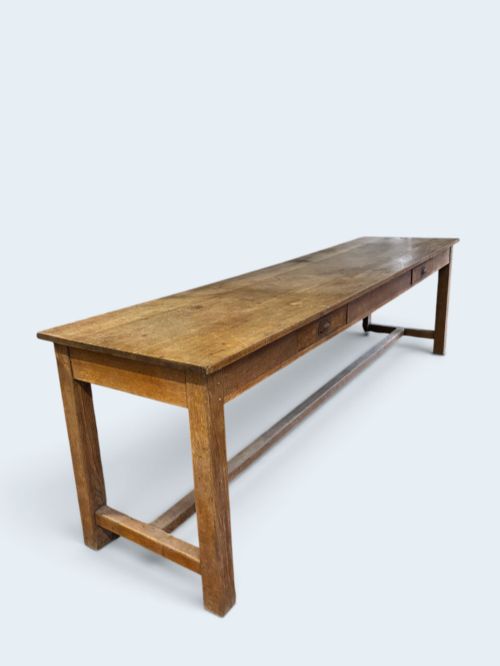
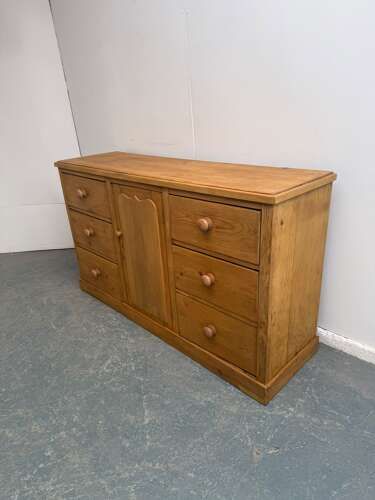
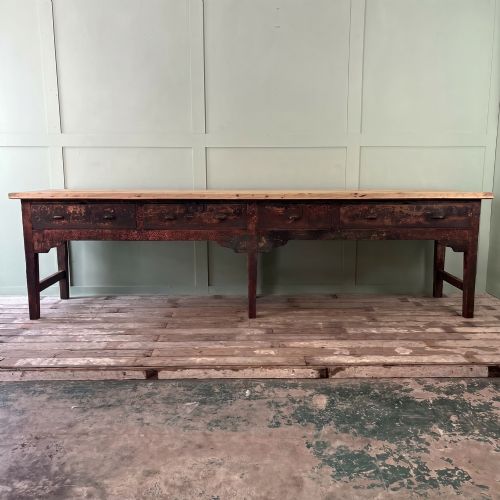


Vintage Farmhouse Sideboard
These vintage farmhouse sideboards and serving tables bring honest utility and deep rustic character straight into a modern dining space.
Vintage Farmhouse Sideboard
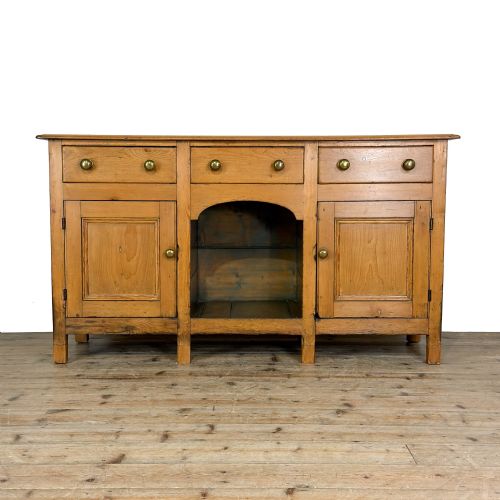
A vintage farmhouse sideboard serves as a practical storage piece and a striking focal point rooted in rural utility. These pieces include serving tables, dresser bases, cupboards, and consoles built for hard work in kitchens, dairies, and country homes.
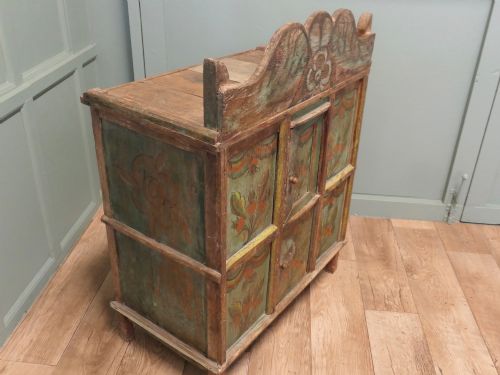
The selections span the nineteenth century alongside earlier eighteenth-century examples, taking regional forms from English, Scottish, and French country traditions. Solid pine and oak dominate the offerings, occasionally finished with original pigment or wax.
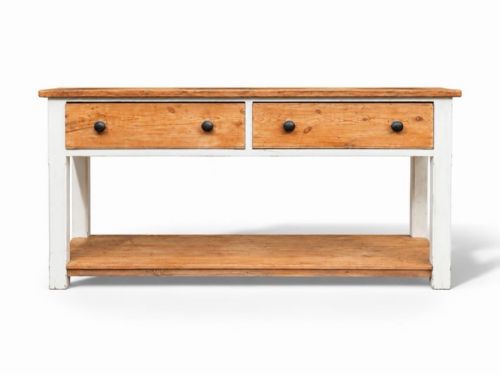
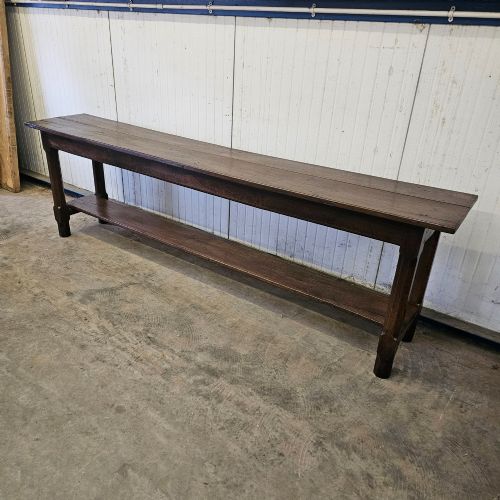
Buyers frequently encounter long serving tables with potshelves, dresser bases with generous storage, and heavy cupboards designed for domestic provisions. Each item carries the marks of its working past, whether through scrubbed tops or aged timber.
How they were made
Joiners built these vintage farmhouse sideboards using solid timbers like pine and oak, relying on sturdy pegged joints and heavy planks to withstand daily domestic demands. Secondary metals such as brass and iron appeared on handles, hinges, and structural brackets.
Surfaces were often left bare to be scrubbed clean, though some examples received protective coats of wax or layers of traditional paint and pigment. Construction prioritised steadfast utility over ornament, resulting in honest proportions and robust frames.
Vintage Farmhouse Sideboard Retail Price Guide 2026
Typical asking prices for vintage farmhouse sideboard among the pieces listed under this phrase on Sellingantiques today, from the lower quarter to the upper quarter. They describe what is for sale here now, not the wider market.
Listings feature items spanning the eighteenth century to the early twentieth century, constructed predominantly from solid pine and oak.
What varies in quality
Quality rests in the integrity of the timber and the preservation of original surfaces, such as early pigment or scrubbed patination. Pieces that retain their structural honesty without excessive timber replacement command greater appreciation.
Regional quirks and proportions also separate standard examples from finer country pieces, particularly where distinct moulding or potshelves elevate a utilitarian form. The harmony between the original hardware and the main body determines the overall visual balance.
The Vintage Farmhouse Sideboard Glossary
- Dresser base
- A lower storage unit featuring cupboards or drawers beneath a flat top, historically used for food preparation and serving. These pieces lack the upper shelving tier of a full kitchen dresser.
- Potshelf
- An open lower shelf fitted between the legs of a serving table or dresser base, designed for storing heavy cookware and pots. It adds valuable structural stability to long wooden tables.
- Softwood
- Timber derived from conifers, predominantly pine in these country pieces, valued for its accessibility and workability. It forms the carcase of many traditional kitchen furnishings.
- Pigment
- Coloured powder mixed with a binder to create traditional paint finishes found on country cupboards and dresser bases. Original paint layers offer important historical evidence of a piece's evolution.
- Waxed finish
- A protective coating applied to bare wood to nourish the grain and provide a soft, tactile sheen. This treatment was regularly replenished through domestic maintenance.
Vintage Farmhouse Sideboard: Frequently Asked Questions
What is a farmhouse sideboard?
A farmhouse sideboard is a robust, utilitarian storage piece traditionally built from solid pine or oak for use in country kitchens and dining rooms.
These items encompass serving tables, dresser bases, and heavy cupboards designed to hold household provisions and serving ware.
How were these sideboards used originally?
These pieces served as practical workstations for food preparation, baking, and storing heavy pots, pans, and tableware.
Their sturdy surfaces and generous drawers made them central fixtures in rural working homes and dairies throughout the nineteenth century.
How do I style a vintage sideboard?
Pair the natural timber or painted pigment of a vintage sideboard with simple ceramics, glassware, or everyday kitchen items to maintain its functional character.
Allow the aged surface and honest construction to remain the primary focus within a dining room or hallway setting.
How can I tell the period of a sideboard?
Dating relies on examining the construction methods, such as hand-cut joints, timber species like solid oak or pine, and the wear patterns on the wood.
Regional styles from English, Scottish, and French traditions also offer clear clues to the era and origin of the piece.