


Vintage Farm Scene
These vintage farm scene works capture rural life through oil and watercolour, offering a direct window into the traditional working countryside.
Vintage Farm Scene
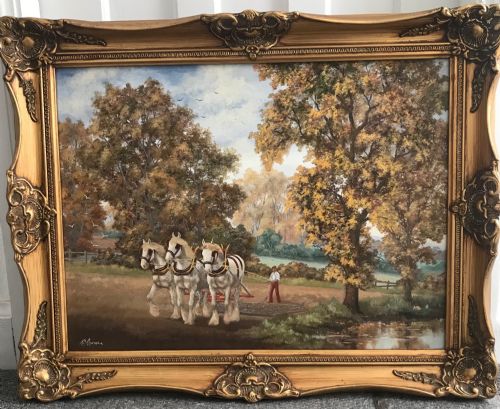
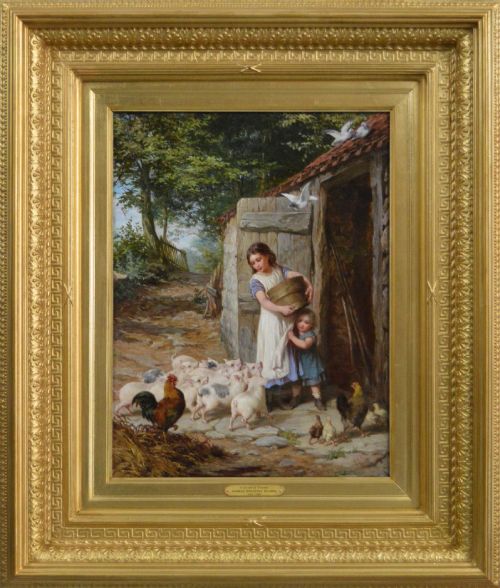
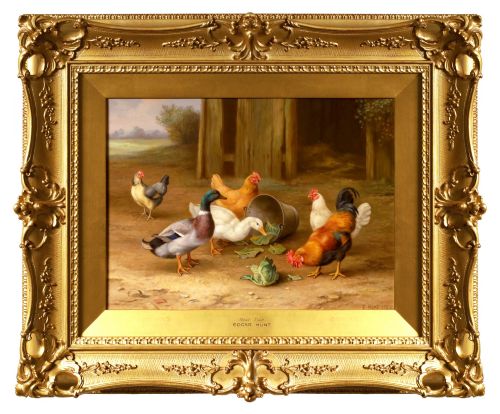
A vintage farm scene depicts the daily realities of agricultural life, from ploughing fields with shire horses to feeding poultry and hauling hay. These works capture the changing rhythms of the rural year, including harvest times and quiet farmyard moments.
The pieces on this page span from the nineteenth century through the mid-twentieth century, encompassing periods such as the Victorian and Edwardian eras. Common formats include framed oil paintings on canvas or board alongside delicate watercolours on paper.
Makers range from regional British artists depicting specific Yorkshire dales and Cumberland fields to painters focusing closely on farm animals, horses and working farmhands.
How They Were Made
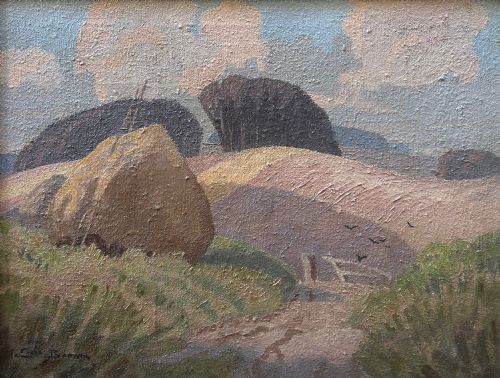
Artists painted primarily in oil on canvas or wood panel, applying pigment to build up texture, depth and natural light across the landscape. Watercolours on paper offered a lighter medium for capturing open skies and rural meadows.
Many works were finished in traditional wood frames, sometimes ebonised, which served to contain and protect the canvas or paper from environmental wear while complementing the pastoral subject matter.
Chickens, ducks, pigs and shire horses frequently share the canvas with hardworking farmers.
What Varies in Quality
Quality depends upon the artist's command of light, shadow and atmospheric perspective, which separates a flat depiction of a field from a convincing rendering of an overcast harvest afternoon. The handling of animal anatomy and human posture dictates whether the figures appear stiff or naturally integrated into the landscape.
The preservation of the original paint layer and the condition of the support, whether canvas, board or paper, determine the visual integrity of the scene. Frame selection and original mounting also contribute to how successfully the artwork survives its period.
George Augustus Holmes·Edgar Hunt·Herbert Royle·James William Booth·John Frederick Herring Jnr·Ernest Pile Bucknall·Charles Vickers·Percival Glenfern·Claude Cardon·J.C. Grey·George Soper·Florence Hess·Arthur Winter Shaw·John Frederic Greenwood·Robert Russell MacNee·Owen Bowen·B. Kaufmann·Rowland Henry Hill·Frederick J. Knowles·Gustav Goemans·John R.K. Duff·Frederick William Jackson·John Percy Cooke·Ernest Higgins Rigg·George Hamilton Constantine
The Vintage Farm Scene Glossary
- Canvas
- A heavy woven fabric stretched across a wooden frame to serve as a sturdy surface for oil painting. It provides a distinct texture that holds thick applications of pigment.
- Watercolour
- A paint consisting of pigment suspended in a water-based solution, applied to paper to achieve translucent washes of colour. It is frequently used for lighter landscape studies.
- Impressionism
- An artistic style focused on capturing the visual impression of the moment, particularly shifting light and natural outdoor conditions. Painters use visible brushstrokes rather than smooth blends.
- Ebonised
- Wood treated with a dark stain or finish to resemble ebony, creating a formal contrasting border around a painting. It was a popular framing choice in the nineteenth and twentieth centuries.
Vintage Farm Scene: Frequently Asked Questions
What periods do these paintings cover?
The works span from the nineteenth century through the 1950s and 1960s, encompassing Victorian, Edwardian and mid-century British art.
They reflect shifts in pastoral painting styles across those decades, moving from traditional realism towards impressionist approaches.
How were these artworks created?
Artists used oil paint on canvas, board or wood panel, as well as watercolour on paper.
These traditional materials were paired with custom wooden frames to preserve and display the rural scenes.
Where do the landscape settings come from?
Many paintings depict specific British locations, including Yorkshire dales, Cumberland, and various northern farmsteads.
Artists often painted en plein air or recorded local agricultural labour directly from life.
How should I care for these paintings?
Keep the artworks away from direct sunlight and fluctuating humidity to protect canvas, paper and pigment.
Dust frames gently and avoid using liquid cleaners on the painted surfaces.