



Vintage Farm Painting
These vintage farm painting works capture rural labour, livestock and homesteads across British and Scandinavian scenes.
Vintage Farm Painting
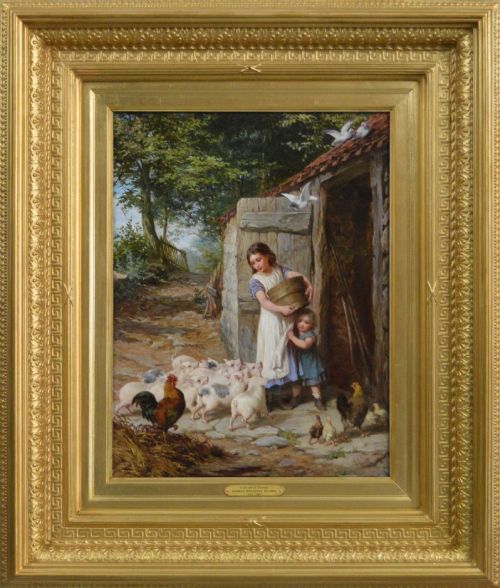
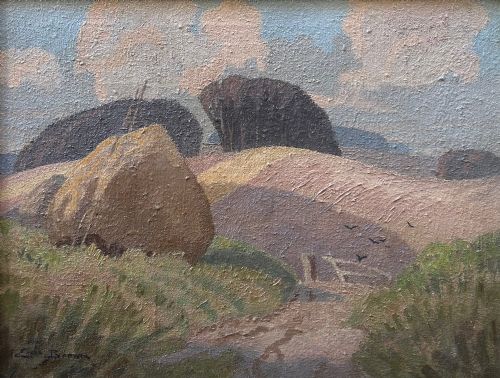
A vintage farm painting depicts rural life, agricultural labour and livestock across British and Scandinavian landscapes. You encounter oils on canvas and watercolours representing harvest scenes, farmyards and animal studies from the nineteenth and twentieth centuries.
The selections span Victorian realism, Edwardian pastoral and British impressionism alongside folk art interpretations. These pieces record historical rural trades, cart horses, poultry and vernacular architecture.
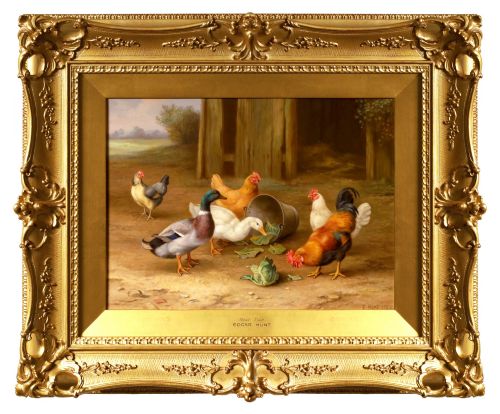
Rural scenes vary from detailed character studies of livestock by named artists to broad impressionistic views of Yorkshire dales and harvest fields.
Materials and methods
Artists painted primarily with oil on canvas or board, using rich pigments to build textured layers of landscape and animal subjects. Watercolour on paper appears frequently for lighter, more luminous rural scenes.
Substrates include traditional woven canvas stretched over wooden frames, sturdy wood panels, and heavy artist paper. Frames range from simple ebonised wood mouldings to ornate period frames suited to the Victorian and Edwardian eras.
Vintage Farm Painting Retail Price Guide 2026
Typical asking prices for vintage farm painting among the pieces listed under this phrase on Sellingantiques today, from the lower quarter to the upper quarter. They describe what is for sale here now, not the wider market.
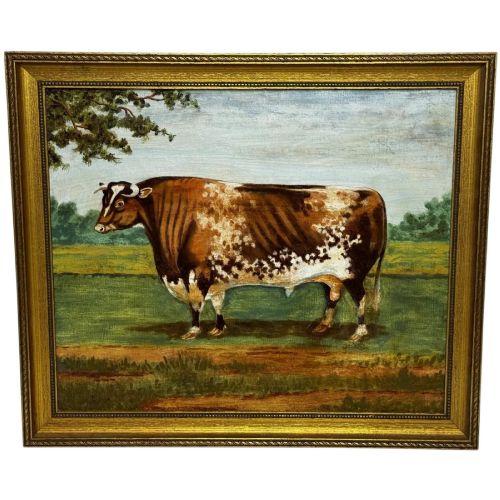
Several canvases are dedicated entirely to the serious expressions of prize-winning shorthorn bulls and watchful farmyard hens.
Judging quality in rural art
Quality rests upon the artist's ability to render anatomy, light and atmosphere convincingly within the rural setting. Works by established painters demonstrate superior brushwork and compositional balance compared to anonymous school pieces.
Condition of the pigment and canvas surface dictates longevity, where stable paint layers without excessive craquelure or old amateur touch-ups command greater respect. The presence of a signed attribution, artist studio provenance or original period framing adds tangible context.
George Augustus Holmes·Edgar Hunt·Herbert Royle·John Frederick Herring Jnr·Ernest Pile Bucknall·Charles Vickers·George Soper·Owen Bowen
The Vintage Farm Painting Glossary
- British Impressionism
- A painting style developed in Britain focusing on natural light, outdoor settings and visible brushstrokes.
- Provenance
- The documented history of ownership of a work of art, establishing its authenticity and origin.
- Oil on Canvas
- Pigment mixed with drying oil applied to a stretched woven fabric support, prevalent in nineteenth and twentieth century art.
- Watercolour
- A painting method where fine pigment is suspended in a water-based solution, typically applied to heavy paper.
- Folk Art
- Art produced by self-taught individuals using traditional methods, often prioritising direct expression over academic convention.
Vintage Farm Painting: Frequently Asked Questions
What subjects feature in these paintings?
The artworks predominantly show farmyards, agricultural labour, haymaking, and domestic animals such as cattle, horses, pigs and poultry. Landscapes span Yorkshire dales, pastoral fields and homesteads.
Scenes range from intimate animal portraits to wide valley views detailing rural trades and seasonal farm work.
How do I identify the period of a painting?
Dating relies on stylistic clues, framing, artist signatures and mediums characteristic of periods like the Victorian era or mid-century decades. Canvas stamps and paper types also assist with chronological placement.
Many works include biographical dates for the artist or exhibition labels that narrow down the exact decade of creation.
Where should I hang a rural painting?
These works suit traditional dining rooms, studies or hallways, pairing well with rustic wooden furniture, pine tables and natural textiles. Adequate wall space allows larger oil canvases to anchor a room.
Keep paintings away from direct sunlight and damp conditions to preserve the integrity of the canvas and watercolour pigments.
Are watercolours as durable as oils?
Watercolour paintings require protection behind glass to shield the paper and pigments from atmospheric moisture and UV degradation. Oils on canvas offer greater resilience against environmental factors.
Both mediums survive centuries if framed properly and kept away from extreme temperature fluctuations.