


Vintage Fairground Carving
Vintage fairground carving brings bold sculptural presence into a room, taking the form of carousel animals, decorative panels and ride fragments shaped by hand.
Vintage Fairground Carving
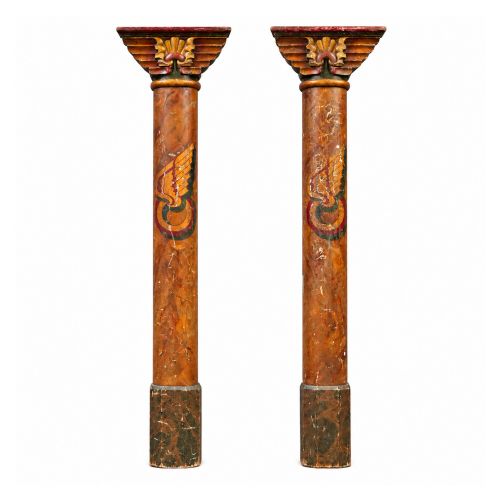
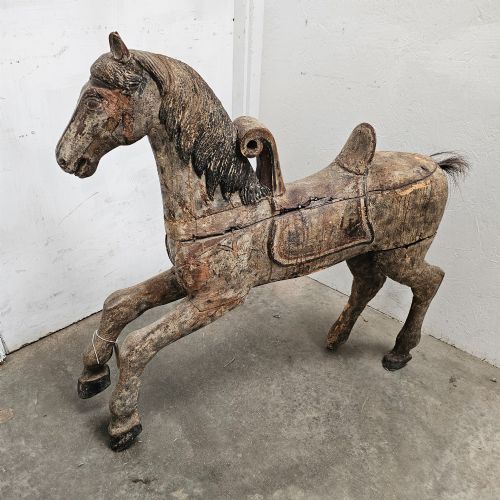
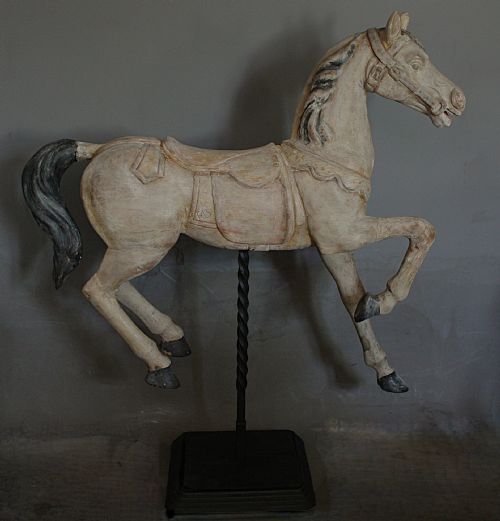
Vintage fairground carving encompasses architectural columns, carousel horses, pigs, dragons, targets and decorative panels originating from English and French makers. These pieces originate from periods spanning the late nineteenth century through to the nineteen-twenties, reflecting working amusement parks and travelling attractions.
The version most commonly met on this page is the carved wooden carousel animal or decorative ride panel, often retaining traces of polychrome paint. These items functioned as practical elements of entertainment before entering the decorative market as sculptures and wall art.
Materials and construction
Makers utilised wood as the primary medium, shaping structural forms by hand before applying layers of paint to withstand outdoor environments. Additional materials such as iron, glass and horsehair appear in specific components like mirrors, mounts and manes.
Carvers employed robust joinery and deep relief techniques to ensure figures survived the constant motion and weather exposure of fairground rides. Surface finishes rely on polychrome paintwork applied over timber, often showing successive layers from decades of working use.
Listings feature wood, iron, glass and horsehair across periods ranging from eighteen-eighty to nineteen-twenty.
Variations in quality
The distinction between ordinary and exceptional examples rests upon the depth of the carving and the character of the remaining surface paint. Master carvers imbued animals with dynamic movement and realistic anatomy, whereas workshop pieces display simpler execution.
Original paint layers that survive largely intact elevate an object above pieces stripped to bare wood or heavily restored in modern times. The presence of authentic structural elements, such as original brackets or glass eyes, further distinguishes superior survivals.
Bayol·Limonaire·Gavioli
The Vintage Fairground Carving Glossary
- Polychrome paint
- Multiple colours applied to a surface. This traditional finish protected the wood and provided vibrant visual impact on moving fairground rides.
- Carousel figure
- A carved animal designed for a fairground ride platform. These sculptures typically depict horses, pigs or mythical creatures in dynamic poses.
- Ride panel
- A flat or curved board decorated with carved and painted designs. These elements decorated the machinery and housing of nineteenth and twentieth-century amusements.
- Architectural salvage
- Building components rescued from structures slated for demolition. Fairground columns and decorative panels often enter collections through this trade.
- Folk art
- Utilitarian or decorative objects created outside formal academic traditions. These pieces reflect regional craftsmanship and popular culture rather than academic styles.
Vintage Fairground Carving: Frequently Asked Questions
How were fairground carvings used?
These carvings served as functional decoration on travelling amusement rides, organs and architectural structures. They ornamented the machinery of nineteenth and twentieth-century fairgrounds to attract the public.
Over time, retired rides were dismantled, and individual carved elements were preserved as decorative objects for domestic and commercial interiors.
Where should I place a carousel panel?
Large carved panels and decorative boards suit prominent wall placements in living spaces or hallways. Their substantial wooden construction requires secure fixings to support the weight.
Smaller fragments and mirrors work well grouped together or mounted singly as focal points against neutral walls.
How do I care for painted wood?
Keep carved wooden items away from direct heat sources and strong sunlight to prevent the old paint from flaking. Stable indoor humidity protects the timber substrate from movement.
Dust gently with a soft dry cloth and avoid chemical cleaners that might strip the historic polychrome layers.
What defines Edwardian fairground style?
Edwardian fairground pieces combine traditional hand carving with early twentieth-century decorative motifs. The work maintains the robust folk art character established in the previous century.
Items from this period often show sophisticated painted details alongside sturdy timber construction.