




Vintage Expandable Conference Table
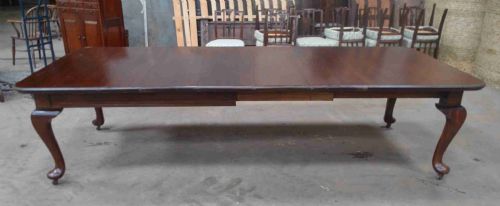
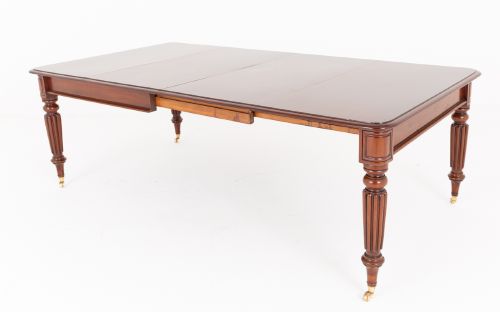
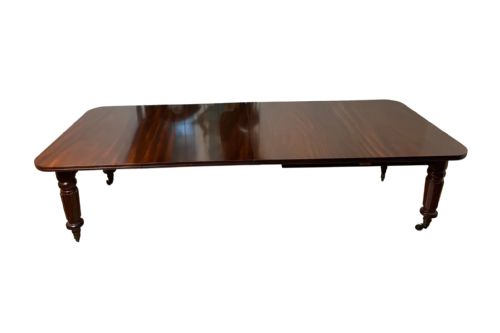
These vintage expandable conference table examples are adaptable boards made in mahogany, offering period grandeur for large gatherings.
Vintage Expandable Conference Table
Buyers seeking a vintage expandable conference table encounter large dining tables from the Regency, Victorian, and William IV periods, adaptable for seating groups of eight to ten or more. These pieces use extra leaves to adjust their length for different occasions.
The forms on this page span from George III style and Chippendale Revival to the solid proportions of 19th-century workshop production. They provide the generous proportions required for boardrooms or large dining spaces.
Materials and construction
Makers built these tables primarily from mahogany, often utilising figured timbers for the top surfaces to showcase rich grain patterns. Brass components frequently appear in the hardware, castor fittings, and mechanism parts.
The construction relies on sturdy pillar supports and carved legs, including claw and ball designs, which provide the structural stability needed when the table extends to accommodate multiple extra leaves.
Some tables come with a surprising number of leaves, capable of swallowing up an entire dining room on a whim.
Indicators of quality
Quality rests in the selection of figured mahogany timber and the precision of the extending mechanism that allows leaves to be added smoothly. Higher quality pieces display refined carving on the legs, such as detailed claw and ball motifs.
Attribution to documented makers elevates a piece, as seen in examples bearing signatures or distinct workshop characteristics from makers like Thomas Treherne or Gillows.
Gillows·Thomas Treherne
The Vintage Expandable Conference Table Glossary
- Extending table
- A dining table designed with a mechanism and removable leaves to increase its overall length. This allows the surface to expand for larger gatherings and contract for daily use.
- Figured mahogany
- Timber cut to highlight decorative patterns within the grain, such as flame or curl figures. It was chosen for high-status furniture tops.
- Claw and ball
- A furniture foot carved to resemble an animal's claw grasping a spherical ball. This detail appears frequently on 18th and 19th-century revival pieces.
- Pillar
- A vertical support column used in pedestal dining tables. Multiple pillars provide stability for extended lengths.
Vintage Expandable Conference Table: Frequently Asked Questions
How do the extra leaves work?
The table pulls apart along a central runner system to create a gap for removable timber boards. These leaves slot into the centre to increase the surface length.
Securing latches or alignment pins underneath keep the leaves steady and level with the main tabletop.
How many people do they seat?
These tables typically accommodate eight to ten diners when fully extended with their extra leaves in place. The exact capacity depends on the length and the number of leaves included.
Shorter configurations suit everyday use, while the maximum extension provides ample room for large meetings or banquets.
What periods do these tables represent?
The selection spans the Regency, William IV, and Victorian eras, alongside later revivals from the early twentieth century. Each period brings distinct design traits, from classical proportions to heavier carved details.
Craftsmen of the nineteenth century built these pieces primarily in mahogany, following evolving aesthetic preferences from George III styles onward.
How should I care for mahogany?
Keep the wood away from direct heat sources and strong sunlight to prevent the timber from drying out or fading. Regular dusting with a soft cloth maintains the finish.
Applying a traditional wax polish occasionally nourishes the mahogany and preserves the depth of the grain.