
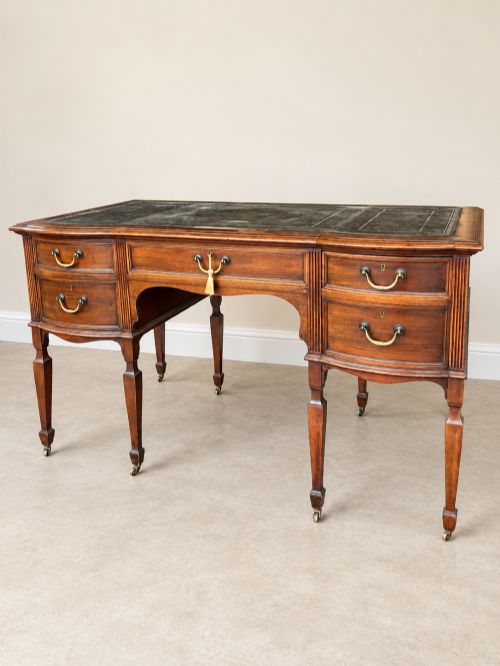
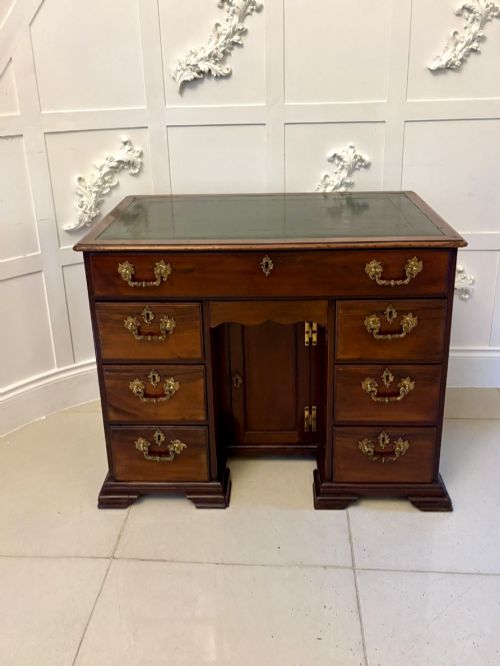
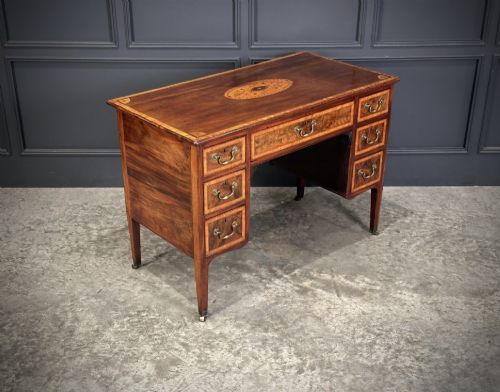
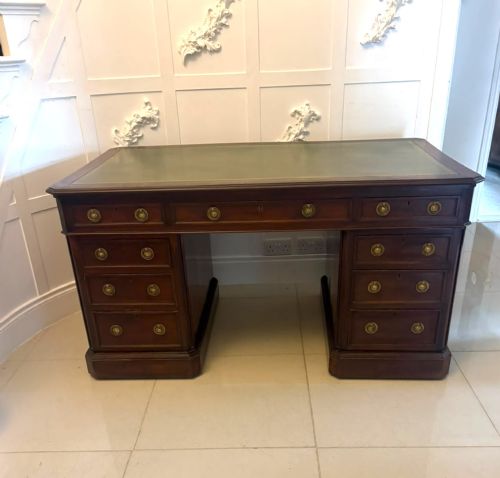


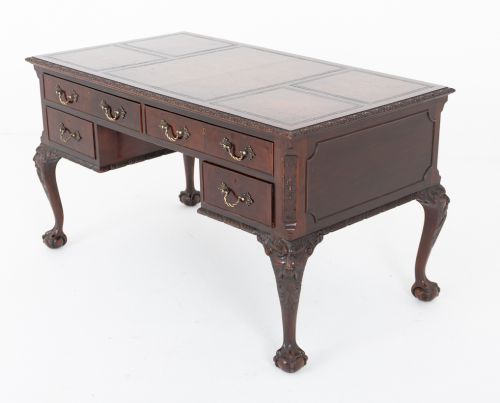
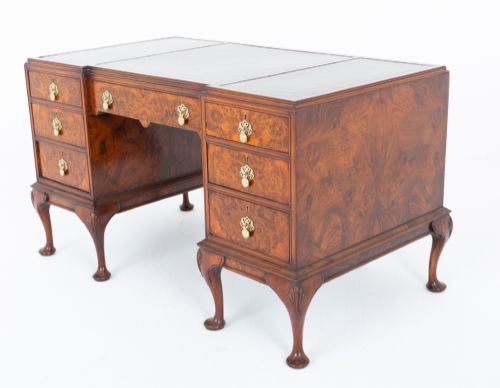
Vintage Executive Kneehole Desk
A vintage executive kneehole desk provides a commanding workspace with pedestal drawers and a central recess, uniting grand presence with practical daily use.
Vintage Executive Kneehole Desk
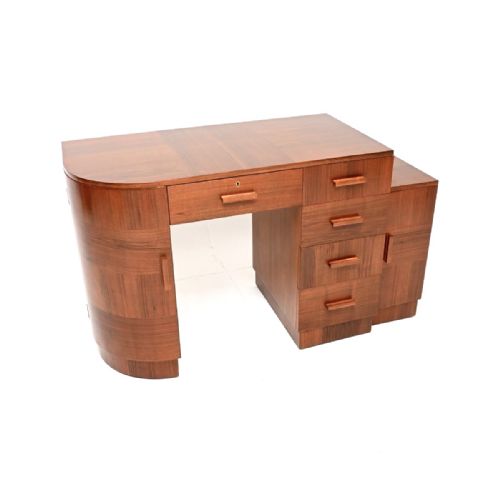
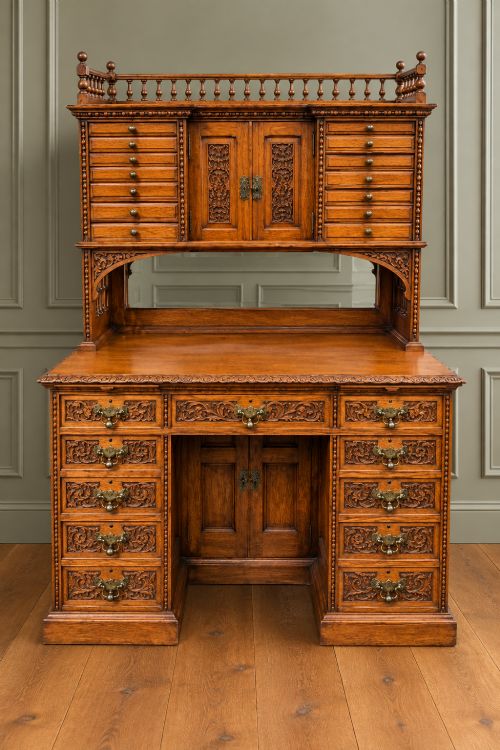
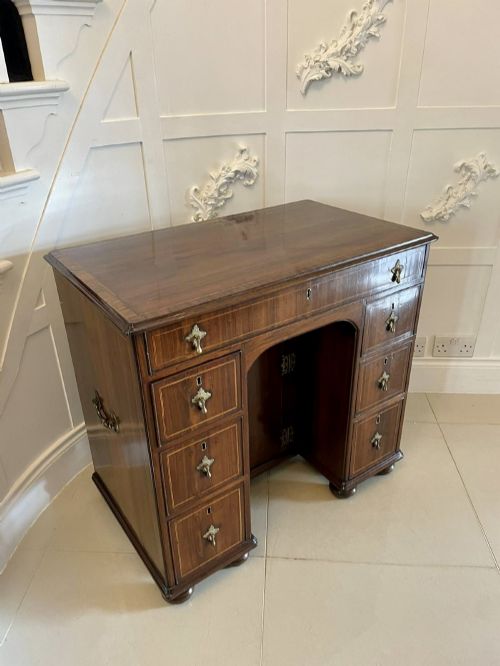
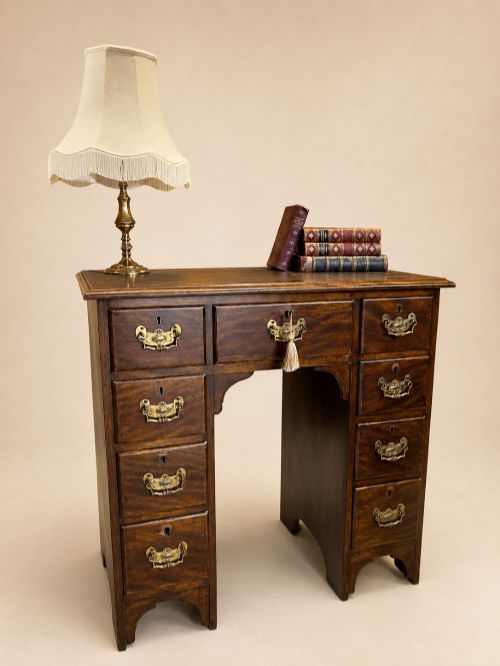
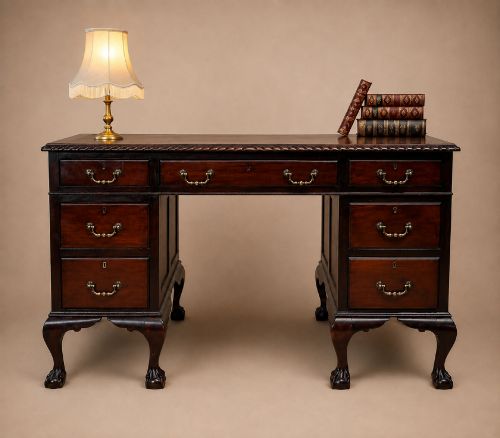
When searching for a vintage executive kneehole desk, buyers encounter substantial pieces designed to anchor a study or office. The selections span from the Victorian and Edwardian eras into the 1930s, encompassing styles such as Chippendale Revival, Queen Anne style, and Art Deco.
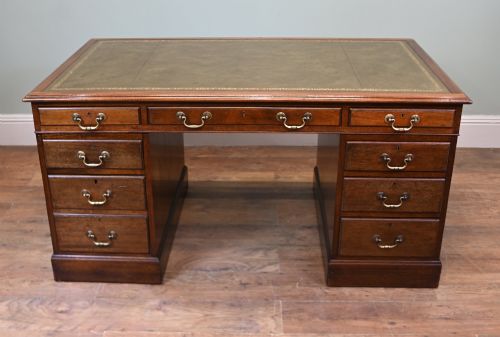
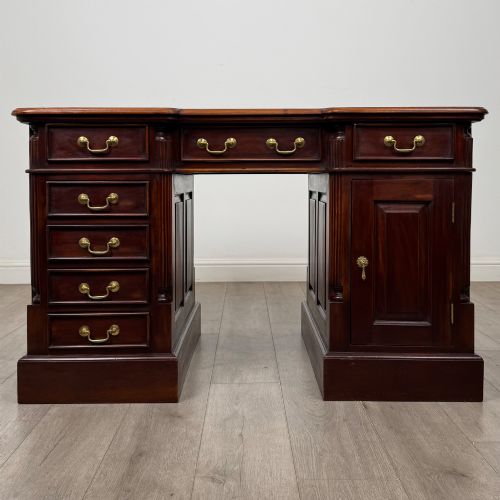
Most examples found on this page are pedestal desks and writing tables constructed in mahogany, walnut, or oak. These configurations typically feature banks of drawers flanking a central kneehole space, often accompanied by writing slides or fitted stationery compartments.
Origins stretch across the nineteenth and twentieth centuries, incorporating revival movements alongside clean-lined Art Deco forms. Buyers will find both freestanding models finished on all sides and pieces designed to sit against a wall.
Distinctions in quality
The upper tier of these desks is distinguished by superior timber selection, such as highly figured burr walnut or dense mahogany, paired with meticulous cabinetmaking. Maker attribution to notable firms elevates a piece through documented craftsmanship and refined proportion.
Quality also manifests in the interior fitments, including secondary drawer woods, smoothly operating runners, and finely tooled leather writing surfaces. Freestanding execution with finished backs similarly separates standard utilitarian models from premier executive examples.
Materials represented include mahogany, burr walnut, oak, satin birch, brass, leather, and chrome.
Trollope and Sons·Maple and Co·Wylie and Lochhead Glasgow·Betty Joel·Gill and Reigate
The Vintage Executive Kneehole Desk Glossary
- Kneehole desk
- A desk featuring a central recessed space for the legs, flanked by pedestals containing multiple drawers on either side. This layout became standard for larger study and office desks.
- Pedestal desk
- A heavy freestanding desk supported by two pedestals or columns of drawers down to the floor. They offer substantial storage capacity and a formal appearance.
- Writing slide
- A pull-out board positioned above the drawers that extends the usable surface area for writing or resting papers. They slide flush into the desk frame when not in use.
- Burr walnut
- Timber obtained from the burl growths of walnut trees, yielding complex swirling grain patterns. Cabinetmakers prized it for high-status decorative veneering.
- Tooled leather
- Leather hide impressed with decorative gold or blind-stooled borders using heated brass rolls and stamps. It forms a traditional writing surface insert.
Vintage Executive Kneehole Desk: Frequently Asked Questions
What is a kneehole desk?
A kneehole desk is a large pedestal form featuring a central recess for the user to sit comfortably between two vertical banks of drawers.
This layout provides ample storage and a formal architectural presence suited to executive studies.
How do I identify Art Deco desks?
Art Deco desks from the 1930s typically present streamlined silhouettes, geometric lines, and figured walnut or chrome elements.
Unlike revival styles that imitate earlier centuries, these pieces embrace modernist simplicity and functional elegance.
Are these desks finished on the back?
Many executive kneehole desks are described as freestanding, meaning the rear is polished and finished just like the front. This allows the piece to sit in the middle of a room rather than strictly against a wall.
Buyers should check individual listings to confirm whether a specific desk is fully finished on all sides.
What woods were commonly used?
Makers relied heavily on mahogany, oak, and walnut as primary structural timbers throughout the nineteenth and early twentieth centuries. Burr walnut and flame mahogany veneers were frequently applied for decorative effect.
Leather was also standard for the inset writing surfaces across many periods.