


Vintage Etched Mirror
These vintage etched mirror pieces bring reflective depth and historic charm to interiors, ranging from Venetian glass trays to Victorian overmantels.
Vintage Etched Mirror
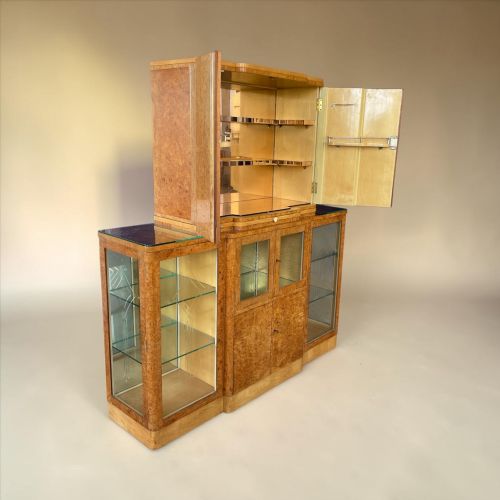
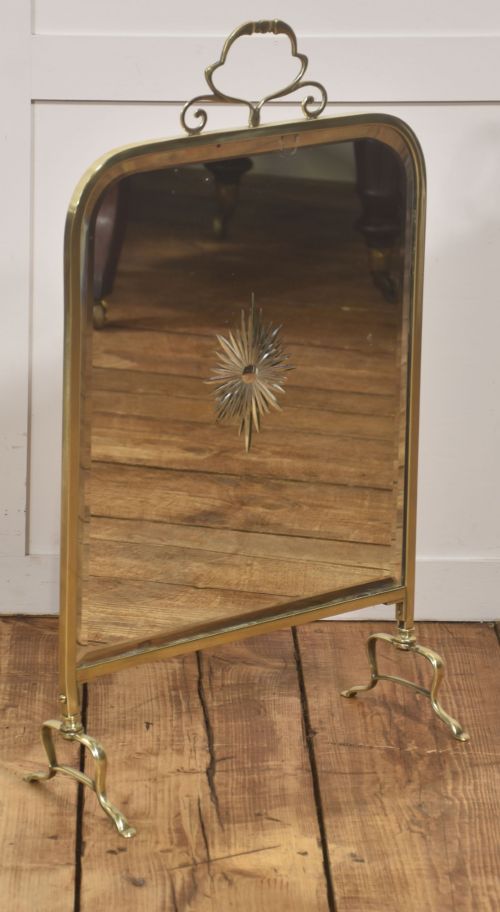
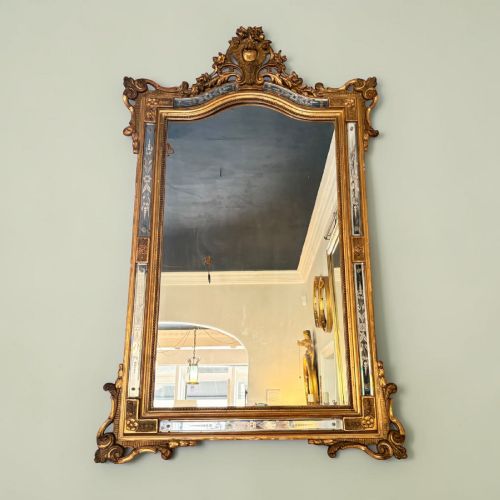
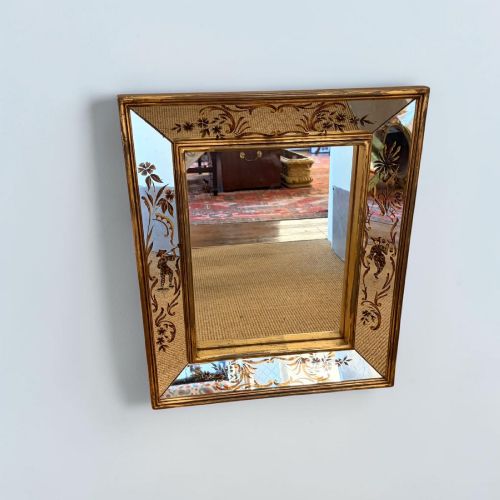
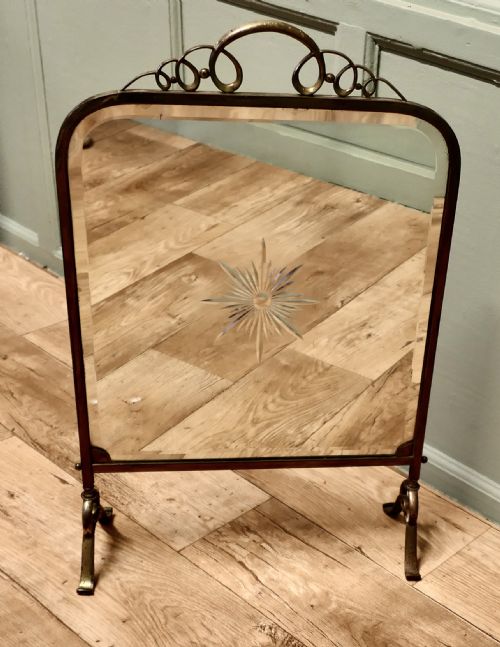
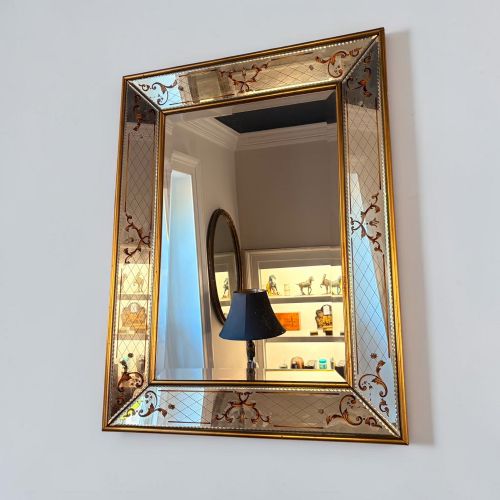
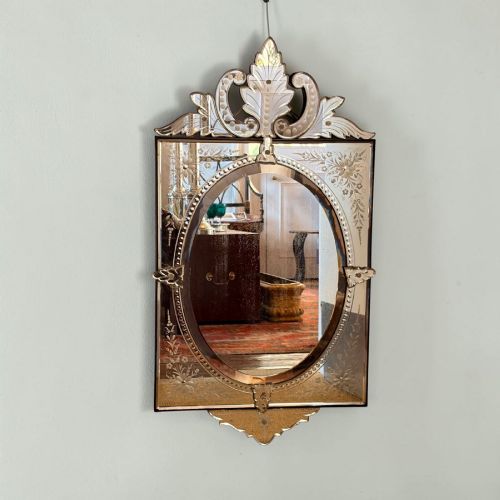
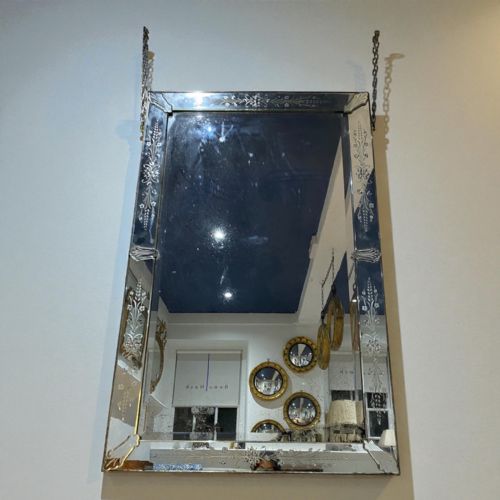
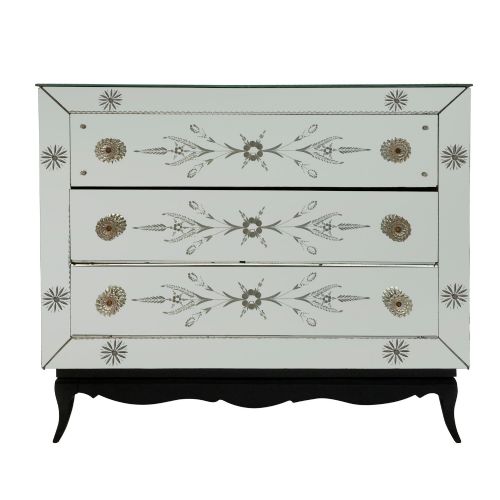
When someone searches for a vintage etched mirror, they encounter a diverse array of decorative objects spanning the nineteenth and twentieth centuries. The selection encompasses wall mirrors, fire screens, serving trays, and occasional furniture such as mirrored chests of drawers and floor lamps.
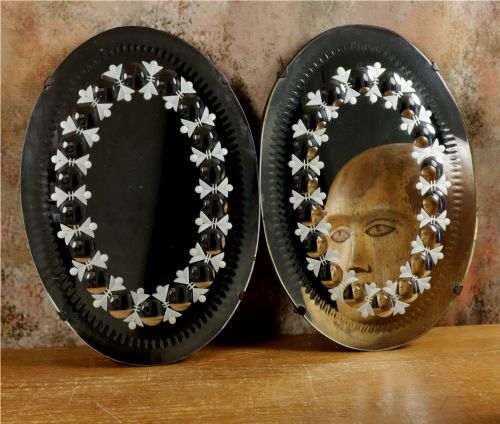
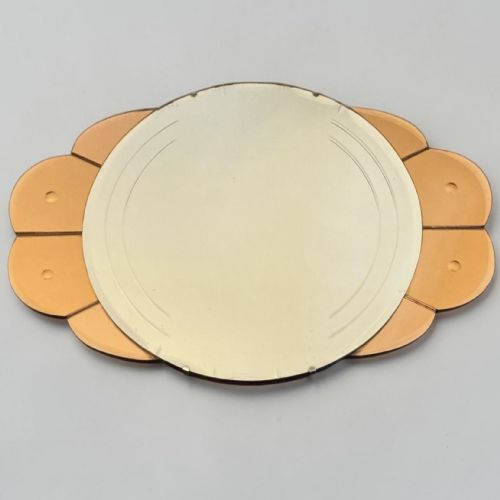
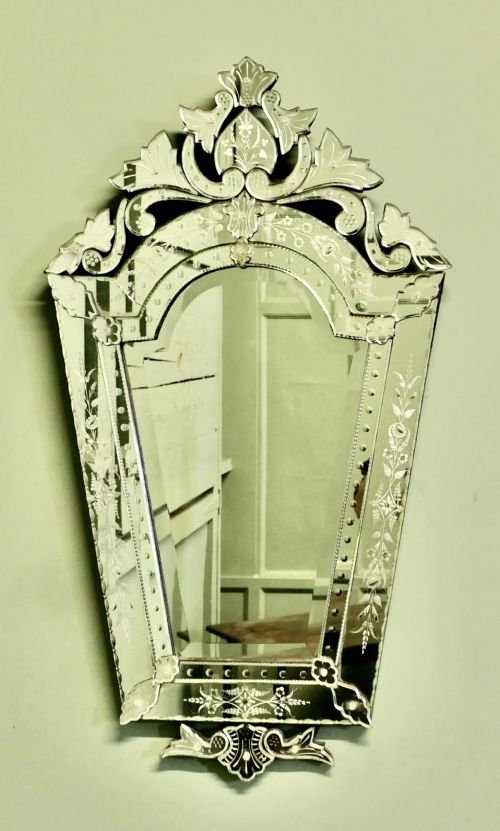
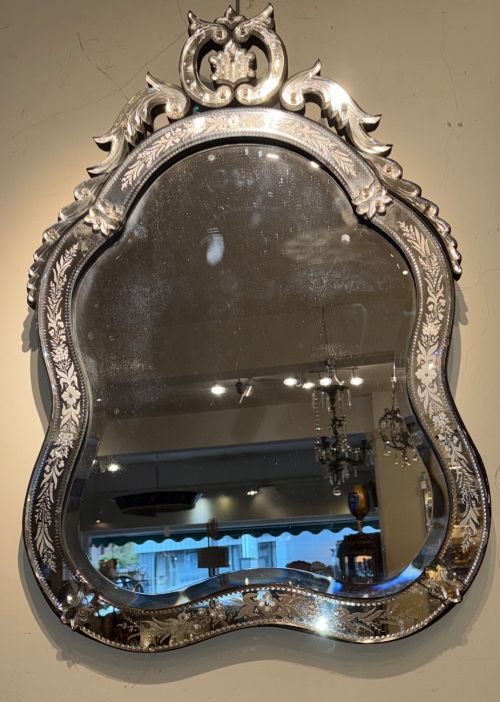
Venetian and Art Deco examples dominate the forms available, often incorporating decorative glass plates with engraved or etched designs. Pieces originate from periods including the Victorian and Edwardian eras, as well as the 1920s and 1930s.
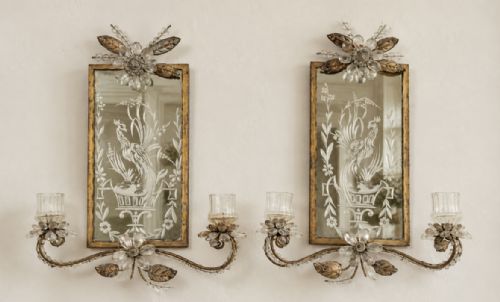
Buyers frequently find items defined by distinctive regional styles, such as French Rococo frames, Italian Murano glass trays, and English pub mirrors. These objects combine utilitarian reflective functions with elaborate decorative glasswork.
How they were made
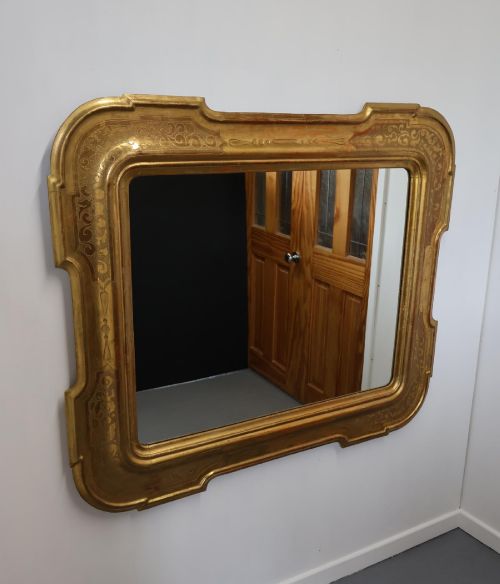
Maker construction relies heavily on combinations of glass, mirrored glass, and structural supports fashioned from wood, brass, giltwood, and metal. Frames are carved, cast, or gilded to house delicate glass plates.
Techniques involve acid etching, engraving, and reverse glass painting known as eglomise, often applied to clear, peach-coloured, blue, or ruby red glass borders. Cushion mirrors and cut glass components demonstrate advanced hand-working methods by period artisans.
Vintage Etched Mirror Retail Price Guide 2026
Typical asking prices for vintage etched mirror among the pieces listed under this phrase on Sellingantiques today, from the lower quarter to the upper quarter. They describe what is for sale here now, not the wider market.
Pub mirrors from Maida Vale recorded here prove that nineteenth-century locals took their glassware with a side of heavy advertising.
What varies in quality
Quality differences rest upon the crispness of the glass engraving, the depth of the bevels, and the preservation of the original silvering or foxing on the mirror plate. Superior examples display intricate, hand-cut detailing rather than superficial surface scratching.
The integrity of the surrounding frame, whether carved giltwood, brass, or painted wood, contributes substantially to the overall standard of the piece. Matching original components and robust structural joinery distinguish finer specimens from ordinary ones.
The Vintage Etched Mirror Glossary
- Eglomise
- A traditional technique where a design is painted and gilded on the reverse side of glass. This process creates a reflective, metallic finish viewed from the front.
- Foxing
- Age-related spots and discoloration appearing within the mirrored glass layer. Collectors value this natural oxidation as evidence of antiquity.
- Cushion mirror
- A frame style featuring a raised, sloping central section covered with shaped glass panels. These plates are typically held together by decorative glass-headed screws.
- Overmantel mirror
- A large mirror designed specifically to be hung above a fireplace mantel. These pieces often feature arched tops and substantial gilt frames.
- Sunburst mirror
- A circular frame design featuring radiating rays or segments resembling the sun. They frequently utilise brass or giltwood materials.
Vintage Etched Mirror: Frequently Asked Questions
How do I hang a heavy antique wall mirror safely?
Ensure the wall fixings engage directly with structural studs or use heavy-duty wall anchors rated for the weight of the frame and glass. Professional mirror hangers utilise split battens to distribute the load evenly across the wall.
Check that the original hanging loops or wire on the back of the frame remain secure and stable before mounting. For very large overmantel mirrors, supplementary lower brackets provide essential support.
What is the difference between an etched mirror and an engraved mirror?
Etching typically involves using acid or chemical agents to bite patterns into the surface of the glass, creating a frosted, matte appearance. This method allows for delicate, widespread surface decoration.
Engraving is a mechanical process where a wheel or diamond point physically cuts deeper lines and facets into the glass. Engraved details catch the light sharply, producing clear, defined grooves.
Can I use a vintage mirror tray for serving drinks?
Many vintage glass trays were manufactured specifically for serving or display, constructed with sturdy metal, silver-plated, or wooden galleries. Care must be taken to protect the delicate eglomise or etched undersides from moisture and rough handling.
For everyday use, line the tray with a protective pad or limit use to decorative display on a cocktail table or sideboard. Avoid submerging antique trays in water to preserve the backing.
How do I identify an Art Deco mirror?
Art Deco mirrors frequently feature geometric shapes, such as diamonds, hexagons, or stepped silhouettes, reflecting the design trends of the 1920s and 1930s. They often incorporate peach or coloured glass accents alongside clear mirrored sections.
The frames tend to be streamlined or minimalist, relying on the geometry of the cut glass plates rather than ornate carving. Etched motifs on these pieces typically display stylized floral or abstract linear patterns.