






Vintage Etched Glassware
Vintage etched glassware brings pattern and light to a table, combining clear or coloured surfaces with delicate engraved detail.
Vintage Etched Glassware
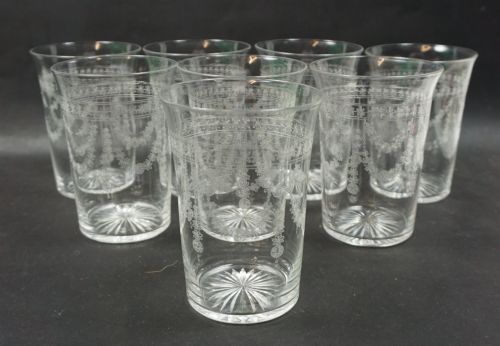
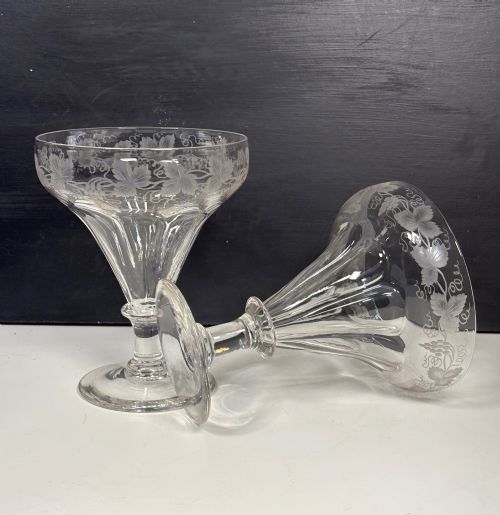
Vintage etched glassware encompasses decorative and functional vessels bearing surface ornamentation created by acid or mechanical tools. When seeking vintage etched glassware, buyers encounter items ranging from Victorian table services to Art Deco drinking suites.
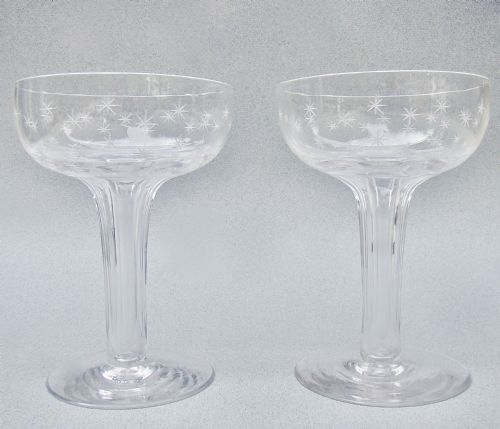
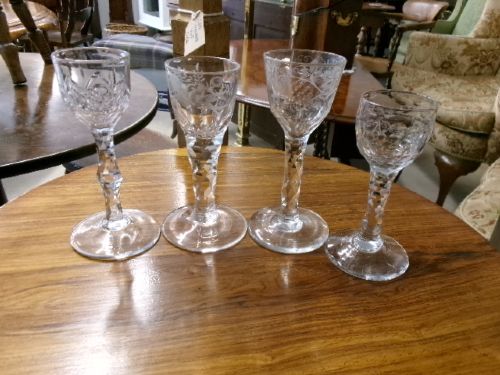
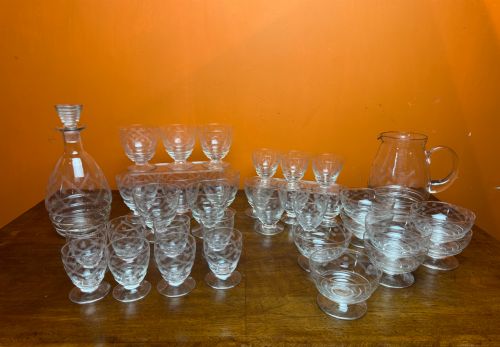
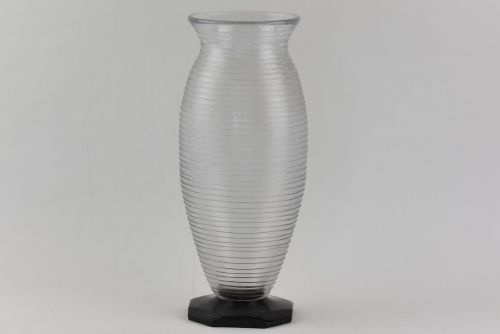
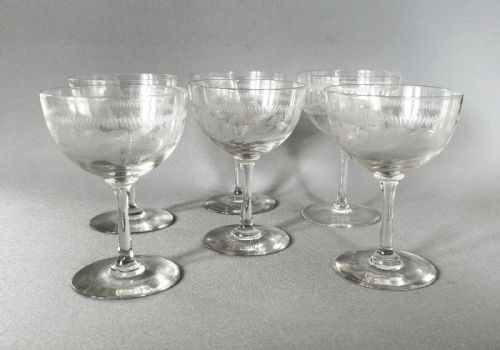
The objects span varied domestic forms, including champagne coupes, wine glasses, decanter sets, and display vases. Pieces from the Victorian and Edwardian eras sit alongside 1930s continental suites.
The material composition moves from clear lead crystal to coloured Bohemian glass, cameo layers, and enamelled surfaces. Each period brings distinct decorative motifs, from botanical wreaths to geometric lines.
How these pieces were made
Makers utilised clear glass, lead crystal, frosted layers, and coloured casing to build depth before decorating. Artisans then applied acid etching, wheel engraving, or cameo carving to cut designs into the surface.
Acid etching involved masking the glass with wax and exposing unprotected areas to hydrofluoric acid to bite the pattern. Wheel engraving relied on small rotating discs of copper or stone to grind intricate scenes directly into the material.
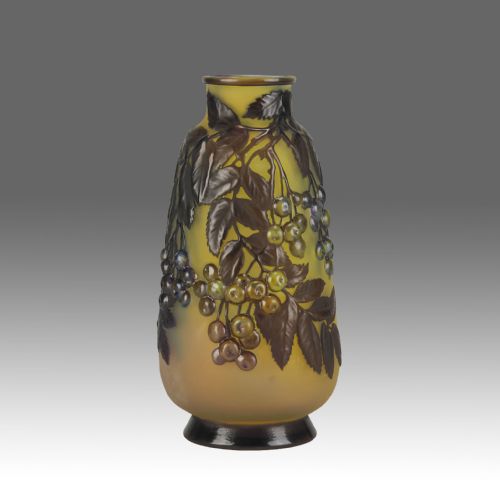
Cameo glass required fusing layers of contrasting glass colours before carving away the exterior layer to reveal the motif. Enamel decoration added coloured glass pigments fired onto the surface for extra contrast.
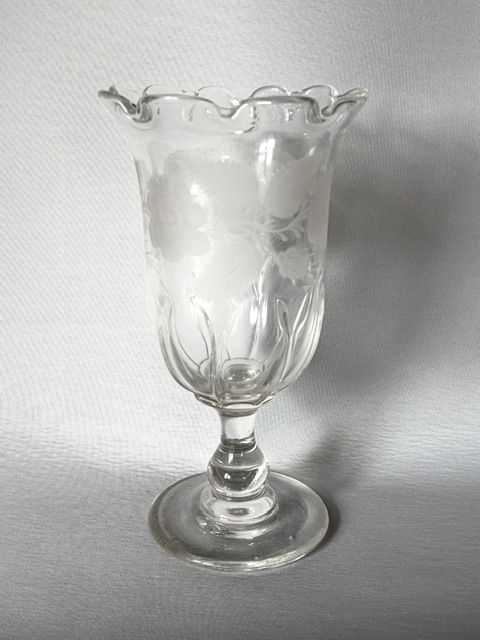
A stoic stone philosopher gazes across the centuries from a wheel-engraved glass vase.
What varies in quality
Depth and precision of the engraving distinguish standard items from superior work. Sharp lines in wheel engraving and clean borders in acid-etched patterns indicate skilled execution.
Weight and metal content of the base material separate ordinary vessels from fine lead crystal. Clarity of the underlying glass and richness of applied enamel or layered cameo colours dictate overall visual balance.
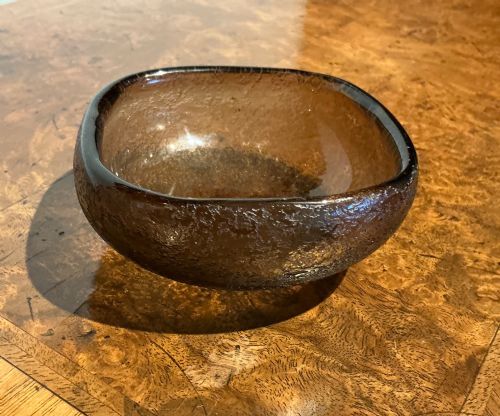
Venini glass bowl Carlo Scarpa·Rene Lalique·Daum Art Deco·Gallé·Karl Palda·Schneider·Stevens & Williams
The Vintage Etched Glassware Glossary
- Acid etching
- A decorating technique using acid to bite designs into glass surfaces masked with a protective substance. This method allowed makers to produce intricate, repetitive patterns rapidly.
- Cameo glass
- Multi-layered glass carved or etched to create contrasting relief designs. Artisans cut through an outer layer of coloured glass to expose a different shade beneath.
- Lead crystal
- Glass containing metal oxides that increase weight, brilliance, and refractive index. This material provides a resonant ring when struck and clarity for deep cutting.
- Wheel engraving
- A cold-work technique where rotating wheels cut designs into glass. It yields crisp lines and varied depths impossible to achieve by acid alone.
Vintage Etched Glassware: Frequently Asked Questions
Can I use these glasses for daily dining?
Many vintage drinking vessels remain suitable for occasional dining or special gatherings. Handle them carefully to prevent rim chips and surface wear.
Heavier Victorian and Edwardian forms withstand gentle use, while delicate cameo vases suit display purposes better.
How do I date etched glassware?
Examine the decorative style, form, and manufacturing technique to determine the period. Art Deco items feature geometric patterns from the 1930s, whereas Victorian pieces often display naturalistic motifs.
Pontil marks and wear on the base also help establish the approximate age of older items.
What is the difference between etching and cutting?
Etching uses acid or chemical agents to create shallow surface patterns. Cutting involves grinding deep grooves into the glass using abrasive rotating wheels.
Cut glass feels heavily faceted to the touch, while etched surfaces remain relatively smooth.