


Vintage Enamel Cutlery
Vintage enamel cutlery brings bright colour and sharp twentieth-century design to the table through cased sets of spoons made for daily use or display.
Vintage Enamel Cutlery
Vintage enamel cutlery principally comprises decorative teaspoons and coffee spoons produced across the twentieth century in various distinct regional workshops. When searching for vintage enamel cutlery, buyers encounter cased sets intended for gifting or formal tea service, often bearing specific club or festive associations.
The objects span multiple influential design movements from the early nineteen-hundreds through to the nineteen-sixties. Pieces range from British retailer commissions to Scandinavian imports, capturing changing aesthetic tastes over six decades.
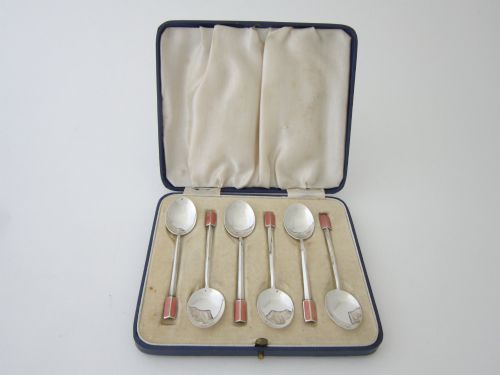
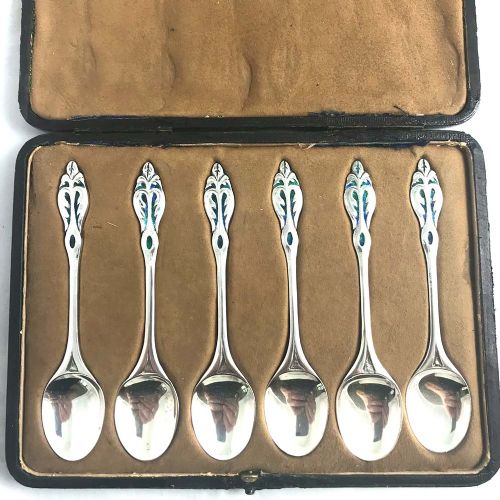
Spoons form the vast majority of surviving examples on this page, frequently presented in fitted leatherette presentation boxes. These small dining implements combine precious metal foundations with vibrant vitreous decoration.
Materials and construction
Craftsmen built these items using silver or sterling silver foundations, frequently applying gold gilt surfaces to enhance the interior bowl or handle details. Vitreous enamel was then fused to the metal base through high-temperature firing, creating smooth, glossy coloured panels.
Makers integrated satin linings inside fitted presentation cases to protect the delicate metallic and enamelled finishes during storage. The combination of precious metalwork and glass-based colour demanded precise silversmithing skills alongside expert glazing techniques.
Current listings span periods from nineteen-hundred through nineteen-sixty-two, featuring styles from Art Nouveau and Art Deco to mid-century modern.
Judging quality in silver and enamel
Quality reveals itself in the crispness of the metallic casting and the uniformity of the vitreous surface. Superior examples display even colour saturation across the enamel panels without surface pitting or irregular thickness.
The distinction between standard commercial output and high-tier manufacture often rests on the sophistication of the design and the reputation of the retailer or maker. Fitted boxes lined with satin and stamped by notable London department stores or international silversmiths elevate the standing of a set.
David Andersen·Harrods London·Liberty And Co·Tamesis Sailing Club
The Vintage Enamel Cutlery Glossary
- Vitreous enamel
- A glass-like substance fused to a metal surface through intense heat. This material provides the durable, glossy colour found on twentieth-century spoons.
- Silver gilt
- Silver that has been coated with a thin layer of gold. This treatment adds a warm tone to the interior bowl or decorative terminals of the cutlery.
- Cased set
- A collection of items housed in a fitted presentation box. These containers often feature satin interiors and secure clasps designed for preservation.
- Sterling silver
- An alloy consisting of silver and other metals, chosen for durability and strength. It serves as the primary structural metal for many British and Scandinavian pieces.
Vintage Enamel Cutlery: Frequently Asked Questions
How should I store my vintage spoons?
Keep the items inside their original fitted cases or wrapped in soft cloth to prevent surface scratching on the delicate glass panels.
Avoid exposing the pieces to high humidity or rapid temperature changes, which can stress the bond between the metal and the vitreous coating.
Can I use these spoons for daily dining?
While these implements were originally manufactured for table use, the fragile nature of twentieth-century glass glazing makes gentle handling advisable.
Hand washing in lukewarm water without harsh abrasives preserves the coloured surfaces and any gold gilt highlights.
How do I date an enamel spoon set?
Examine the stylistic indicators such as geometric motifs from the Art Deco period or clean lines associated with mid-century modern design.
Maker marks, retailer stamps inside the presentation boxes, and assay office hallmarks often provide more precise chronological markers.
Why are most sets found in boxes?
These collections were predominantly produced as luxury gifts for weddings, anniversaries, or special holidays like Christmas.
Original presentation cases lined with satin protected the fragile metallic and enamelled finishes from damage when not in active service.