


Vintage Empire Pendant Fixture
These vintage empire pendant fixture designs bring classical French elegance to ceilings through tiered crystal drops, gleaming brass, and formal neoclassical silhouettes.
Vintage Empire Pendant Fixture
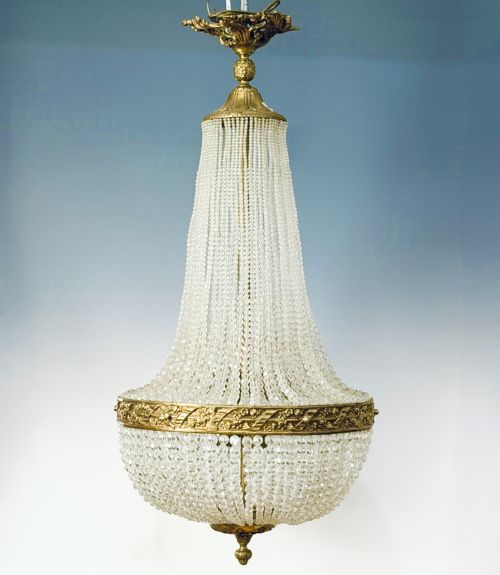
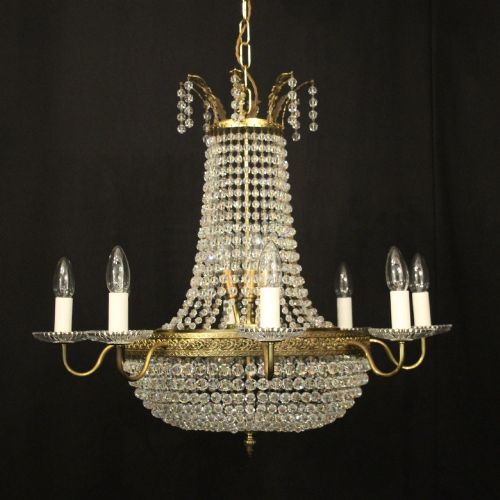
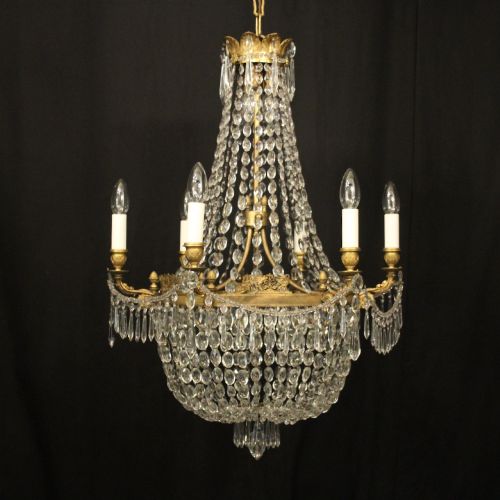
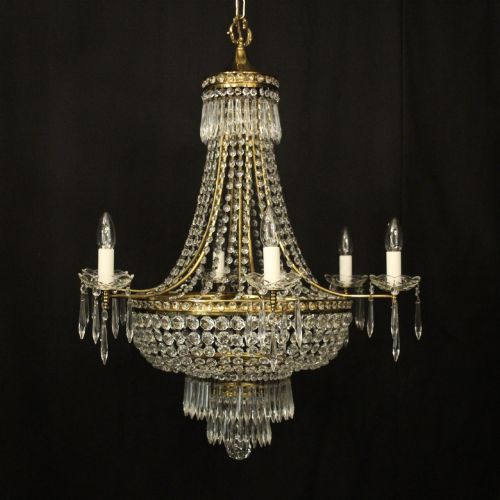
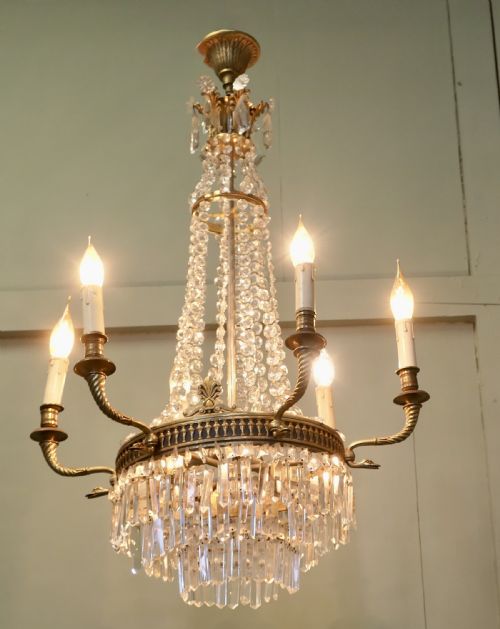
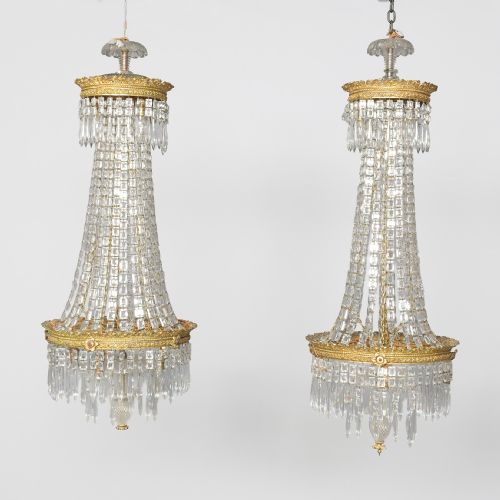
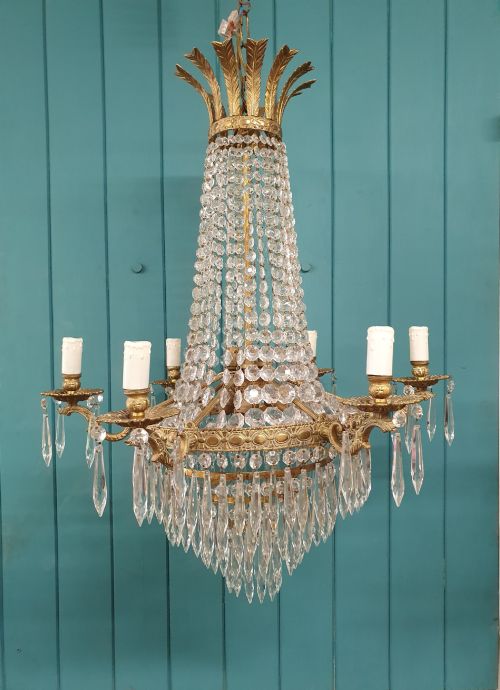
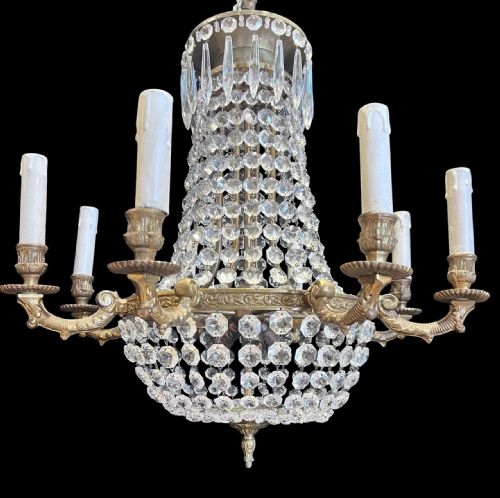
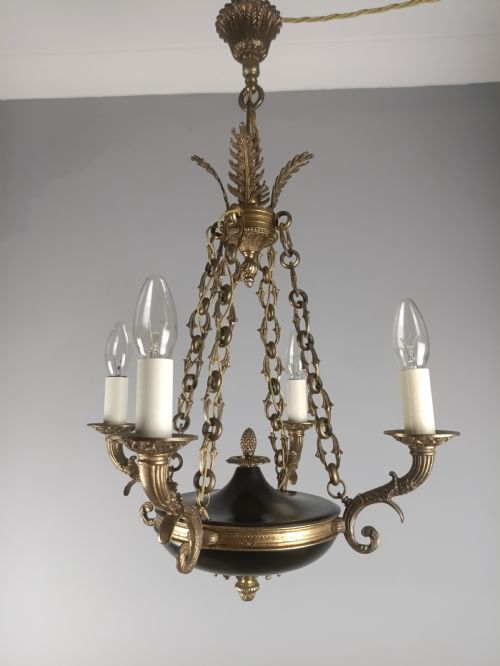
A vintage empire pendant fixture takes the form of a formal chandelier or ceiling light, most frequently seen here in French styles spanning from the late nineteenth century through to the nineteen-thirties. These pieces typically present a structured silhouette composed of an upper tent leading down to a cascading waterfall of crystals or a lower basket.
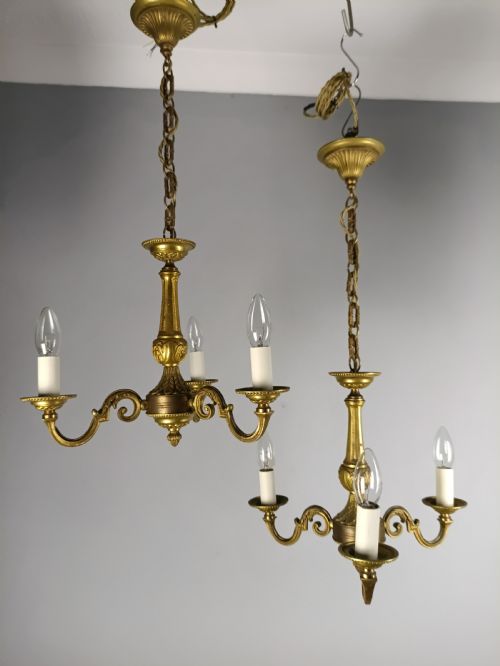
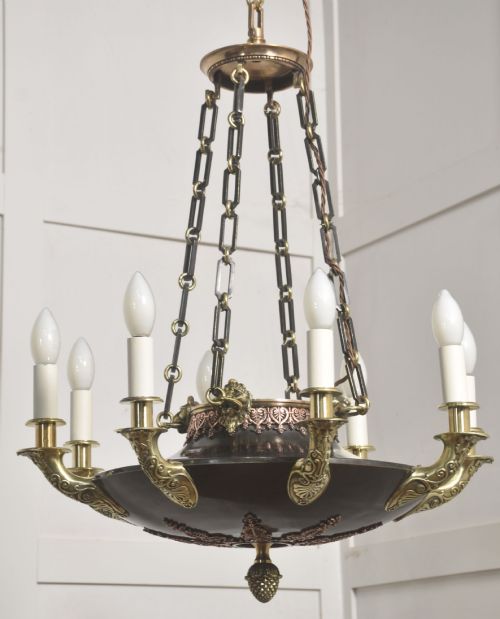
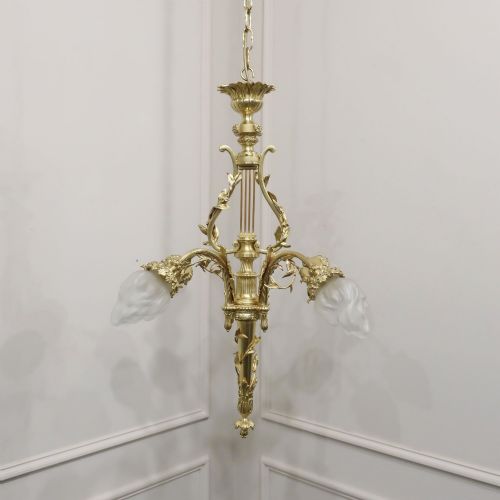
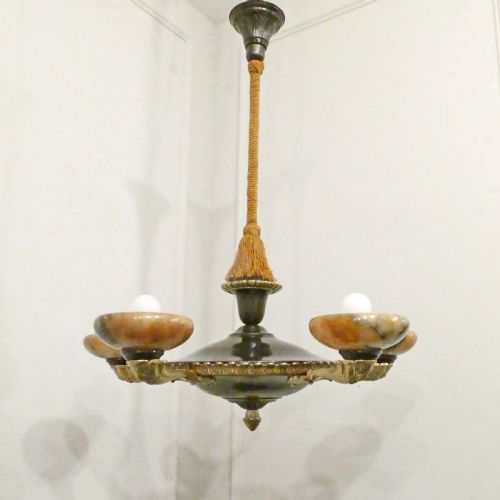
The selection ranges from substantial multi-light chandeliers featuring up to sixteen arms down to compact single-light lanterns and basket fixtures. Designs draw heavily on French Neoclassical, Empire Revival, and Art Deco traditions, often incorporating decorative elements such as leaf motifs or rams heads.
Materials and construction methods
Makers constructed the structural frames of these fixtures using durable metals including brass, bronze, gilt bronze, copper, and silver plating. These metal armatures support intricate arrangements of glass, cut glass, and crystal prisms.
Craftsmen assembled the transparent elements into cascading tents, waterfalls, and bags using fine wire to link individual glass drops and crystal beads together securely.
Vintage Empire Pendant Fixture Retail Price Guide 2026
Typical asking prices for vintage empire pendant fixture among the pieces listed under this phrase on Sellingantiques today, from the lower quarter to the upper quarter. They describe what is for sale here now, not the wider market.
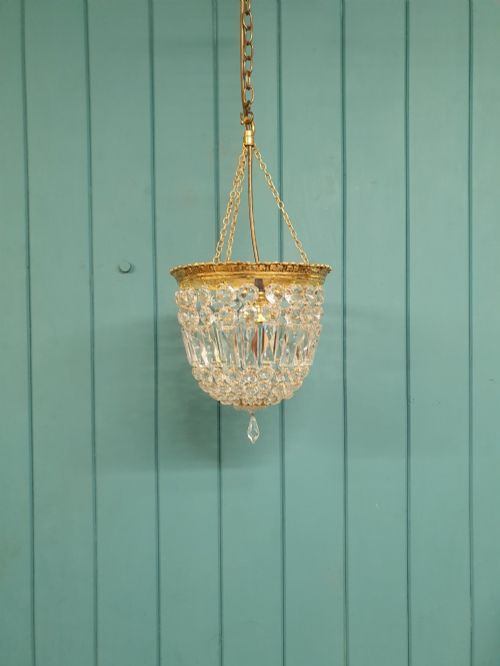
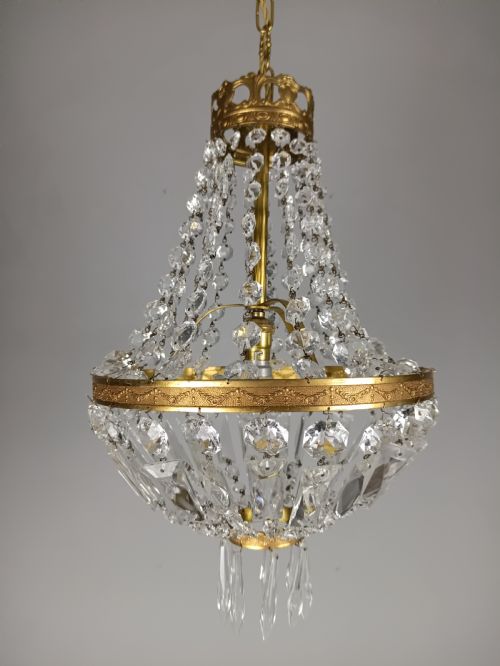
One tiny eight-inch prison bag chandelier manages to pack an immense amount of sparkle into a surprisingly compact footprint.
Judging the quality of these chandeliers
Quality in a vintage empire pendant fixture rests on the richness of the metalwork and the clarity of the glass. Heavier bronze or gilt bronze castings with crisp detailing mark out superior examples.
The density and cut of the crystal components also dictate the standard of the piece, with deeply cut glass prisms producing sharper refraction and a more brilliant presence than plain pressed glass.
The Vintage Empire Pendant Fixture Glossary
- Tent and waterfall
- A classic chandelier configuration featuring an upper conical section of strings of beads above a wider, cascading lower section of crystal drops. This arrangement maximises light reflection.
- Bag chandelier
- A lighting form characterised by a flattened or rounded lower bag of glass crystals suspended beneath a metal frame. It creates a dense cluster of sparkling glass.
- Gilt bronze
- Metalwork coated with a thin layer of gold using traditional fire-gilding or ormolu techniques. This finish imparts a warm, enduring golden lustre to the bronze frame.
- Prism
- A cut glass or crystal pendant designed to refract light into spectral colours. These elements hang from the arms and rings of the fixture.
- Neoclassical
- A style rooted in the classical antiquity of Greece and Rome, favouring symmetry, restraint, and formal ornament. It strongly influences nineteenth-century French lighting design.
Vintage Empire Pendant Fixture: Frequently Asked Questions
How do I clean a crystal chandelier?
Maintenance requires gentle cleaning with a mild soapy solution applied by hand to each individual crystal prism and glass bead. Technicians remove the components only when necessary, supporting the delicate wire links.
Harsh chemical sprays damage the surrounding metal frames and strip the gilt finishes. Regular dusting keeps the glass bright between deeper cleans.
Are these fixtures suitable for modern ceilings?
These lights adapt well to contemporary interiors when hung at the correct height over dining tables or in hallways. Their classical proportions provide a striking focal point against plain modern plaster.
Professional electricians easily adjust the drop and update the internal wiring to meet current safety standards without altering the antique exterior.
How do I identify an Empire style light?
Key indicators include symmetrical tent-and-waterfall crystal configurations, classical bronze mounts, and geometric neoclassical forms. The silhouette tapers toward the top like a crown before flaring outwards.
Many examples incorporate specific decorative motifs such as acanthus leaves, urns, or rams heads derived from ancient architecture.
What is the difference between brass and bronze?
Bronze is an alloy of copper and tin offering a heavier weight and a darker, richer natural tone that patinates richly over time. Brass contains copper and zinc, yielding a brighter, more golden metallic appearance.
Both metals serve as robust structural frames for hanging heavy crystal arrangements.