



Vintage Embroidered Sampler
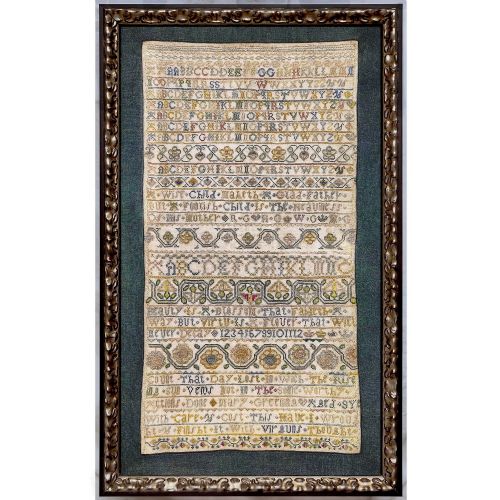
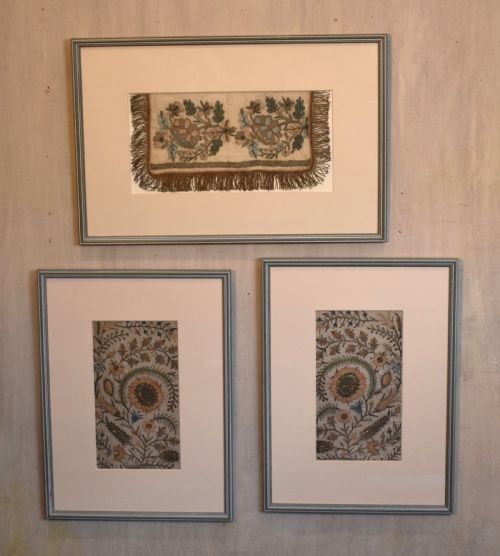
These vintage embroidered sampler pieces are hand-worked textile panels that record stitches, alphabets and family trees, bringing centuries of domestic patience into a modern room.
Vintage Embroidered Sampler
A vintage embroidered sampler is a piece of textile art created by needleworkers to practise stitches, alphabets, numbers and motifs. The selection spans the 18th century, the 19th century, the Victorian period, the Georgian era, the Regency period and the 1930s, showing how needlework evolved from schoolroom exercises into framed wall art.
The forms on this page range from traditional alphabet samplers and band samplers to map samplers, needlework pictures and even a needlework sampler firescreen. Many examples preserve the names, ages and locations of their young makers, such as Mary Greening, Ann Hodson, Margaret Ann Blackow, Mary Mason, Mary Street, Rachel, and Emma and Hannah Barnes.
Makers utilised various linen grounds and frames of wood or gilt wood, frequently protected behind glass. Whether you encounter a folky stitched sampler from the 1930s or a Georgian schoolroom piece, each item carries the precise hand of its maker across generations.
What varies in quality
The quality of a sampler rests on the regularity and complexity of the stitching, the survival of the original ground linen, and the clarity of the design. Pieces that retain legible names, dates and secure framing offer a clearer historical record.
The visual appeal depends on the variety of stitches employed, the preservation of colour in the wool and silk thread, and the integrity of the wood or gilt wood frame. Simpler folk art pieces display charm through their rustic execution, whilst schoolroom examples often showcase precise alphabets and pictorial elements.
Vintage Embroidered Sampler Retail Price Guide 2026
Typical asking prices for vintage embroidered sampler among the pieces listed under this phrase on Sellingantiques today, from the lower quarter to the upper quarter. They describe what is for sale here now, not the wider market.
Materials recorded across these listings include linen, glass, wood, wool, silk, silk thread, thread and gilt wood.
The Vintage Embroidered Sampler Glossary
- Band sampler
- A long, narrow textile panel featuring horizontal rows or bands of disparate embroidery stitches and pattern motifs. This format developed in the seventeenth century before square and pictorial formats became common.
- Alphabet sampler
- A needlework piece dominated by rows of letters in various scripts, used to teach literacy alongside sewing skills. Young makers often added numbers and simple borders beneath the text.
- Map sampler
- A geographical embroidery depicting a county, country or continent, popular in Georgian and Victorian schools to test geography and needlework simultaneously. These pieces frequently outline borders and important towns in coloured thread.
- Needlework picture
- A pictorial textile panel designed primarily for display rather than as a stitch reference. These works portray figures, buildings, animals or pastoral scenes.
- Gilt wood
- Wood coated with a thin layer of gold leaf or gilt paint, commonly found on frames housing 18th century and 19th century samplers. This finish provides a bright border that complements the textile inside.
Vintage Embroidered Sampler: Frequently Asked Questions
What is a vintage embroidered sampler?
A vintage embroidered sampler is a textile panel stitched by hand to practice or display needlework skills, alphabets and motifs.
They often include the maker's name, age and date, serving as historical records of domestic education and art.
How were samplers displayed?
Many samplers were framed behind glass in wood or gilt wood to protect the delicate linen and threads from dust and light.
Some functional items, such as the needlework sampler firescreen, integrated the textile directly into household furniture.
How do I date a sampler?
Makers frequently stitched their names, ages and specific dates directly into the linen ground, as seen in pieces by makers from the 18th century through the Victorian era.
Stylistic markers, such as alphabet layouts, framing materials and the type of linen, also help determine the period.
What materials are used in samplers?
Traditional samplers use a woven linen foundation worked with threads made of wool, silk or plain thread.
The completed needlework is then typically mounted in a wood or gilt wood frame, often secured behind glass.