

Vintage Elm Seating
Vintage elm seating brings tactile honesty to an interior through robust vernacular timbers and time-worn saddle seats.
Vintage Elm Seating
Vintage elm seating encompasses utilitarian stools, kitchen dining chairs, and robust armchairs shaped by regional makers across the eighteenth, nineteenth, and early twentieth centuries. These pieces emerge from domestic farmhouse kitchens, provincial taverns, and workshops where durability dictated design.
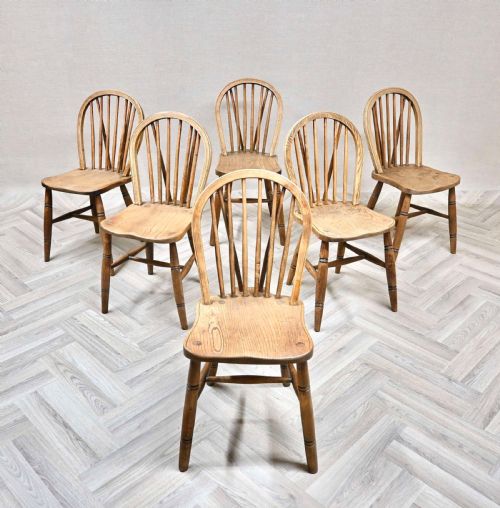
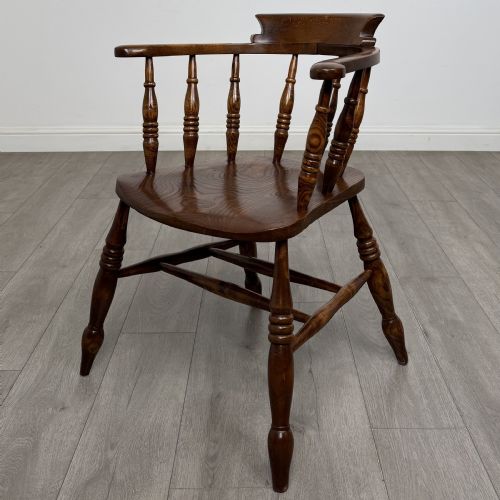
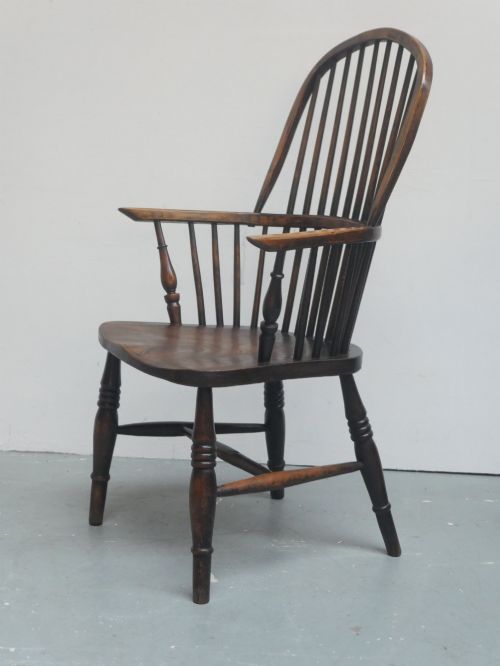
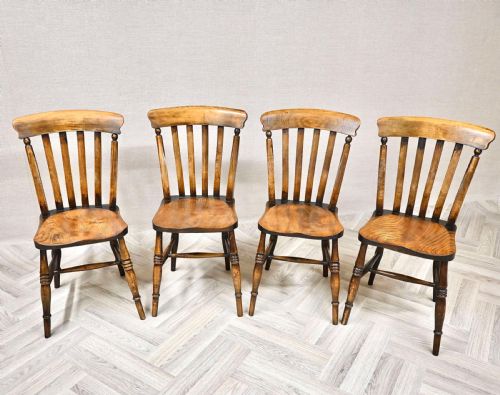
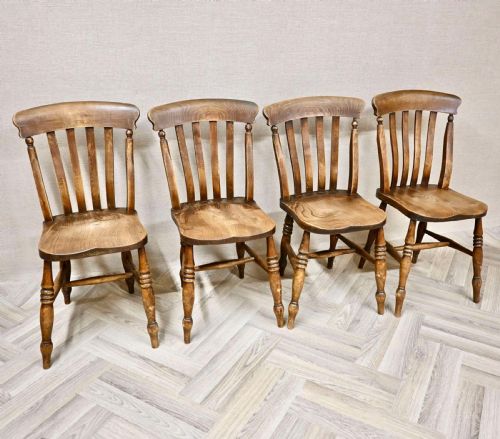
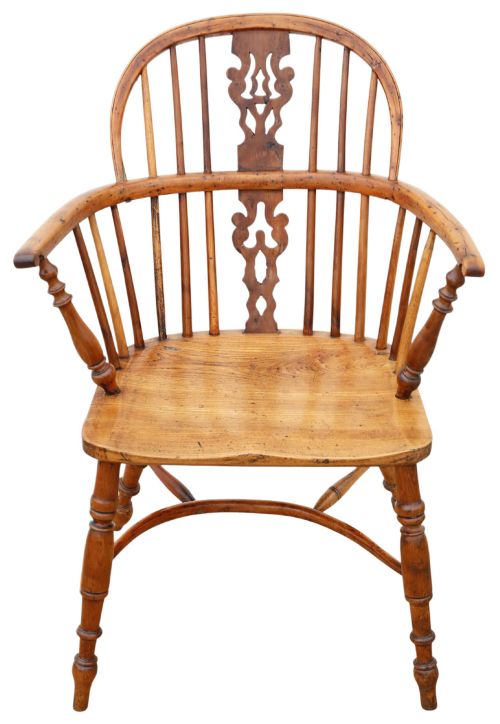
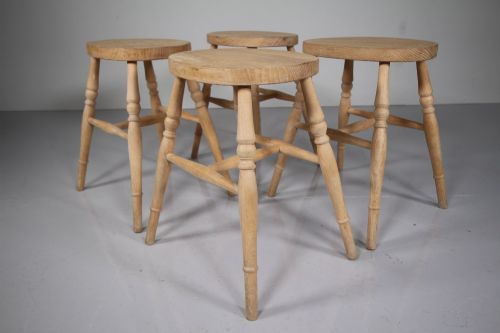
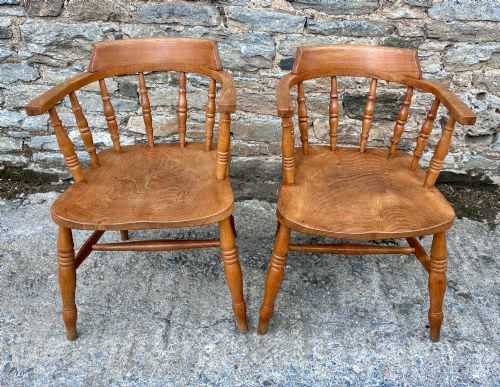
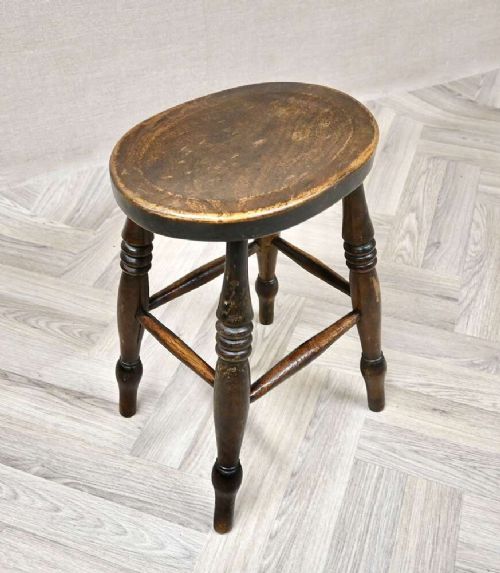
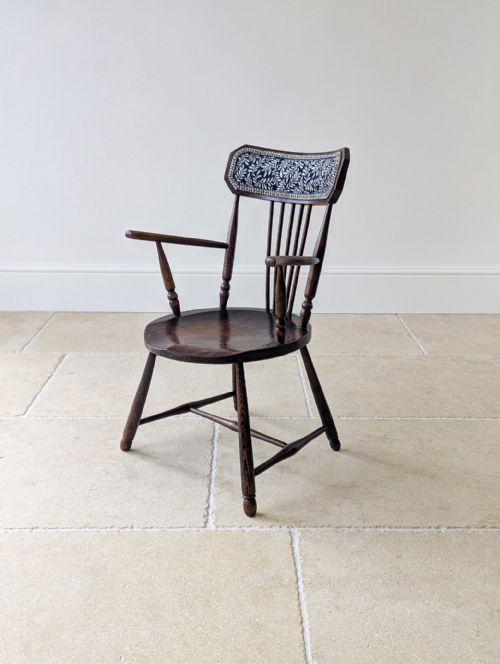
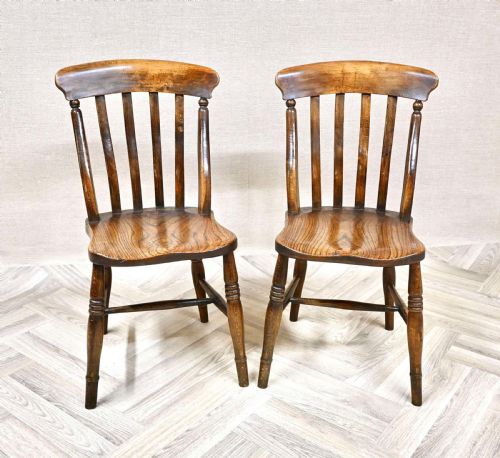
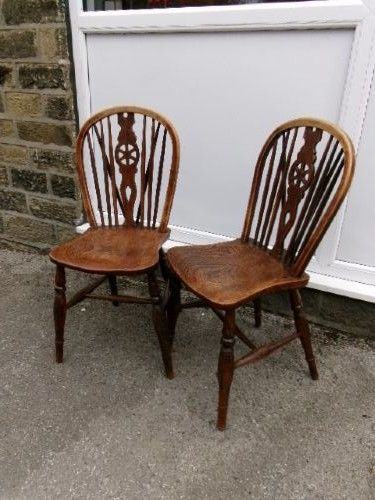
The version most commonly met on this page is the Windsor chair, featuring a solid saddle-shaped elm seat fitted with spindles and bentwood hoops. Alongside these sit low stools and Captains chairs, often paired with contrasting timbers like beech or ash.
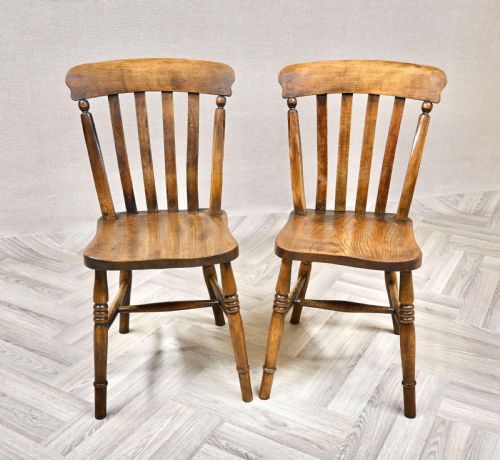
Geographic variation surfaces in regional details such as High Wycombe production, Gothic motifs, or crinoline stretchers. Buyers encounter everything from single vernacular armchairs to matched sets intended for farmhouse dining tables.
Materials and Construction
Makers utilised elm for its interlocking grain and resistance to splitting, making it the primary choice for solid saddle seats. This dense timber pairs with ash and beech for turned spindles, legs, and steam-bent bows.
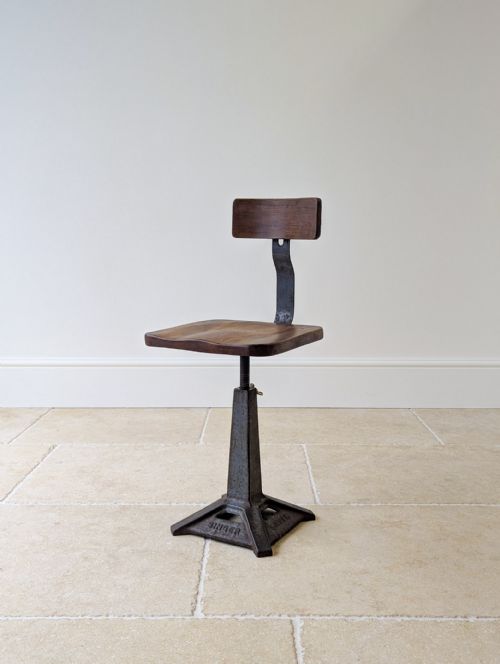
Joinery relies on traditional wedged tenons and mortise joints that allow timber to move naturally over decades of use. Iron framing appears in industrial machinist chairs and garden benches, combining cast metal bases with carved wooden tops.
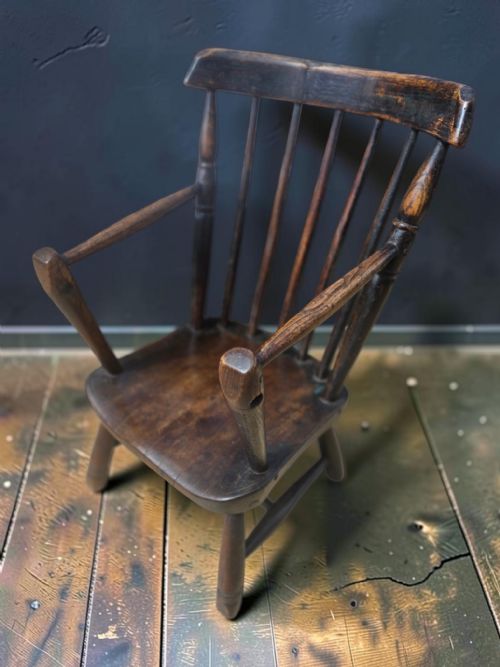
Many nineteenth-century children's armchairs survive in exact miniature, built with the same solid elm saddle seats as adult versions.
Distinctions in Execution
Quality rests in the depth and sculpting of the solid elm seat, where superior examples exhibit a deep, comfortable dish shaped by adze and scorper. Lesser pieces feature flat, thin boards lacking ergonomic contour.
The integrity of the turned components and the crispness of spindle details differentiate workshop standards. Original surface patination, such as unstripped waxed finishes, elevates an example above stripped or heavily restored timber.
The Vintage Elm Seating Glossary
- Windsor chair
- A chair built with a solid wooden seat into which the legs and back spindles are directly inserted. This construction distributes weight effectively and provides sturdy provincial support.
- Crindoline stretcher
- A bentwood horseshoe-shaped stretcher connecting the legs of a chair to provide lateral stability. It takes its name from the shape of nineteenth-century fashion hoops.
- Vernacular
- Objects made by local craftsmen following regional traditions rather than formal academic styles. These pieces prioritise functional utility over metropolitan fashion.
- Saddle seat
- A wooden seat scooped and carved to resemble the contours of an equestrian saddle. This shaping improves comfort on solid timber chairs.
Vintage Elm Seating: Frequently Asked Questions
How do I care for vintage elm chairs?
Feed the dry timber periodically with traditional beeswax to maintain the natural lustre and protect the grain from splitting in heated rooms.
Avoid placing these chairs directly beside radiators or in damp environments, as extreme temperature shifts cause the historic wood to warp.
Are these chairs suitable for daily dining?
Most nineteenth-century kitchen and Windsor chairs were built for heavy domestic service and remain entirely sturdy for everyday meals.
Check that the leg joints and wedged spindles remain tight before putting frequent weight onto antique seating.
What is a Captains chair?
A Captains chair is a low-backed Windsor armchair featuring a continuous curved arm rail that wraps around the occupant. They gained popularity in offices and taverns for their compact proportions and supportive backrests.
On this page, they frequently appear alongside kitchen and farmhouse dining groups.
How do I distinguish regional Windsor styles?
Regional attribution relies on timber combinations and turning profiles, such as the distinctive comb backs or High Wycombe production markers. Makers utilised local woods like beech, ash, and elm depending on regional availability.
Wheelback and lyreback splats offer further clues to the specific manufacturing district and decade of origin.