


Vintage Elm Chairs
Vintage elm chairs bring robust rustic character and honest timber grain into a room, spanning Windsor forms, country kitchen seating, and sturdy desk chairs.
Vintage Elm Chairs
Vintage elm chairs encompass a diverse selection of traditional seating primarily built for utilitarian strength in homes and workspaces. When searching for vintage elm chairs, buyers encounter everything from modest kitchen dining seats to expansive Windsor armchairs and heavy office furniture.
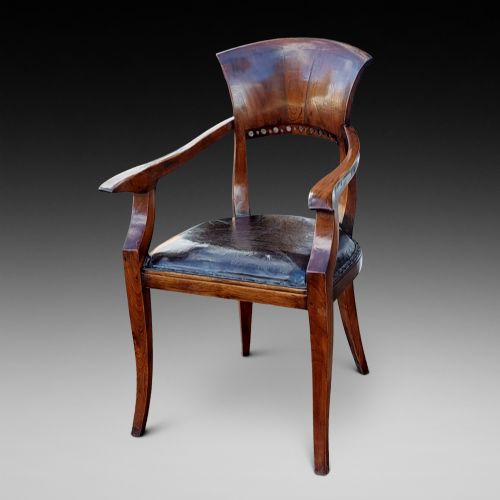
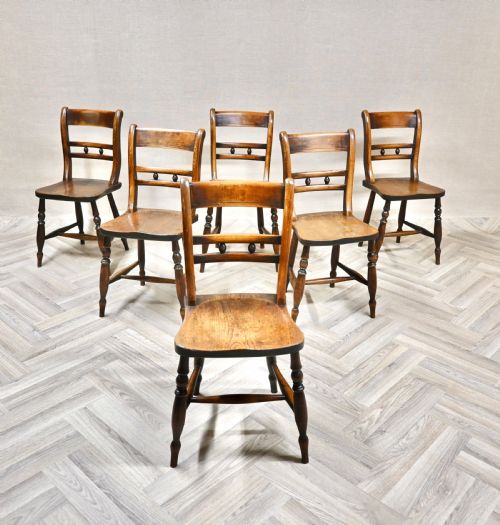
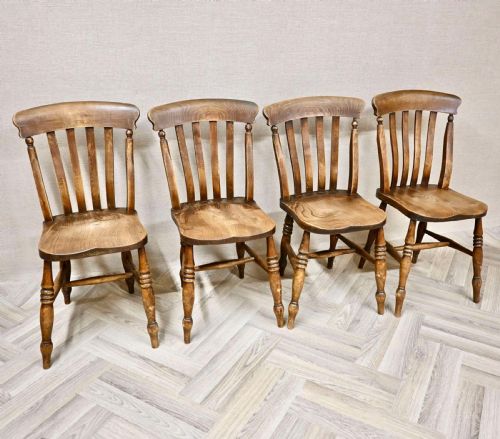
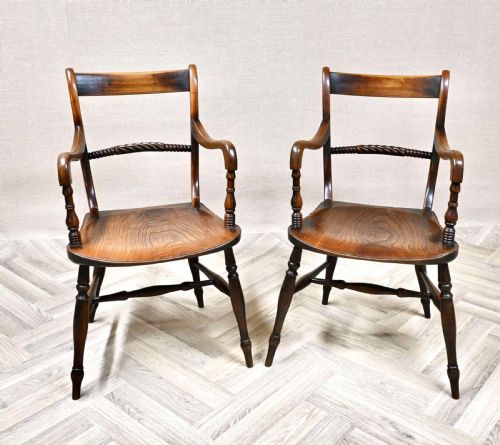
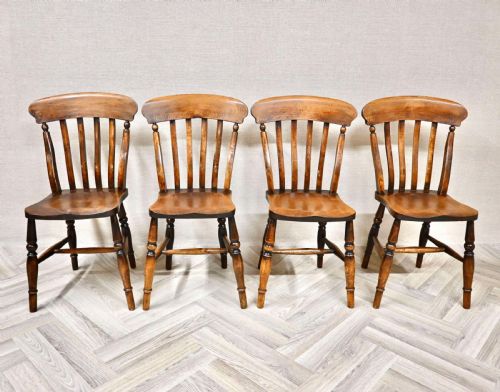
The inventory on this page leans heavily toward 19th-century and Victorian country vernacular pieces, alongside early 20th-century workshop examples. Forms range widely from simple stick-back kitchen chairs to low children's seating, industrial machinist seats, and French country desks.
Makers frequently combined elm with supporting timbers like beech, ash, and oak to construct durable frames that survived generations of daily use. Whether single carvers or matched sets of six, these chairs showcase regional British, French, and Swedish domestic craftsmanship.
How they were made
Makers relied on solid elm for shaped seats because its interlocking grain resisted splitting under heavy pressure. This characteristic timber is frequently paired with ash or beech for turned spindles, legs, and bowed backs.
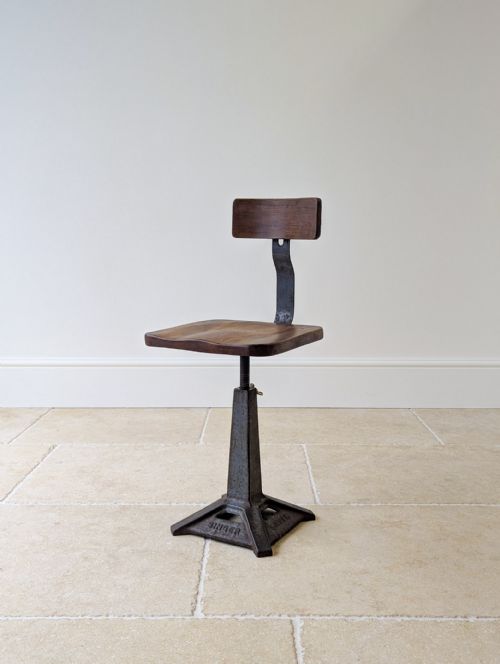
Construction techniques combine traditional woodturning with steam-bending to create continuous hoop and lath backs. Metal components appear on industrial and garden variants, utilising cast iron bases and frames alongside timber seats.
Listings feature elm alongside secondary timbers including beech, ash, oak, and yew wood across various 19th and 20th-century periods.
What varies in quality
Quality rests in the proportional balance of the turned components and the depth of the figuring in the seat timber. Superior examples exhibit crisply carved saddle seats and well-matched turning across spindles and legs.
The integrity of the structural joints and the subtlety of the steam-bent wood distinguish finer vernacular pieces from standard utilitarian seating. Wear and patination reflect decades of honest use without compromising the underlying rigidity of the frame.
The Vintage Elm Chairs Glossary
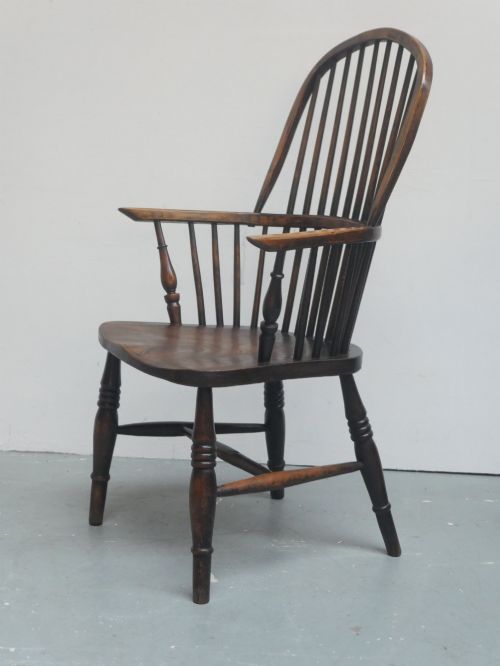
- Windsor
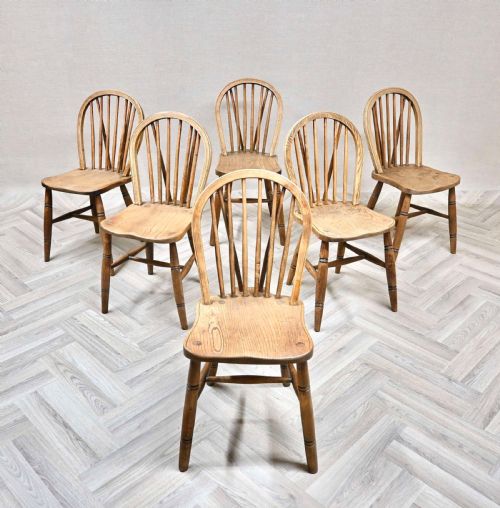
- A traditional chair construction featuring a solid wooden seat into which the legs and back spindles are directly fitted. These seats often incorporate a steam-bent bow or hoop back.
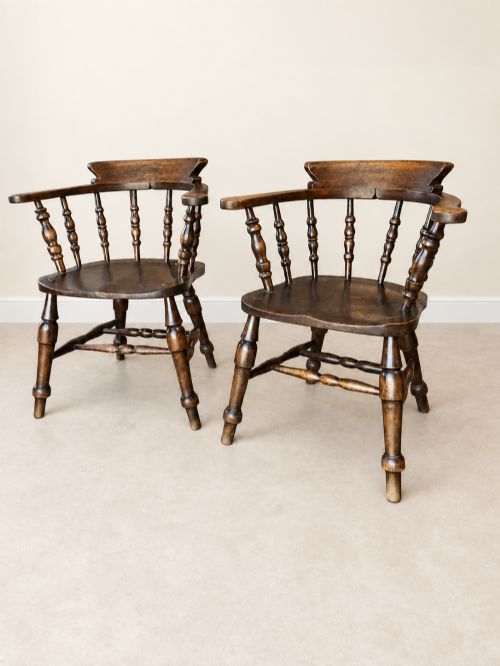
- Smokers Bow
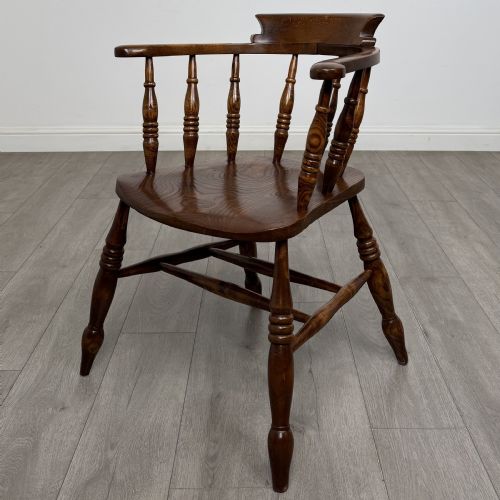
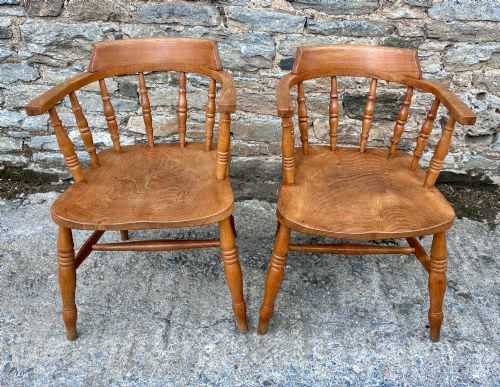
- A low-backed Windsor armchair designed for comfort, typically featuring a continuous curved arm rail supported by turned spindles. They appear frequently in 19th-century domestic settings.
- Vernacular
- Objects built by local artisans following regional traditions rather than formal academic design patterns. These pieces prioritise functional utility and local material availability.
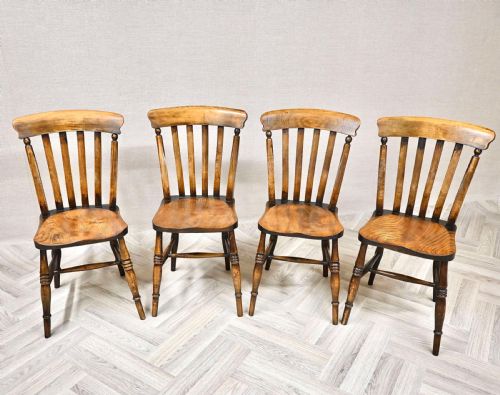
- Lathback
- A chair back style incorporating flat vertical wooden slats or laths framed within a curved wooden bow. This design provides robust support while maintaining a lighter visual profile than solid panel backs.
- Spindle
- A slender, turned wooden rod used structurally to support chair arms and backs. Skilled turners created subtle variations in profile that help date and localise individual pieces.
Vintage Elm Chairs: Frequently Asked Questions
What periods do these chairs come from?
The selection spans from the late Georgian era through the Victorian period and into the early 20th century. Most examples date from the 19th century and the Edwardian decades.
Industrial and modernist interpretations stretch slightly later into the mid-20th century. The variety reflects continuous domestic and commercial production across British and European workshops.
How do I care for elm timber?
Keep elm furniture away from direct heat sources and rapid humidity fluctuations to prevent timber movement. Regular dusting and occasional application of appropriate wax maintain the surface condition.
Avoid excessive liquid exposure on the unpolished undersides of the seats. Gentle maintenance preserves the natural patination built up over decades of use.
Were elm chairs used in kitchens?
Elm served as a primary material for heavy-duty kitchen and farmhouse seating due to its resistance to splitting. Many listings feature sets of dining or kitchen chairs designed for daily domestic service.
The tough timber seat endured constant movement around farmhouse tables. Windsor and stick-back formats predominated in these utilitarian spaces.
How can I tell different regional styles apart?
Regional variations show in the turning styles of legs and spindles, along with the shaping of the wooden seats. Thames Valley and high Wycombe pieces often display refined vernacular turning and generous proportions.
Other regional centres developed distinct comb backs or wheel backs. Comparing the combination of primary elm seats with secondary woods like beech or ash helps indicate origin.