




Vintage Ecclesiastical Art
Vintage ecclesiastical art gathers devotional objects, furnishings, and paintings from centuries of worship, offering a direct tangible link to historic sacred spaces.
Vintage Ecclesiastical Art
Vintage ecclesiastical art encompasses devotional objects, liturgical furnishings, and sacred paintings created for worship and religious communities. When you explore vintage ecclesiastical art, you encounter everything from processional mannequins and collection boxes to altar tables, religious statues, and church seating.
The pieces available span from the seventeenth century through the Edwardian era and the 1930s, reflecting centuries of devotion. Most examples stem from the nineteenth century, capturing the intense revival of Gothic and religious aesthetics during that period.
Origins vary widely across European traditions, featuring British craftsmanship alongside Italian, French, and Spanish pieces. Functional items like book stands and lecterns share space with expressive oil portraits, polychrome angels, and hand-carved wooden figures.
Judging Quality in Sacred Pieces
Quality rests in the depth of hand-carving and the expressiveness of painted or sculpted figures. Master carvers imparted distinct emotion to statues of saints and angels, while lesser pieces rely on mechanical repetition or flat execution.
The integrity of original surface treatments, such as polychrome paint and gold leaf, defines the visual power of an object. Pieces retaining their genuine historical patination stand apart from those altered by modern interventions.
Vintage Ecclesiastical Art Retail Price Guide 2026
Typical asking prices for vintage ecclesiastical art among the pieces listed under this phrase on Sellingantiques today, from the lower quarter to the upper quarter. They describe what is for sale here now, not the wider market.
A solitary 1939 coffin-shaped collection box waits quietly to gather your loose change.
Ernst Stierhof·Henri Charles Angéniol·Rouillard Angers
The Vintage Ecclesiastical Art Glossary
- Polychrome
- Painted in several colours. This technique brings depth and realism to carved wooden statues and angels.
- Gothic Revival
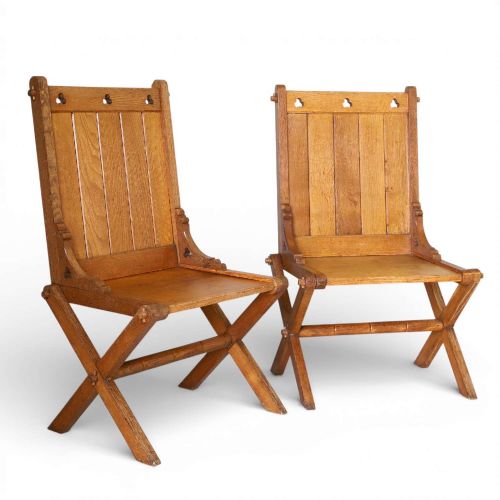
- An architectural and decorative style drawing on medieval forms. You see this in pointed arches, trefoil details, and heavy oak furniture.
- Lectern
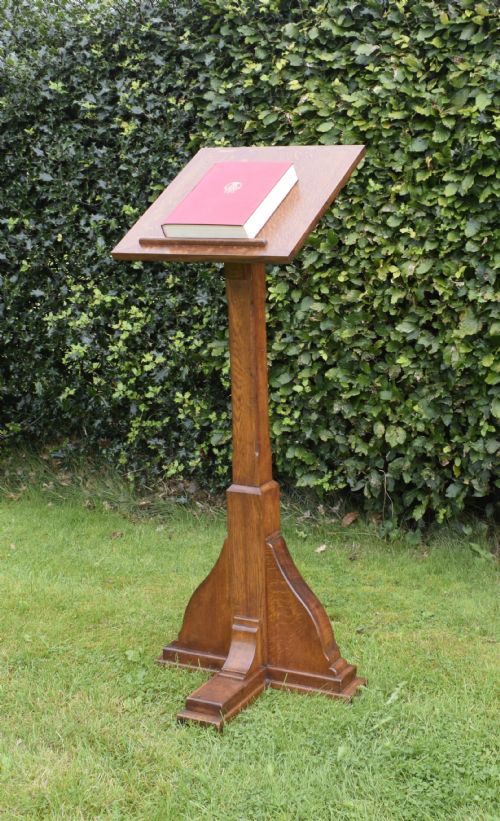
- A tall stand with a sloping top to hold a book for reading aloud. Churches utilise these carved wooden stands for scripture readings.
- Processional mannequin
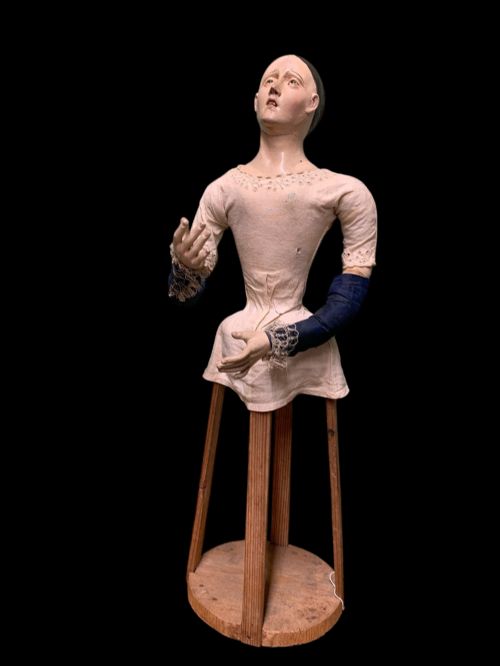
- A large figure dressed in textiles for religious processions. These life-size pieces carry considerable presence.
- Lithograph
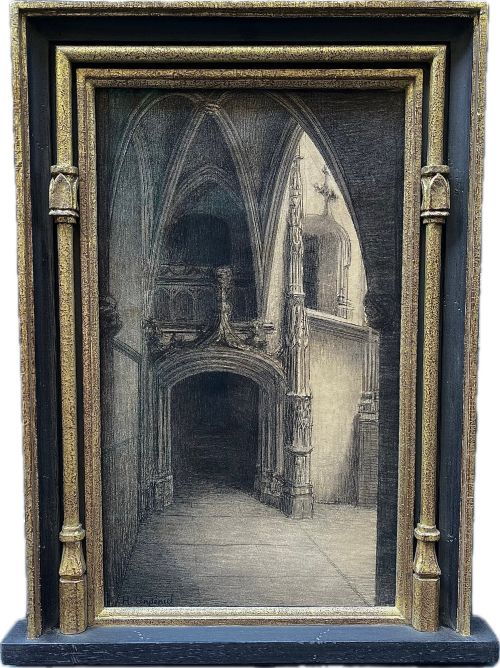
- A print produced from a flat stone or metal plate. Nineteenth-century examples often record the detailed interiors of historic churches.
Vintage Ecclesiastical Art: Frequently Asked Questions
Where do religious statues usually originate?
Religious statues typically emerged from European workshops, convents, and artisan studios dedicated to sacred production.
Countries like Italy, France, and Spain produced distinctive carved wooden figures and polychrome angels for altars and processions.
How do you display a collection box?
Collection boxes look striking mounted on a wall or placed securely on a sturdy side table.
Their folk art construction and historic dates make them compelling standalone sculptural objects in domestic interiors.
What defines Gothic Revival furniture?
Gothic Revival furniture borrows heavily from medieval ecclesiastical architecture through pointed arches and geometric tracery.
Pieces like Glastonbury chairs utilise solid oak and carved trefoil details to evoke medieval craftsmanship.