

Vintage Drop Leaf
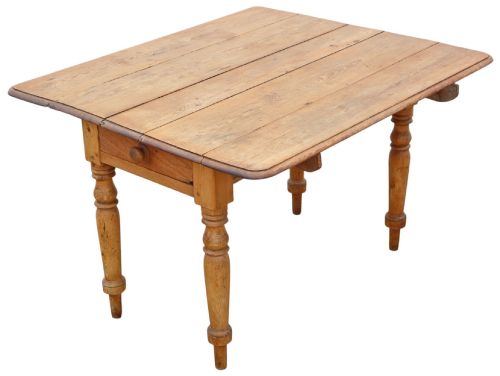
These vintage drop leaf tables and occasional pieces offer folding timber flaps that expand surface space when needed and fold flat for compact rooms.
Vintage Drop Leaf
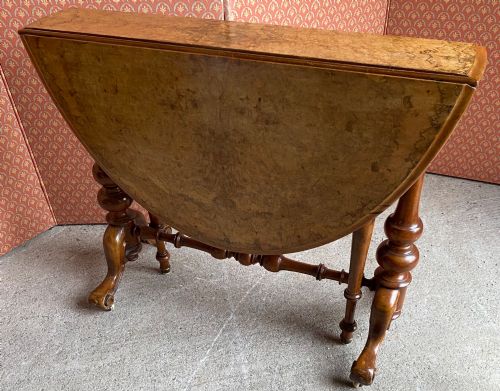
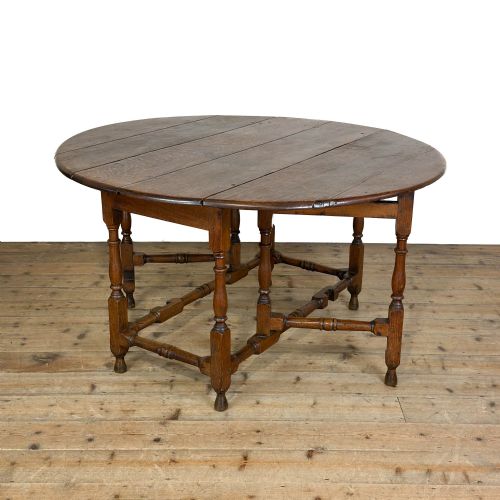
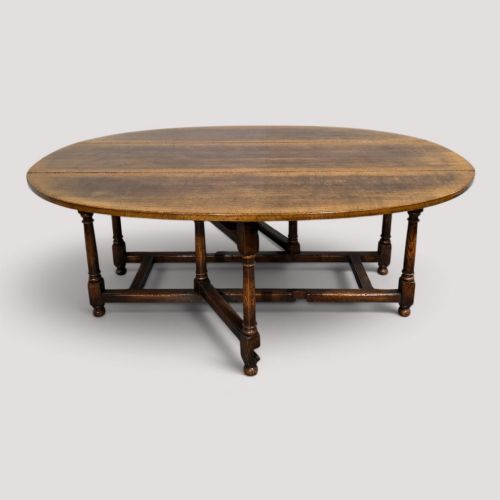
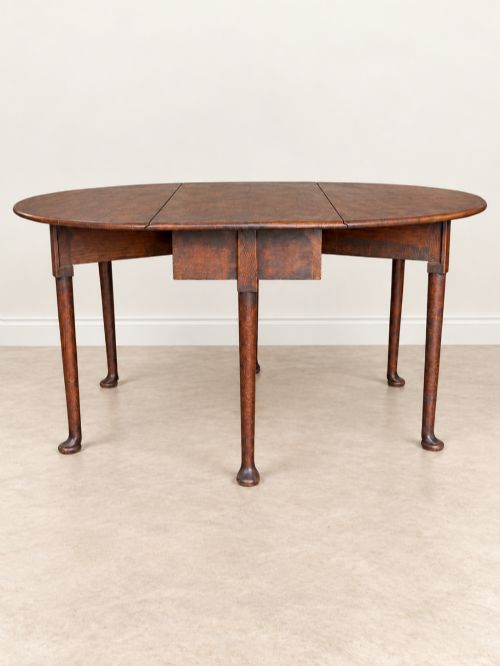
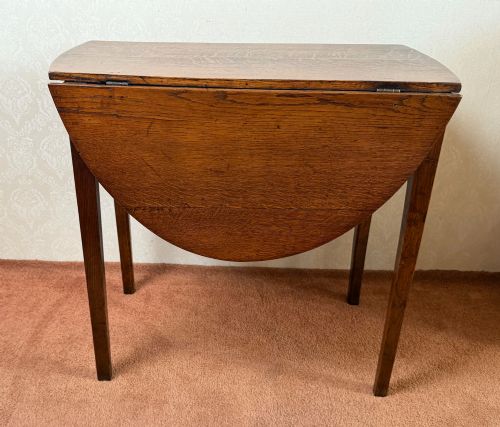
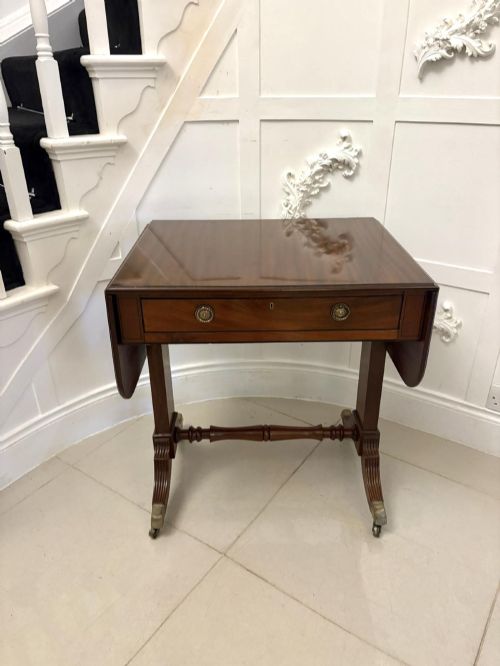
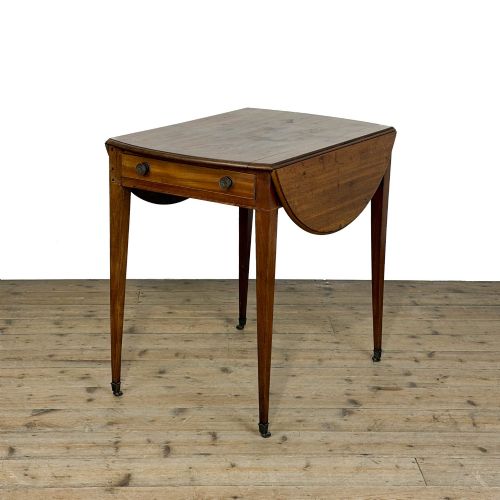
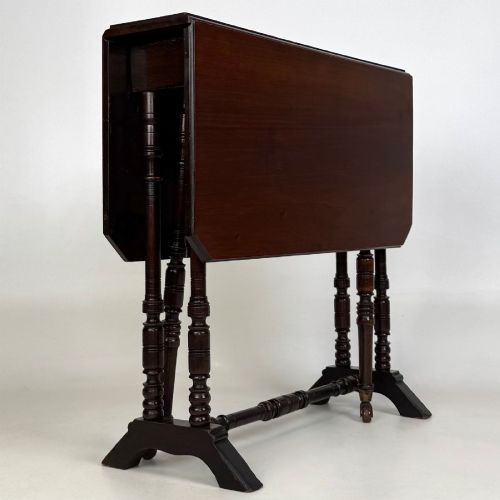
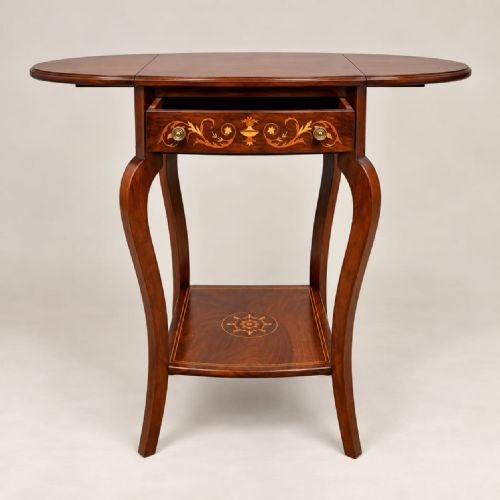
When you search for vintage drop leaf, you encounter versatile wooden tables and occasional items designed with hinged flaps supported by swing legs or gates. The selections span compact Sutherland tables, Pembroke tables with smaller side leaves, and robust oak gateleg dining tables from various historical periods.
You meet oak and mahogany examples most frequently on this page, originating from the eighteenth, nineteenth, and early twentieth centuries. These tables serve daily utility in dining rooms, living areas, and hallways by adapting their footprint to the available space.
How they were made
Cabinet makers utilised dense hardwoods such as oak, mahogany, walnut, and burr walnut, selecting timber with figured grains for prominent surfaces. Structural stability relied on pegged joints, clever pivoting gatelegs, and brass hinges that allowed the drop leaves to hang securely.
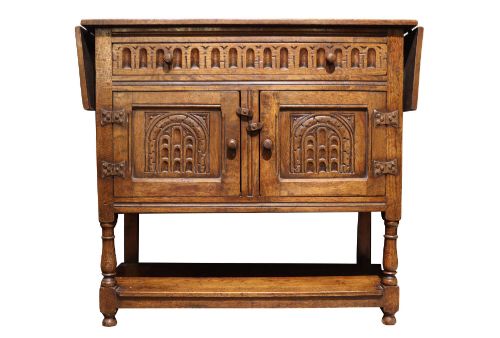
Surface decoration involved hand-carving, barley twist turnings, and subtle inlay work rather than heavy applied ornamentation. Finishes were applied to bring out the natural warmth of the grain while protecting the timber from daily wear.
Vintage Drop Leaf Retail Price Guide 2026
Typical asking prices for vintage drop leaf among the pieces listed under this phrase on Sellingantiques today, from the lower quarter to the upper quarter. They describe what is for sale here now, not the wider market.
Listings feature oak, mahogany, walnut, and burr walnut timbers across forms including Pembroke tables, Sutherland tables, and gateleg dining tables.
What varies in quality
The standard of a piece depends heavily on the selection of timber and the tightness of the joinery where the flaps meet the main top. Superior items display matching grain patterns across the leaves and fixed centre sections, showing deliberate planning by the maker.
Mechanism fluidity separates finer examples from utilitarian ones, with high-grade gatelegs moving smoothly on original brass or wooden pivots without sagging. The crispness of carved details and the retention of original brass hardware further distinguish the finer pieces.
The Vintage Drop Leaf Glossary
- Gateleg table
- A table with hinged leaves supported by swing legs that pull out like a gate to hold the flaps. This design provides sturdy support for large dining surfaces.
- Sutherland table
- A narrow occasional table featuring particularly slender drop leaves and thin gatelegs. It folds down into a remarkably compact profile.
- Pembroke table
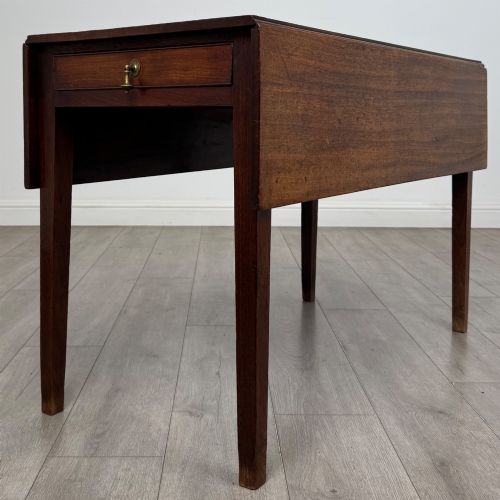
- A small rectangular table equipped with two short drop leaves on opposite sides and often a single drawer. It originated in the eighteenth century for breakfast or writing use.
- Barley twist
- A carved spiral column resembling twisted barley sugar used for table legs and supports. This decorative turning style appears frequently on Jacobean Revival and oak pieces.
Vintage Drop Leaf: Frequently Asked Questions
How do drop leaf tables work?
Drop leaf tables use hinged wooden flaps attached to a fixed centre surface. Swing legs or pivoting gates pull out from beneath the frame to support the extended leaves.
When extra space is not required, the supports fold inward and the leaves drop down against the sides. This mechanism allows a large table to occupy minimal floor space.
Where should I put a Sutherland table?
Sutherland tables suit narrow spaces such as hallways, landings, or behind sofas due to their exceptionally slim profile when folded. Their delicate proportions make them ideal as occasional tea tables.
Opening one leaf allows the table to sit flat against a wall, functioning as a console until surface area is needed.
How do I identify oak gateleg tables?
Oak gateleg tables feature prominent grain patterns, sturdy timber construction, and multiple turned legs connected by stretchers. Two of these legs swing outward on wooden pivots to hold up the folding flaps.
Earlier examples often display hand-turned barley twist supports and pegged joints rather than modern metal fixings.
Can I use a Pembroke table for dining?
Pembroke tables suit light meals, writing, or serving tea rather than formal dining due to their petite proportions. Their folding side leaves provide intermittent surface extension for smaller rooms.
Many incorporate a small drawer underneath for storing writing materials or cutlery.