



Vintage Drinks Cooler
These vintage drinks cooler pieces are timber and metal vessels designed to chill wine, built to last and ready to use.
Vintage Drinks Cooler
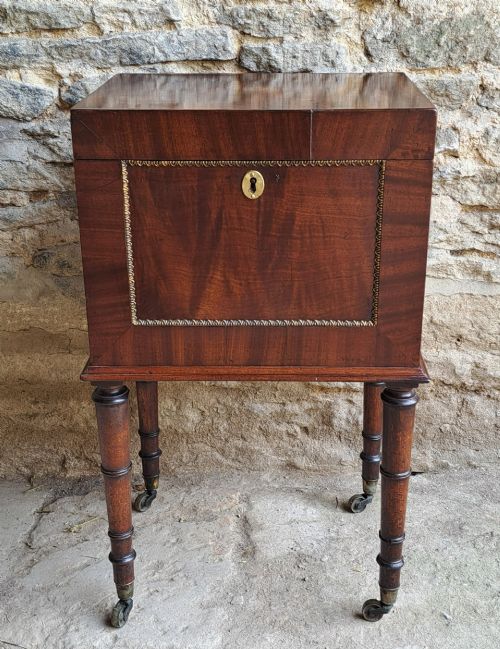
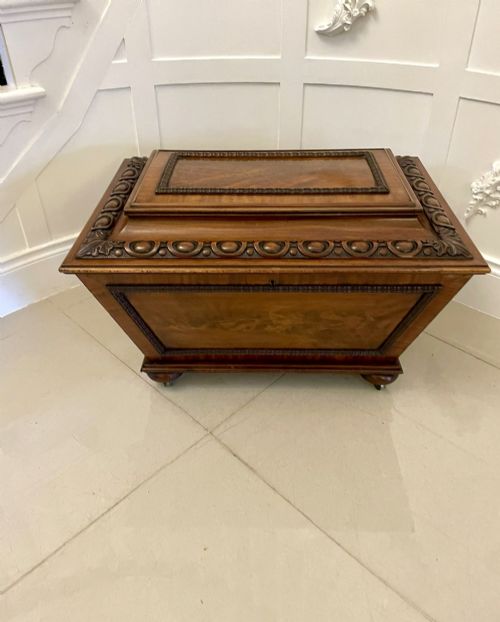
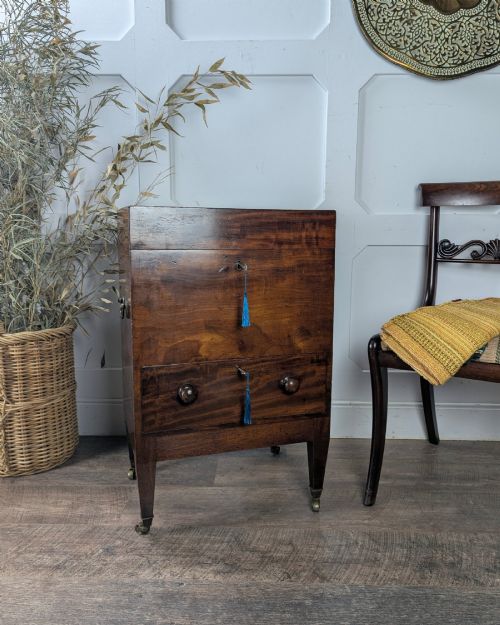
A vintage drinks cooler encompasses cellarettes, ice buckets, and wine coolers intended to keep bottles at table temperature or chilled with ice during dining. These forms appear predominantly in mahogany, often paired with brass fittings, oak framing, and silver plate.
The pieces on this page span the eighteenth, nineteenth, and early twentieth centuries, covering Georgian, Regency, Victorian, and Edwardian eras. Buyers encounter cellarettes in oval, rectangular, and sarcophagus shapes alongside oak ice buckets fitted with ceramic creamware liners.
Makers and cabinetmakers from the Georgian revival through to Edwardian periods constructed these vessels using hardwoods like satinwood and rosewood, applying boxwood inlay and banded details to formal dining room furniture.
How they were made
Cabinetmakers constructed the main bodies of these coolers using solid timbers and veneers of mahogany, oak, satinwood, and rosewood. Sections often feature boxwood inlay and satinwood banding to create contrasting geometric borders.
Metal components such as brass bands, mounts, handles, and silver plate provide structural reinforcement and decorative contrast against the dark wood. Certain ice buckets integrate interior ceramic creamware liners to hold water and ice directly.
Vintage Drinks Cooler Retail Price Guide 2026
Typical asking prices for vintage drinks cooler among the pieces listed under this phrase on Sellingantiques today, from the lower quarter to the upper quarter. They describe what is for sale here now, not the wider market.
Some Edwardian ice buckets hide ceramic creamware liners inside oak staves, ready to keep dinner party champagne properly chilled.
What varies in quality
The selection of timber grain and the precision of boxwood inlay separate standard utility pieces from finer cabinetwork. Superior examples display carefully matched flame mahogany veneers and crisp carving along the feet or mouldings.
Original metalwork, including heavy brass bound hoops and intact interior lead or ceramic liners, elevates the integrity of a piece. The presence of period-correct joinery without modern replacements dictates the standing of each cooler.
The Vintage Drinks Cooler Glossary
- Cellarette
- A lockable container or box designed to hold bottles of wine and spirits near the dining table. They frequently stand on legs or low bases.
- Sarcophagus
- A monumental container shape with a domed lid and sloping sides, popular during the Regency period for large wine coolers.
- Creamware
- A fine-grained, cream-coloured earthenware developed in Yorkshire, often used for internal liners in ice buckets.
- Banded
- A decorative technique where a narrow strip of contrasting timber is inlaid around the perimeter of a surface.
- Silver Plate
- A thin layer of silver applied to a base metal substrate, commonly utilised for ice bucket mounts and handles.
Vintage Drinks Cooler: Frequently Asked Questions
What is a cellarette?
A cellarette is a dedicated timber container built to store bottles of wine and spirits securely in a dining room.
Historically placed beneath sideboards or beside the dining table, these vessels kept drinks close at hand during long meals.
How were these coolers used?
They held wine bottles either in compartmented interiors or packed directly with ice to reduce the temperature before serving.
Some iterations feature internal metal or ceramic liners designed to contain melting ice and water without damaging the surrounding wood.
How do I identify a Georgian cooler?
Georgian coolers typically exhibit structural restraint, straight or serpentine mahogany sides, and robust brass bound feet.
Cabinetmakers of this period focused on rich timber figuring and subtle banding rather than heavy carved ornamentation.
Where should I place a cooler?
These pieces function well as standalone decorative objects, side tables, or functional drinks holders in a modern dining space.
Their substantial timber presence complements existing antique furniture or acts as a focal point in a contemporary room.