

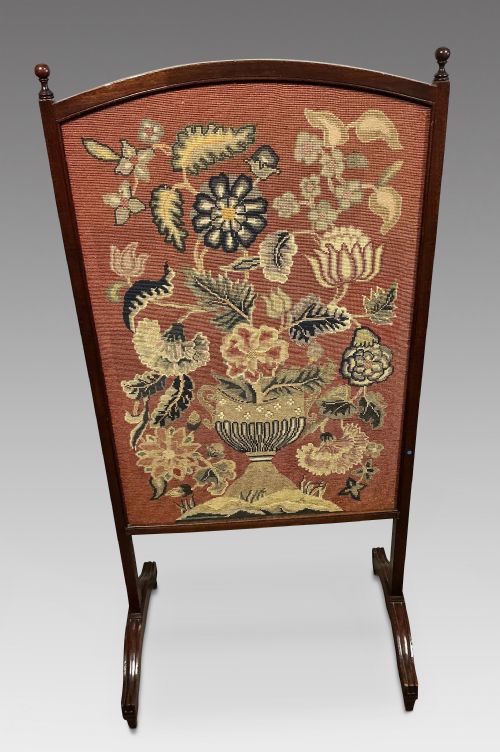


Vintage Draft Screen
A vintage draft screen divides a room or shields a hearth, bringing historical fabric, painted leather, and carved wood to an interior.
Vintage Draft Screen
When you search for a vintage draft screen, you encounter folding panels and hearth guards spanning the Victorian, Edwardian, and early twentieth-century periods. These objects served functional roles in large rooms and beside fireplaces, stopping cold draughts before central heating took over.
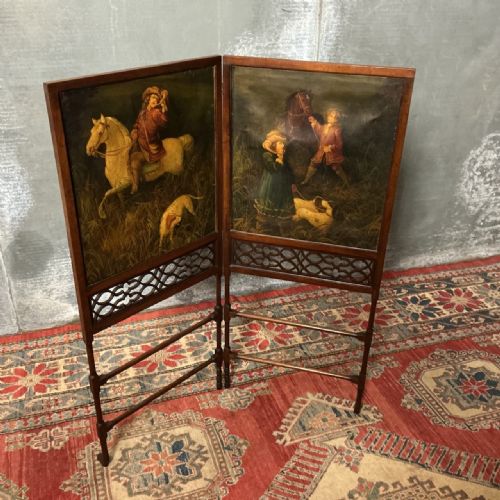
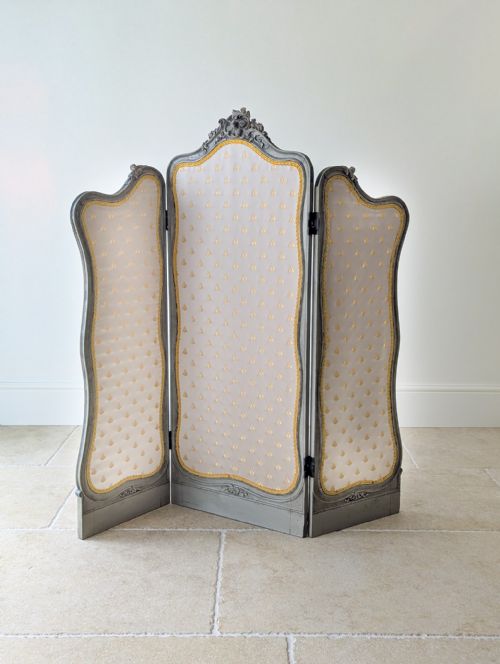
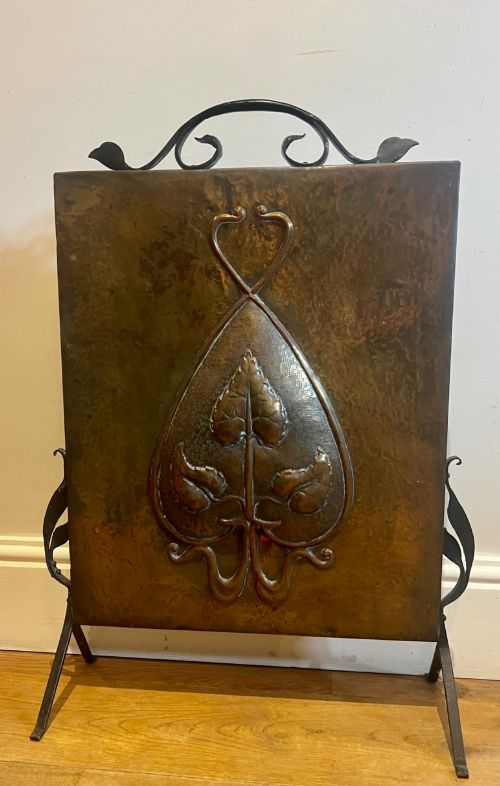
The selections range from tall multi-fold room dividers in mahogany, oak, and walnut to smaller brass, copper, and iron fire screens. Many pieces incorporate painted panels, embroidered textiles, glazed sections, or leather surfaces.
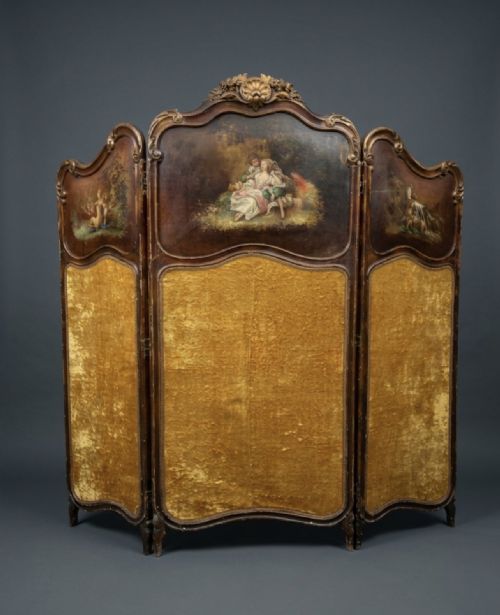
Origin and style vary widely across the selection, featuring French Rococo Revival, Arts and Crafts, Chinese Republic Era, and Persian influences. Buyers find everything from country house decoupage to ebonised oak frames.
How they were made
Frames rely on sturdy timbers such as mahogany, oak, walnut, and ebonised wood, joined with hinges to support multiple folding leaves. Metal alternatives utilise brass, copper, and iron, particularly for domestic hearth accessories.
Infill panels display diverse artisan techniques, including hand-woven tapestry, needlepoint, oil paintings on canvas, hand-painted leather, and leaded glass. Fretwork, gilding, lacquer, and decoupage further enrich the decorative surfaces.
Materials span brass, wood, fabric, glass, mahogany, canvas, leather, and oil paint across the Victorian, Edwardian, and Arts and Crafts eras.
What varies in quality
Quality rests in the integrity of the timber framing, the smoothness of the hinges, and the skill evident in the decorative panels. Hand-painted leather, fine oil paintings, and original hand-woven needlepoint elevate a piece far above simple utilitarian dividers.
The sophistication of the stylistic execution distinguishes standard items from exceptional examples. Fine carving, detailed fretwork, and well-preserved giltwork indicate superior craftsmanship in both room dividers and hearth screens.
WILLIAM MORRIS
The Vintage Draft Screen Glossary
- Modesty screen
- A low folding panel historically used to shield someone seated near a fire or doorway. These screens provide visual privacy and block low-level air movement.
- Firescreen
- A standalone guard placed before an open fireplace to control sparks or block radiant heat when the fire dies down. Many examples feature adjustable panels or glazed sections.
- Decoupage
- The art of decorating a surface by applying coloured paper cutouts, secured with varnish or lacquer. Country house examples often utilise this technique across multiple folding panels.
- Chinoiserie
- European decorative art imitating Chinese and East Asian artistic traditions. These screens typically display gilt motifs on painted leather or lacquer surfaces.
- Needlepoint
- Embroidery stitched on a canvas mesh to form pictorial or geometric designs. Victorian tapestries frequently used this technique for inset screen panels.
Vintage Draft Screen: Frequently Asked Questions
What is a draft screen?
A draft screen is a movable partition composed of multiple hinged panels designed to block cold air currents in large rooms. They provide both physical comfort and visual division within historic interiors.
Over time, these objects evolved from functional draught barriers into decorative focal points, utilising painted leather, fabric, and carved wood.
How do I date a screen?
Dating relies on identifying the underlying timber, hardware construction, and decorative style, such as Arts and Crafts ebonisation or Victorian needlepoint. Examining the fixings and panel materials helps place the piece within the nineteenth or early twentieth century.
Makers often employed specific regional aesthetics, from French Rococo Revival curves to Chinese lacquer work, which anchor the object to a distinct era.
Where should I place a room divider?
Room dividers work effectively to zone open-plan spaces, create private reading corners, or shield seating areas from hallway entryways. Their folding nature allows you to adjust their footprint to suit the room.
Shorter hearth screens belong specifically by a fireplace, whereas taller three to six-fold screens stand independently on wooden floors.
Are fire screens and room dividers the same?
Fire screens are smaller accessories built specifically to sit on the hearth and protect a room from stray embers or intense heat. Room dividers are much taller multi-fold structures meant to segment living space.
While both use timber and decorative panels like brass or glass, their scale and intended domestic placement differ entirely.