

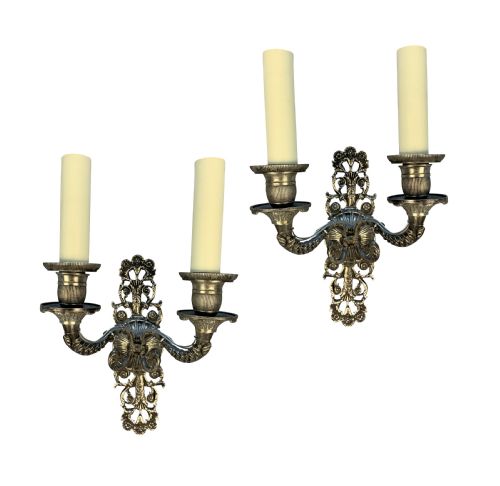
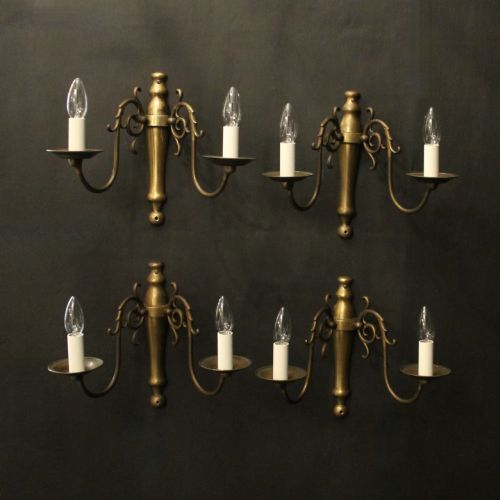
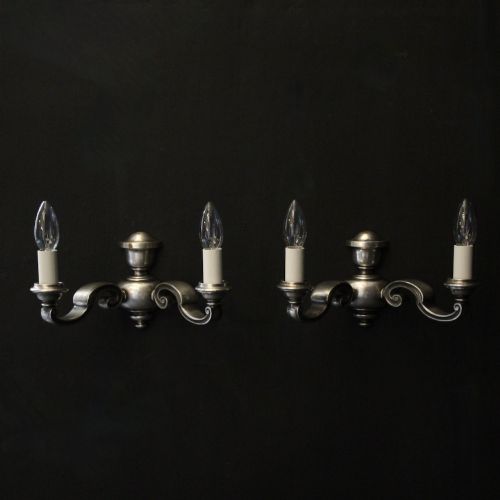
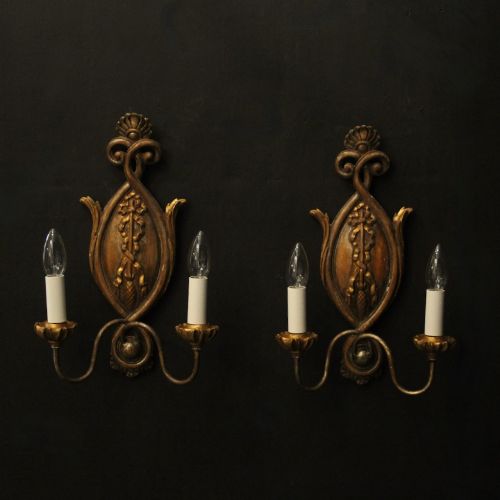

Vintage Double Wall Lights
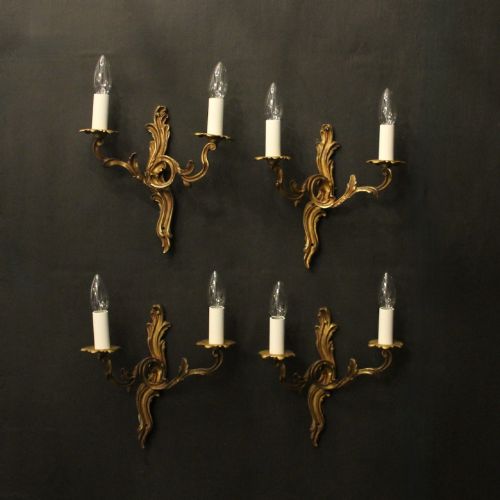
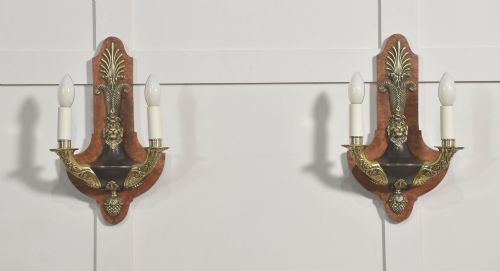
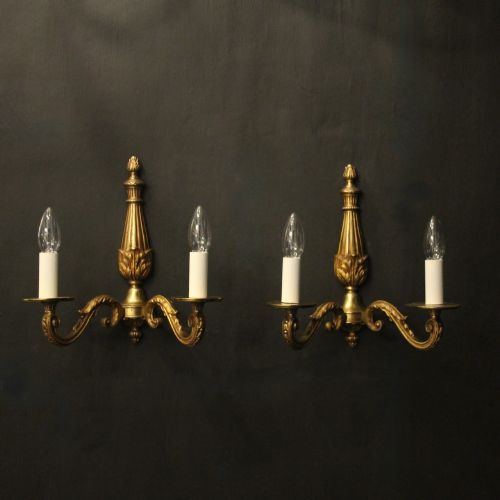
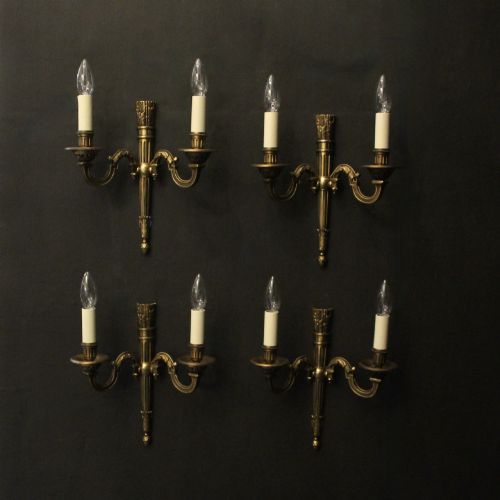
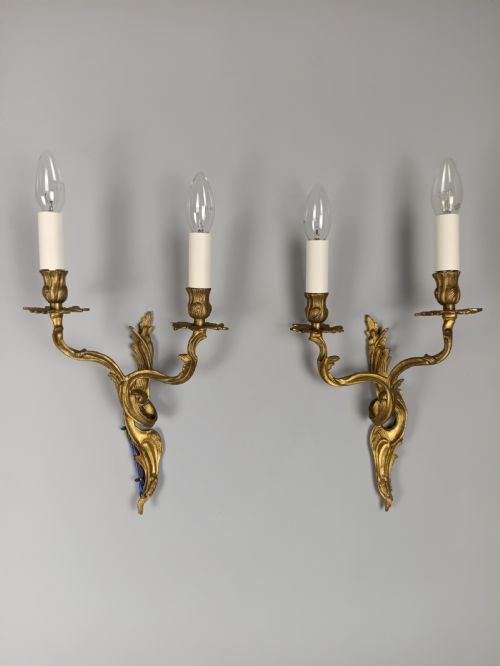
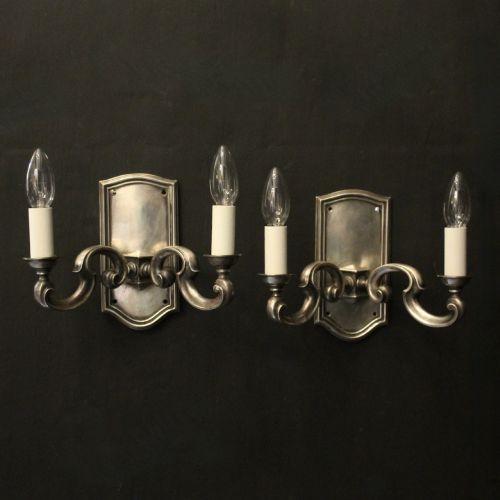
These vintage double wall lights bring dual-arm illumination to period interiors through cast metals and gilt finishes.
Vintage Double Wall Lights
Vintage double wall lights provide twin illumination from brackets mounted directly onto room surfaces. The selections span the Victorian, Edwardian, and twentieth-century periods, with many originating from French workshops or English makers. Buyers frequently encounter twin-arm bracket fixtures made for candles or electricity.
How they were made
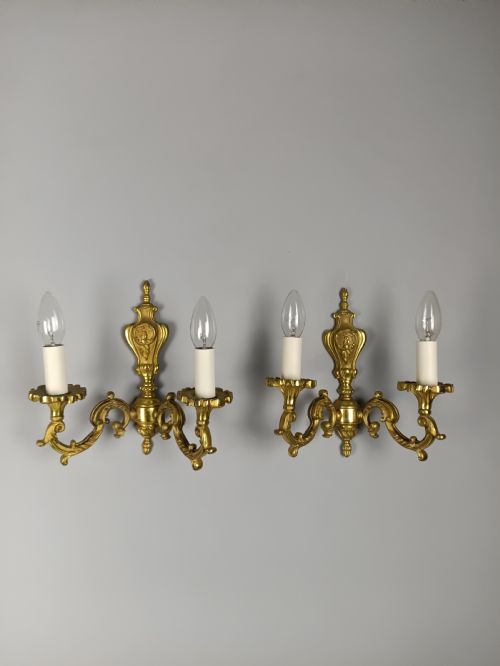
Foundry work dominates construction, utilising cast bronze, brass, and ormolu shaped into symmetrical arms and decorative backplates. Surface treatments rely heavily on gilding, silver plating, or mercury-gilded bronze applied to the metal body.
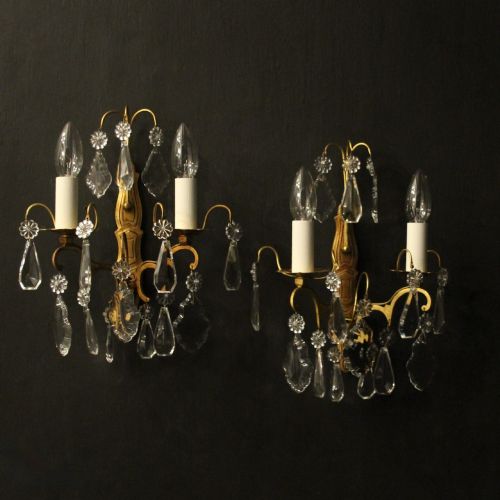
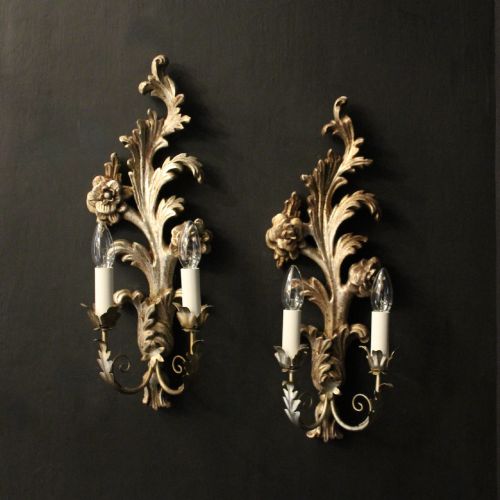
Stylistic elements incorporate carved giltwood or applied crystal drops alongside metal components. Construction joins backplates to branching arms through pins, screws, or threaded fixings characteristic of nineteenth and early twentieth-century metalworking.
Vintage Double Wall Lights Retail Price Guide 2026
Typical asking prices for vintage double wall lights among the pieces listed under this phrase on Sellingantiques today, from the lower quarter to the upper quarter. They describe what is for sale here now, not the wider market.
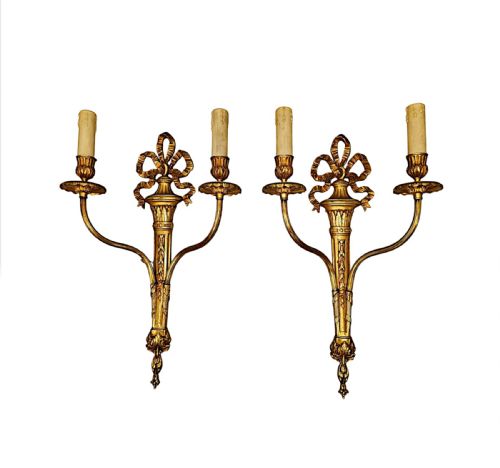
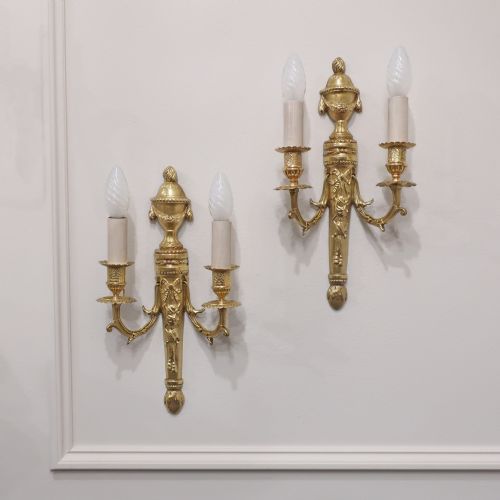
Ribbon motifs tied the lighting arms together in decorative French salons, because no wall needed to take itself too seriously.
What varies in quality
Execution of cast detail separates superior examples from simpler production. Fine pieces display crisp relief work on acanthus leaves, ribbon motifs, or classical figures, whereas lesser items show softer edges from worn moulds.
The integrity of the surface finish dictates overall character. Original mercury gilding or heavy fire-gilt surfaces retain rich warmth, while inferior plating methods wear down to base metals over decades of cleaning.
Casier·F. & C. Osler·Liberty
The Vintage Double Wall Lights Glossary
- Ormolu
- Gilded bronze produced by applying a mercury and gold amalgam to a bronze base and firing it in a kiln. This technique creates a durable, deep golden surface common on French lighting from the nineteenth century.
- Twin Arm
- A wall light configuration featuring two branching holders projecting from a central backplate. This layout provides balanced illumination across a wider span than single-arm variants.
- Giltwood
- Timber carved and subsequently covered with a thin layer of gold leaf or gesso preparation. Florentine workshops utilised this material extensively for decorative wall fixtures.
- Backplate
- The structural section of a wall light that fastens directly to the wall surface and supports the projecting arms. Backplates often carry the primary decorative motifs of the piece.
- Rococo
- A theatrical design style marked by asymmetric C-scrolls, shell motifs, and naturalistic foliage. Pieces in this style appeared frequently in French production during the periods represented here.
Vintage Double Wall Lights: Frequently Asked Questions
How do I wire vintage double wall lights?
Electric conversion requires routing internal wiring through the hollow channels of the backplates and arms to standard lamp holders. Professional rewiring ensures compliance with current safety regulations while preserving original metal components.
Qualified electricians can adapt older fixtures to modern wall brackets without altering visible exterior surfaces. Insulation testing protects historical wiring channels from short circuits.
Where should I position twin arm wall lights?
Mounting pairs at eye level or slightly above ensures balanced illumination and appropriate proportion relative to room furnishings. Common placements include flanking mirrors, paintings, or headboards in bedrooms and hallways.
Spacing depends on the width of the backplate and the projection of the twin arms. Ensuring adequate clearance around doorways prevents accidental impacts.
What is the difference between brass and ormolu?
Brass is an alloy of copper and zinc used for structural and decorative components across English and French lighting. Ormolu refers specifically to gilded bronze where a gold amalgam is fired onto a bronze substrate.
Ormolu displays a heavier, richer golden tone due to the underlying bronze and mercury gilding technique. Brass generally shows a brighter, yellower metallic finish unless chemically aged or lacquered.