



Vintage Double Sided Desk
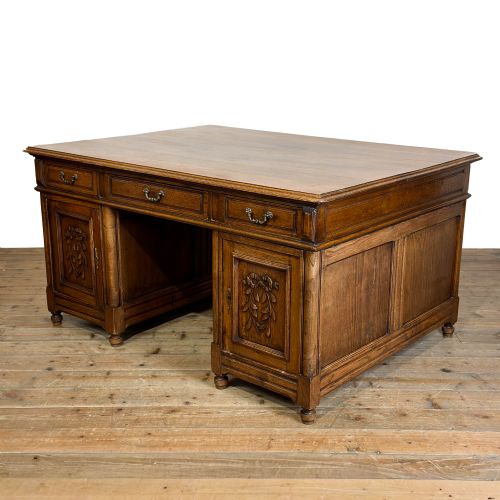
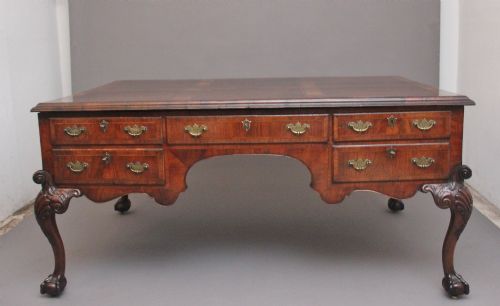
A vintage double sided desk provides workspace on both faces, offering substantial timber construction and generous proportions for shared studies or libraries.
Vintage Double Sided Desk
A vintage double sided desk, frequently encountered as a partners desk, serves two users simultaneously with drawers and cupboards accessible from opposite faces. The selection here spans the nineteenth and early twentieth centuries, drawing on Victorian, Edwardian, and Regency periods.
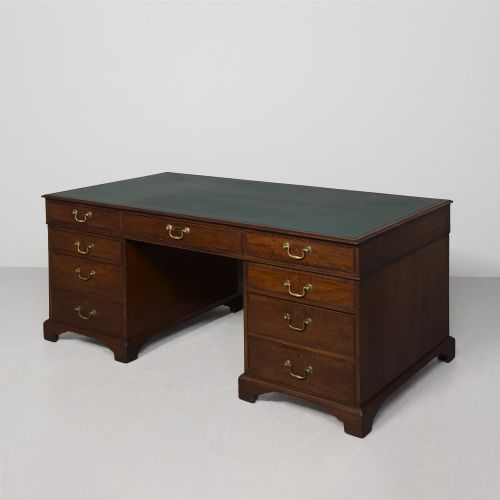
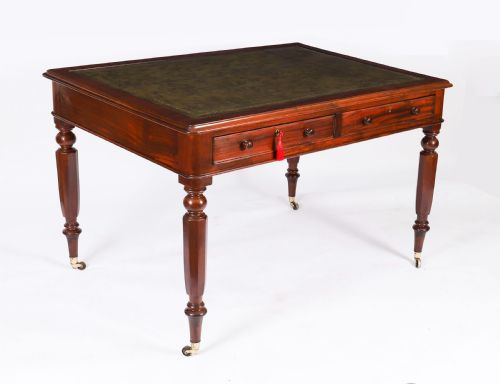
Most examples take the form of twin pedestal desks or library writing tables, designed to stand centrally within a room rather than against a wall. The forms range from substantial oak and mahogany pedestal desks to figured burr walnut variants.
Materials and construction
Cabinet makers utilised dense hardwoods such as mahogany, oak, and walnut, often employing burr veneers on prominent surfaces to display rich grain patterns. Drawer linings commonly feature secondary timbers, whilst structural joints rely on traditional dovetailing.
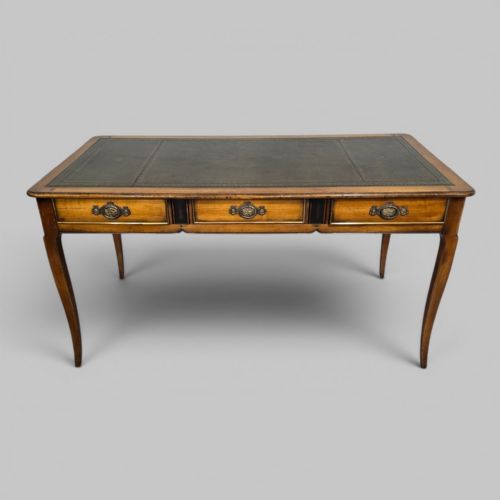
Writing surfaces are typically inset with panels of tooled leather, providing a durable plane for daily correspondence. Brass handles, locks, and occasional mounts finish the exterior details of pedestal cupboards and drawers.
Vintage Double Sided Desk Retail Price Guide 2026
Typical asking prices for vintage double sided desk among the pieces listed under this phrase on Sellingantiques today, from the lower quarter to the upper quarter. They describe what is for sale here now, not the wider market.
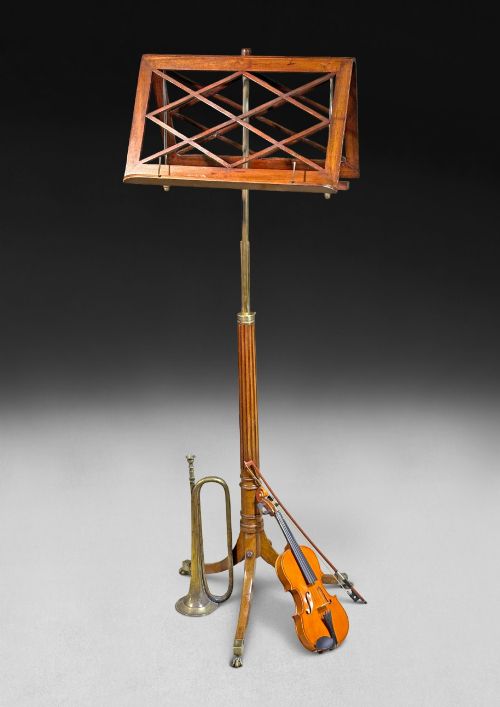
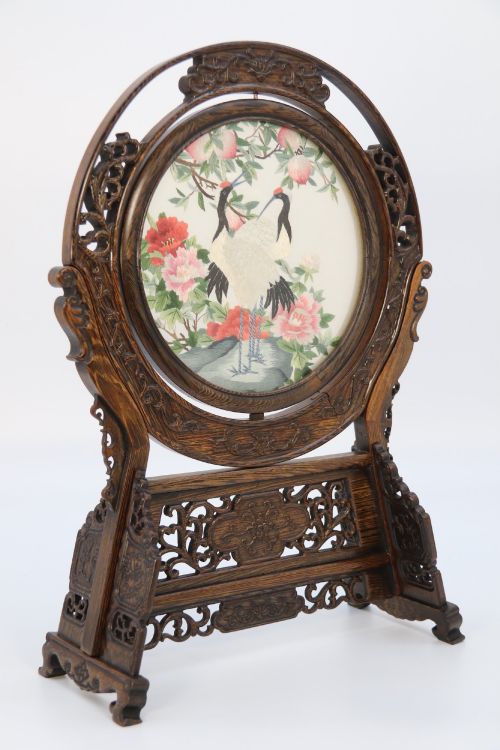
For those whose study requires smaller company, the selection also includes a rotating hardwood display stand and a duet music stand.
Judging quality in double sided desks
Quality rests upon the selection of timbers and the precision of the cabinet work, particularly in the figuring of veneers and the matching of grain across paired pedestals. Superior pieces display crisp carving, well-fitted drawers, and substantial proportions that maintain structural integrity from every angle.
The finish of the secondary timber inside drawers and the original patination of the leather writing surface distinguish standard workshop production from important commissions by notable makers.
Maple and Co·T Wilson
The Vintage Double Sided Desk Glossary
- Partners desk
- A large double sided desk built to accommodate two people sitting opposite one another, featuring drawers and cupboards on both faces.
- Pedestal desk
- A form comprising two supporting columns of drawers beneath a main writing top, joined by a central recess.
- Burr walnut
- Timber taken from the wart-like growths on walnut trees, yielding intricate, swirling grain patterns highly prized for cabinet veneers.
- Kneehole
- The central recessed space beneath a desk top where a chair sits, flanked by pedestals of drawers.
- Serpentine
- A curved desk front or top shaped with an outward sweep in the centre flanked by inward curves.
Vintage Double Sided Desk: Frequently Asked Questions
What is a double sided desk?
A double sided desk provides drawers and kneehole space on opposing faces, allowing two people to work opposite one another.
These pieces were traditionally built for partners in business, banking, or large estate libraries where central floor placement was required.
How do I date a vintage desk?
Dating relies on observing timber choices, construction methods such as dovetailing, and the prevailing decorative style of the period.
Victorian and Edwardian examples show shifts from heavy mahogany and burr walnut towards lighter oak forms influenced by contemporary revivals.
Where should I place a partners desk?
Partners desks are designed to stand away from walls so that the dual-facing drawers and pedestals remain accessible from all sides.
Placing the desk in the centre of a study or library allows it to function as a focal point within the room.
What timbers were used?
Cabinet makers predominantly used mahogany, oak, and walnut, often applying decorative veneers like burr walnut or flame mahogany to the primary surfaces.
Secondary timbers were utilised for internal drawer construction and framing beneath the writing surface.