


Vintage Double Chest Drawers
These vintage double chest drawers combine vast vertical storage with imposing architectural presence.
Vintage Double Chest Drawers
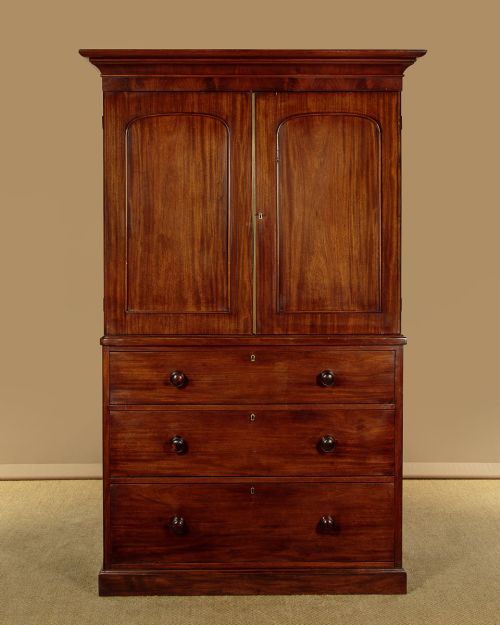
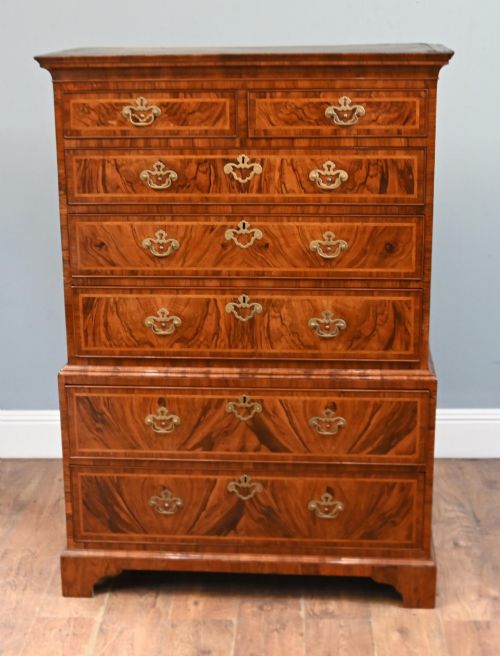
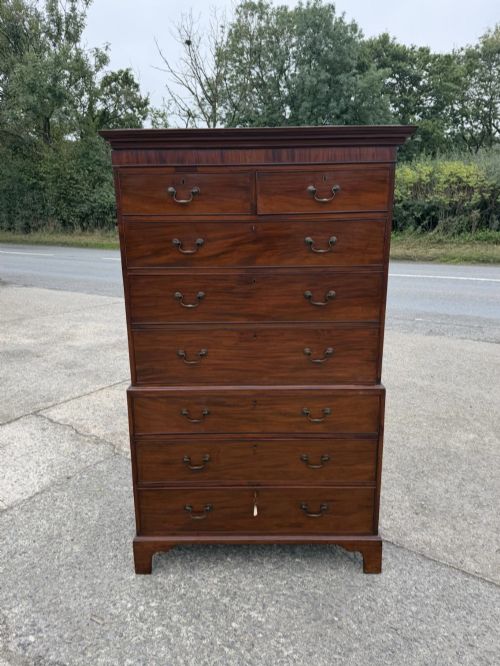
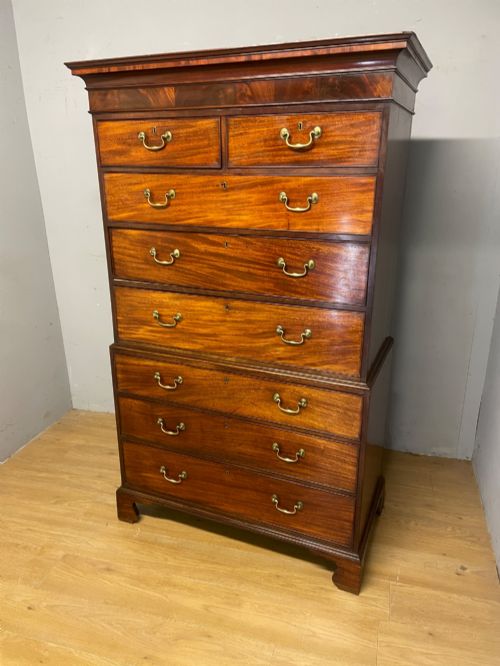
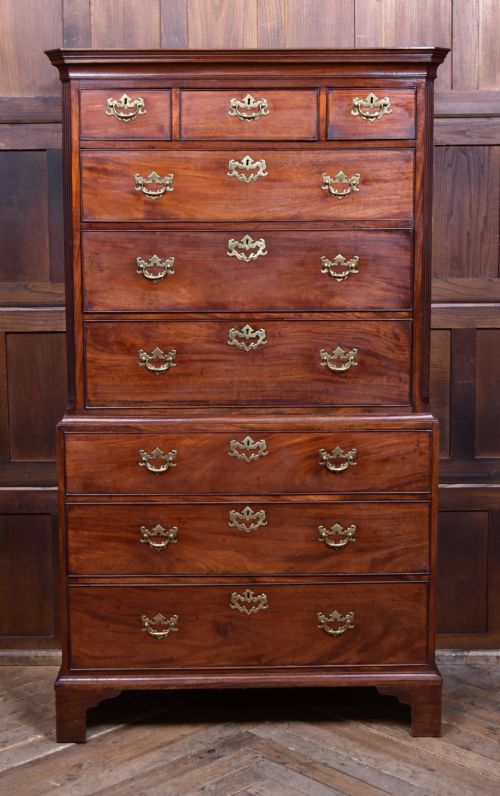
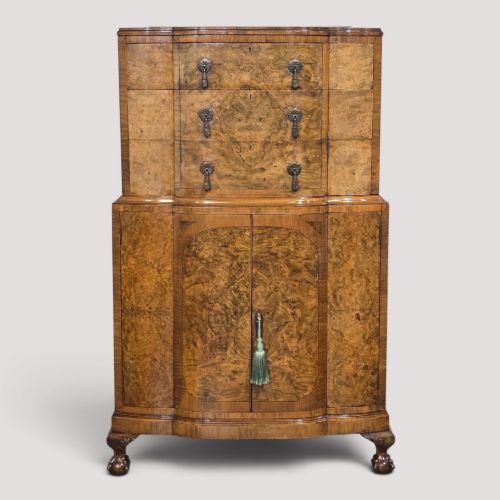
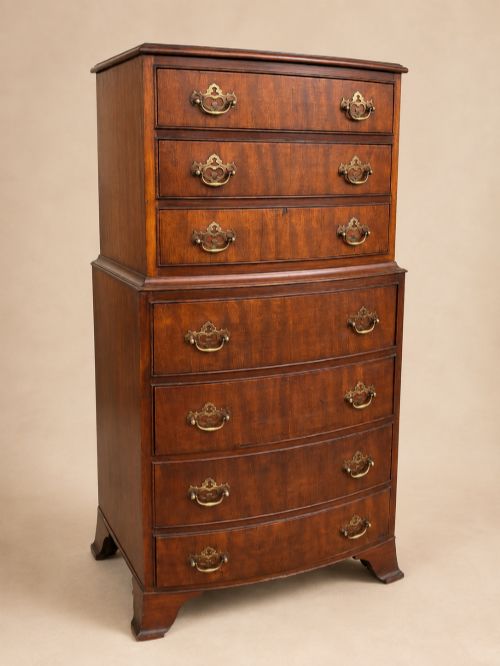
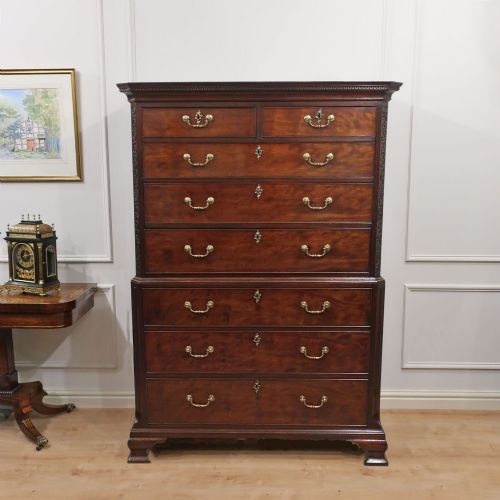
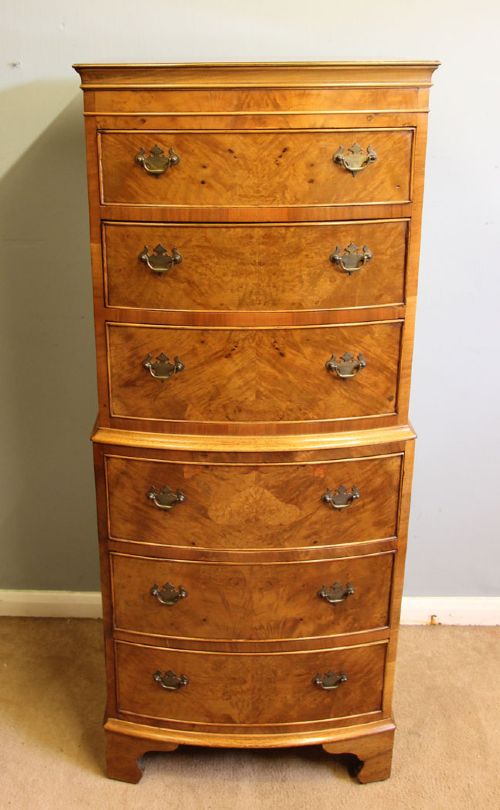
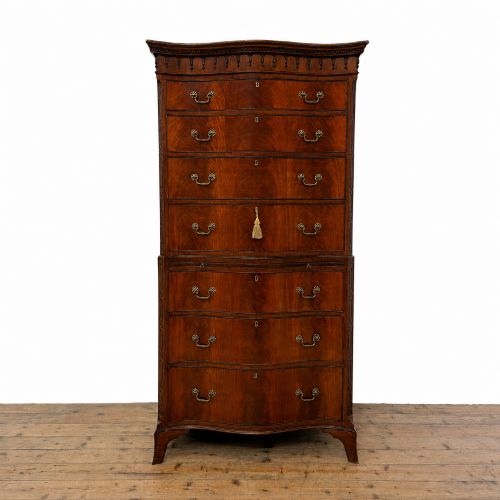
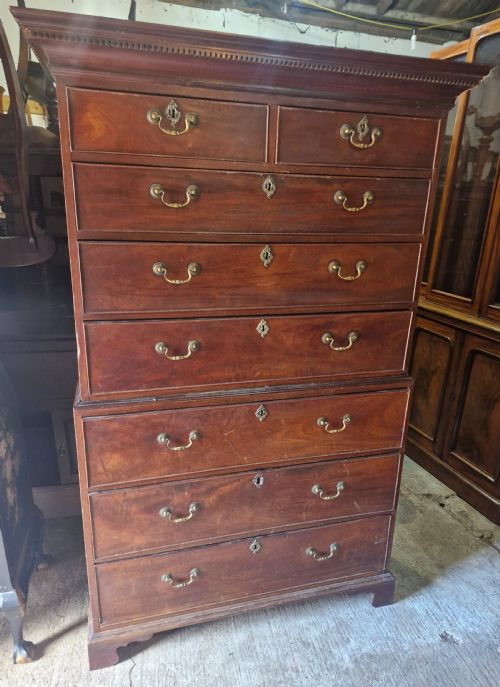
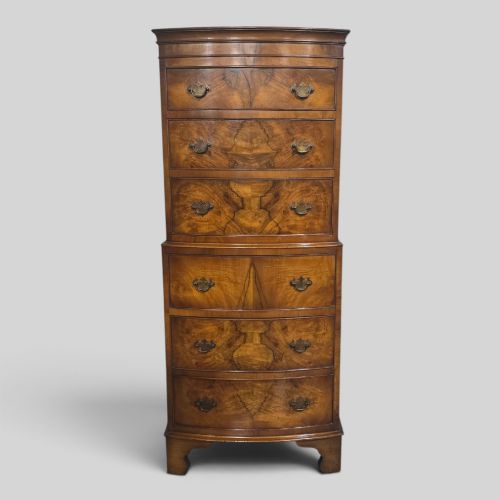
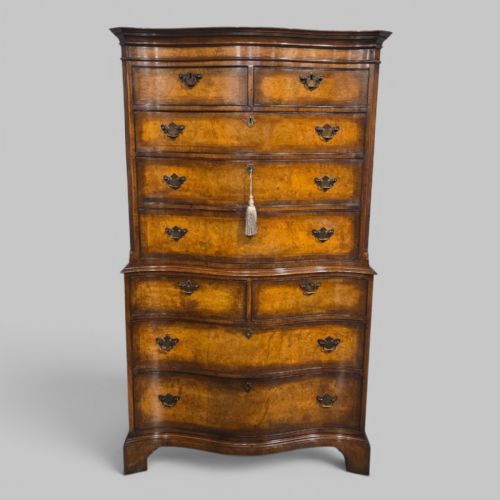
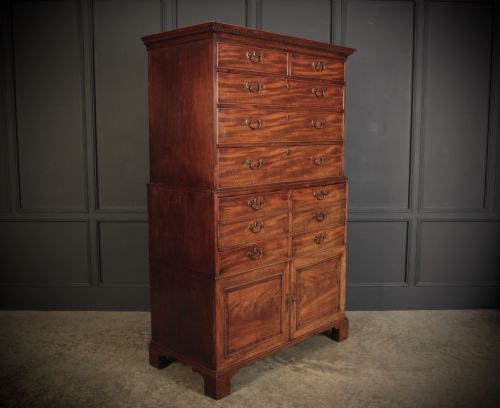
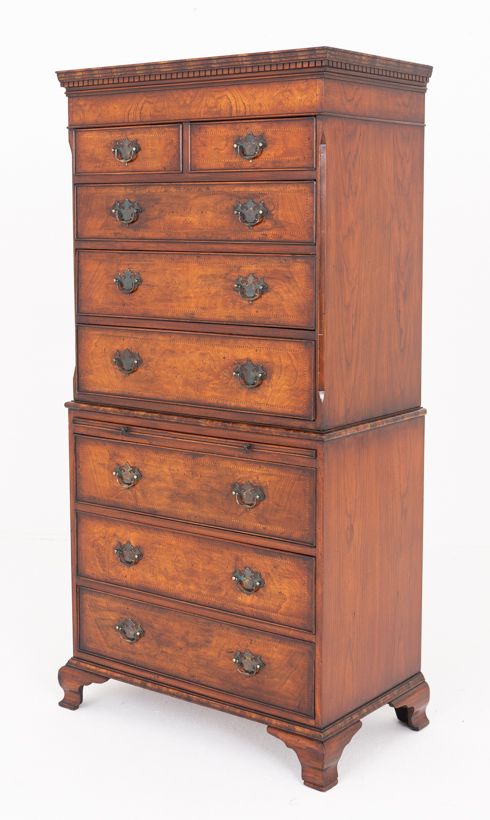
When you search for vintage double chest drawers, you encounter monumental two-tier storage units designed to hold a substantial wardrobe. These pieces typically manifest as tallboys or chests on chests, stacking a smaller upper chest upon a deeper lower section to maximise vertical capacity. The selection spans the eighteenth century through to the early decades of the twentieth century, embracing Georgian, Regency, and Victorian aesthetics.
Mahogany and burr walnut dominate the forms, frequently shaped with bow-fronts or serpentine contours that soften the substantial mass. Tallboys, linen presses, and secretaire variations appear alongside traditional drawer configurations, offering integrated writing desks or sliding linen trays. Oak, pine, and fruitwood examples also emerge, reflecting regional British and continental cabinet-making traditions from different eras.
Distinctions in Quality
Quality reveals itself in the choice of timber veneers and the precision of the cabinet-making across the two stacked sections. Superior examples display continuous grain matching across drawer fronts and intricate mouldings that integrate the upper and lower carcases harmoniously. Finer pieces incorporate secondary timbers like oak for drawer linings and retain original brass fittings.
The refinement of the carving, particularly on Georgian and Chippendale period items, separates standard utilitarian storage from masterwork furniture. Proportions remain balanced even in large tallboys, and specialised interior fittings such as secretaire drawers or sliding trays operate smoothly within the primary frame.
Vintage Double Chest Drawers Retail Price Guide 2026
Typical asking prices for vintage double chest drawers among the pieces listed under this phrase on Sellingantiques today, from the lower quarter to the upper quarter. They describe what is for sale here now, not the wider market.
Periods represented span from the eighteenth century through Georgian, Regency, and Victorian eras up to 1950.
The Vintage Double Chest Drawers Glossary
- Chest on chest
- A tall storage unit comprising two separate drawer sections stacked one directly upon the other. The upper chest is typically narrower than the base.
- Tallboy
- A tall chest of drawers or a chest on chest standing on a separate base or frame. The term often describes eighteenth-century stacking units.
- Secretaire
- A desk fitted with a pull-down writing flap concealing small drawers and pigeonholes. In these pieces, it usually forms the upper drawer of the lower section or a middle writing tier.
- Serpentine
- A front contour characterised by a convex central section flanked by concave curves. This shaping requires expert cabinet-making to follow the timber grain accurately.
- Bow-front
- A convex curved cabinet front that projects outward in an arc. It provides additional internal volume while softening the rectilinear profile.
- Linen press
- A tall cabinet featuring upper doors enclosing sliding trays for textiles, positioned above a base of wider drawers. These units served to store folded linens and garments safely.
Vintage Double Chest Drawers: Frequently Asked Questions
What is a double chest of drawers?
A double chest of drawers refers to a stacked storage unit where a smaller upper chest sits atop a wider lower base. This configuration provides extensive vertical storage without occupying excessive floor space in a bedroom.
Historically designed for comprehensive wardrobe organisation, these pieces combine multiple drawer tiers in a single architectural facade.
How do I date an antique tallboy?
Dating relies on examining the construction methods, timber choices, and hardware styles visible across the carcase. Eighteenth-century examples often feature fine dovetailing, oak drawer linings, and classic Georgian proportions.
Later revival pieces from the early twentieth century display machine-cut elements and distinct veneer patterns that distinguish them from earlier Georgian and Regency originals.
Where should I place a tallboy?
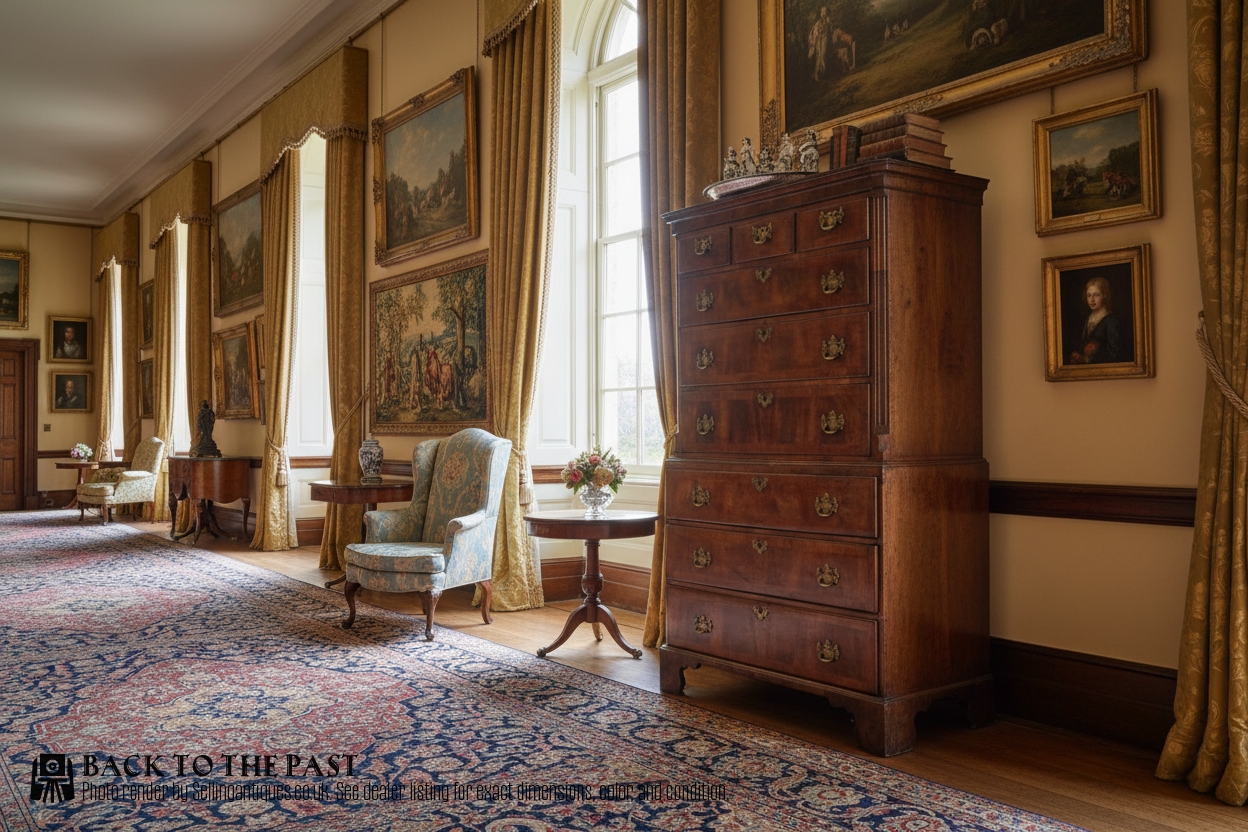
These imposing units require stable wall placement and adequate vertical clearance due to their considerable height. Bedrooms and large dressing rooms offer traditional settings where their storage capacity remains fully functional.
Ensure the room has sufficient floor space to allow lower drawers to pull out completely without obstruction from surrounding furniture.
Are these pieces difficult to move?
Moving these units is manageable because the construction inherently separates into two distinct upper and lower sections. Lifting the lighter top chest off the heavy base significantly reduces the total weight and height.
Securing the internal drawers or removing them entirely prevents shifting and protects the timber framework during relocation.