


Vintage Door Pulls
Vintage door pulls span Georgian, Victorian, and Edwardian periods in brass, bronze, cast iron, and crystal.
Vintage Door Pulls
Vintage door pulls comprise hardware designed for domestic and commercial thresholds, including handles, bell ringers, letter box plates, and boot scrapers from the Georgian, Victorian, Regency, and Edwardian eras. Buyers searching for vintage door pulls encounter cast brass, bronze, and iron mechanisms alongside decorative glass and ceramic options.
The selection ranges from simple shop door handles and centre door knobs to ornate French Art Deco ballroom pulls and bell ringers. Victorian and Georgian brass designs appear frequently alongside later Art Nouveau and Art Deco examples.
Materials and Construction
Foundry work dominates production, utilising cast brass, bronze, cast iron, and nickel in sand moulds to achieve heavy, durable forms. Metal components often feature applied finishes, gilding, or polished surfaces to highlight decorative details.
Insets of crystal glass, lead crystal, amber glass, blue glass, and black china combine with metal mounts, secured by collars or pins. Horn and ebony wood also appear as contrasting elements on turned wooden knobs and specialised pulls.
Listings feature brass, bronze, cast iron, and crystal glass across Victorian, Georgian, and Regency periods.
Factors of Quality
Subtlety of cast detail distinguishes superior examples, where ornamentation such as bee hive turnings or floral motifs remain sharp and crisp. Heavier metal gauge and substantial weight indicate higher grade foundry output.
The clarity and depth of crystal or coloured glass components separate standard utility hardware from finer decorative pieces. Original mounting plates, matching sets, and complete mechanical assemblies elevate the integrity of individual examples.
The Vintage Door Pulls Glossary
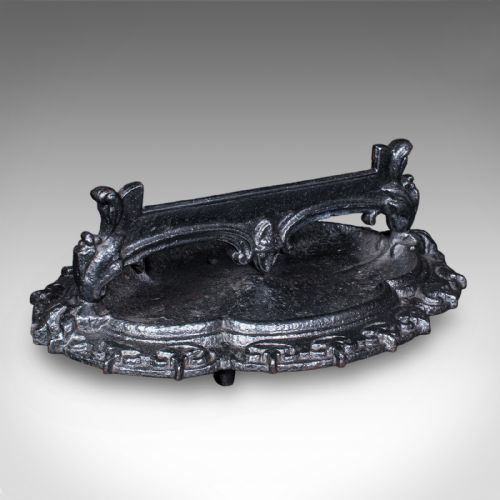
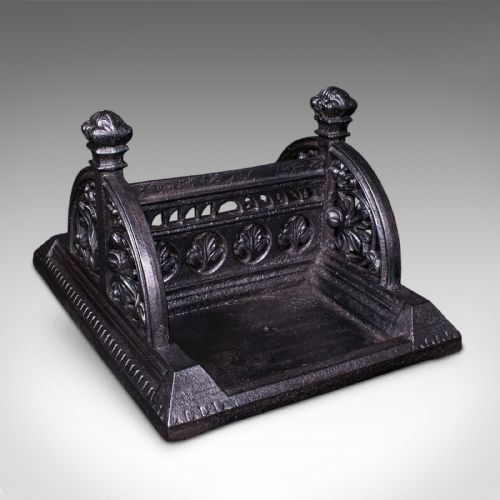
- Boot scraper
- A heavy iron or metal fixture placed near an entrance to clean mud from footwear. These items share functional hardware categories with door pulls.
- Bell ringer
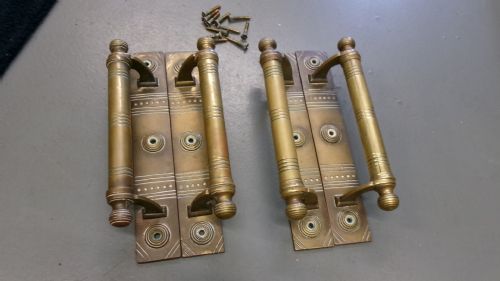
- An exterior pull mechanism connected to an internal bell, often ornate in brass or bronze. Georgian and Victorian examples feature lever or rotary actions.
- Centre door knob
- A stationary handle mounted in the middle of a primary entrance door rather than the edge. These pieces often feature geometric octagonal or bee hive turnings.
- Letter box and pull handle
- A combined brass or bronze assembly incorporating a mail slot and a gripping bar. Victorian examples frequently combine these functions on townhouse doors.
Vintage Door Pulls: Frequently Asked Questions
How do I date a brass door pull?
Dating relies on stylistic shifts and manufacturing marks characteristic of Georgian, Victorian, Regency, or Edwardian periods. Georgian examples tend to show restrained classical proportions, while Victorian hardware often displays heavier ornamentation or specific forms like bee hive turnings.
Technological shifts also offer clues, moving from hand-finished sand castings toward more standardised industrial production by the early twentieth century. Examining the mounting style and accompanying hardware helps place the piece within its historical decade.
Can antique door pulls be fitted to modern doors?
Many vintage door pulls adapt well to modern doors, provided spindle sizes and fixing centres align with contemporary joinery. Centre knobs and surface-mounted pull handles generally require straightforward screw fixings.
Spindle-operated handles may need adjustment to fit modern latch mechanisms safely. Checking the depth and backplate dimensions ensures the hardware covers existing screw holes or latch footprints.
What is the difference between a door pull and a centre knob?
A door pull is designed for gripping to open or pull a heavy entrance, whereas a centre knob often serves as a stationary handle placed centrally on the door exterior. Centre knobs are typically used in conjunction with a separate latch or rim lock operated elsewhere.
Pull handles frequently take vertical or drop forms suitable for commercial shop doors or grand double entrances. Both types utilise similar cast metals like brass and bronze but serve distinct architectural functions.
How should I clean antique brass hardware?
Cleaning antique brass requires gentle washing with warm soapy water and a soft cloth to remove surface grime while preserving the accumulated patina. Abrasive polishes or harsh chemical dips strip the aged surface finish and reduce the historical character of the metal.
Dry the metal thoroughly after washing to prevent spotting. Leaving a minimal layer of natural oxidation often enhances the visual depth of Victorian and Georgian castings.