


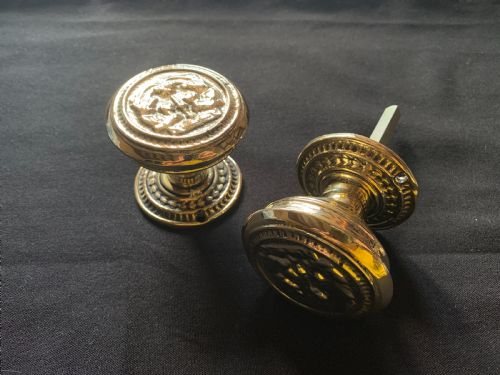


Vintage Door Knobs
Vintage door knobs are robust period hardware built from brass, bronze, and wood, offering a tactile upgrade for any interior door.
Vintage Door Knobs
Vintage door knobs encompass sturdy iron, brass, bronze, and wooden hardware designed for period interiors. When searching for vintage door knobs, buyers frequently encounter Victorian examples alongside Regency and Georgian pieces.
How they were made
Makers utilised cast brass, heavy bronze, and iron to shape durable door furniture, often pairing metal bases with wooden elements like oak and ebony. Amber glass also appears as a distinct moulded material for period handles.
Surface detailing ranges from plain geometric mouldings to ornate Art Nouveau and Arts and Crafts patterns. Individual components include matching door plates, spindle locks, and dedicated centre pulls.
Materials recorded across the selection include brass, bronze, iron, steel, oak, ebony, and amber glass.
What varies in quality
The distinction between ordinary utility hardware and superior pieces lies in the weight of the metal casting and the crispness of the geometric turning. Heavier brass and bronze components maintain better structural integrity over decades of daily use.
Finishing work on wooden grips and glass mouldings separates standard production items from finer decorative examples. Complete matching sets with original finger plates demonstrate superior initial specification.
The Vintage Door Knobs Glossary
- Beehive
- A distinctive turned profile featuring concentric raised ridges, common on Victorian brass knobs.
- Centre pull
- A stationary door knob or handle mounted centrally on a heavy door rather than operating a latch.
- Finger plate
- A decorative metal plate mounted behind a door handle to protect the surrounding woodwork from marks.
- Spindle
- The central metal rod that connects a pair of opposing door handles through the door latch.
Vintage Door Knobs: Frequently Asked Questions
How do I clean old brass?
Warm soapy water and a soft brush remove surface dirt without stripping the historic patina that develops over centuries. Avoid harsh chemical abrasive cleaners which can permanently damage the metal surface.
Dry the metal thoroughly with a soft cloth after washing to prevent spotting and maintain the natural lustre of the period brass.
Will these fit modern doors?
Most historic spindles and fixings can be adapted to fit standard modern door thicknesses with minimal adjustment. However, checking the specific spindle diameter and mechanism type before installation ensures a correct fit.
Some older mortice locks require specific clearance which may differ from contemporary hardware standards.
What is a centre knob?
A centre knob is fixed directly to the middle of a heavy door as a pull handle rather than turning to operate a latch mechanism. These prominent pieces were frequently used on front doors and grand interior entrances.
They often appear paired with matching finger plates to protect the timber.
How do I date a handle?
Stylistic clues such as geometric octagonal shaping, beehive turnings, and Art Nouveau floral motifs point directly to specific periods like the Victorian or Regency eras. Material choices, including amber glass or ebony wood, also help identify the manufacturing decade.
Comparing the casting weight and fastening style provides further context for the age of the hardware.