

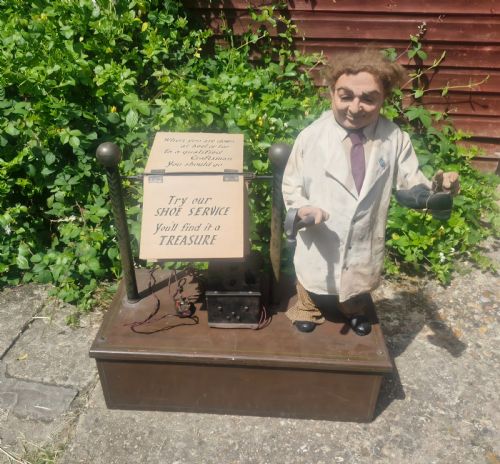



Vintage Display Dummy
A vintage display dummy brings commercial history indoors, offering sculptural form and period character for any interior.
Vintage Display Dummy
When you search for a vintage display dummy, you are looking at commercial shop models, mannequins, and advertising pieces designed to showcase merchandise. These objects range from nineteenth-century figures and early twentieth-century French lingerie advertising mannequins to hat stands and tailors' forms.
The versions you are most likely to meet on this page originate from the nineteen-twenties and nineteen-thirties, spanning Art Deco busts, cloth male mannequins, and terracotta Paris pieces. Other variations include dummy boards, bakers' shop models of bread, and automated cobblers' display pieces.
These items served practical purposes in retail environments before finding a second life in interior design. Their diverse forms reflect the shifting commercial display methods of the nineteenth and twentieth centuries.
How they were made
Makers utilised a diverse selection of materials including wood, paint, plaster, fabric, metal, leather, composite, and papier-mâché. Terracotta and cloth also appear, showing the range of substances used to shape commercial display models.
Construction techniques combined rigid internal structures or frames with moulded exterior surfaces, often finished with painted details or fabric upholstery. These methods ensured the figures could support clothing, hats, or advertising items while withstanding daily shop use.
Vintage Display Dummy Retail Price Guide 2026
Typical asking prices for vintage display dummy among the pieces listed under this phrase on Sellingantiques today, from the lower quarter to the upper quarter. They describe what is for sale here now, not the wider market.
Among the figures stands a giant advertising sparkling wine bottle alongside a baker's loaf of bread.
What varies in quality
Quality in these commercial figures lies in the fidelity of the modelling and the integrity of the original surface finishes, such as paint, fabric, or leather. Finer pieces demonstrate careful attention to anatomical proportion or realistic detail, whether representing a human form, a loaf of bread, or a wine bottle.
The distinction between standard commercial output and superior items rests on the sophistication of the design, such as Art Deco styling or specific French advertising provenance. Original surface patination and material preservation further separate ordinary survivals from more desirable examples.
Charmereine
The Vintage Display Dummy Glossary
- Dummy board
- A flat, painted wooden figure cut out to represent a person or animal, designed to deceive the eye from a distance.
- Mannequin
- An articulated or rigid model of the human body used for fitting or displaying clothes.
- Tailors mannequin
- A padded form covered in fabric, historically used by dressmakers and tailors for garment construction and fitting.
- Hat stand
- A vertical fixture or freestanding sculpture designed specifically to display millinery.
- Art Deco
- A design style prevalent in the nineteen-twenties and nineteen-thirties characterised by streamlined geometric forms.
Vintage Display Dummy: Frequently Asked Questions
What is a vintage display dummy?
A vintage display dummy is a commercial object originally used in shops to showcase clothing, hats, or goods.
These pieces include mannequins, bust forms, and advertising models made from materials like plaster, wood, and papier-mâché.
How were these dummies used originally?
Retailers utilised them in shop windows and interiors to present merchandise to potential customers.
Specialist forms also existed for displaying specific items such as headwear, bread, or beverages.
How do I live with a display dummy?
Display dummies function well as sculptural freestanding objects in hallways, bedrooms, or living spaces.
They can also hold hats, scarves, or garments, combining practical storage with period display.
How do I date a display dummy?
Dating relies on stylistic indicators such as Art Deco geometry, materials like early twentieth-century composite or terracotta, and maker markings.
Construction methods and surface finishes also provide clues to whether a piece originates from the nineteenth century or the interwar decades.