


Vintage Display Drawers
Vintage display drawers bring visible order to collections, combining practical storage with glass-fronted or open viewing spaces.
Vintage Display Drawers
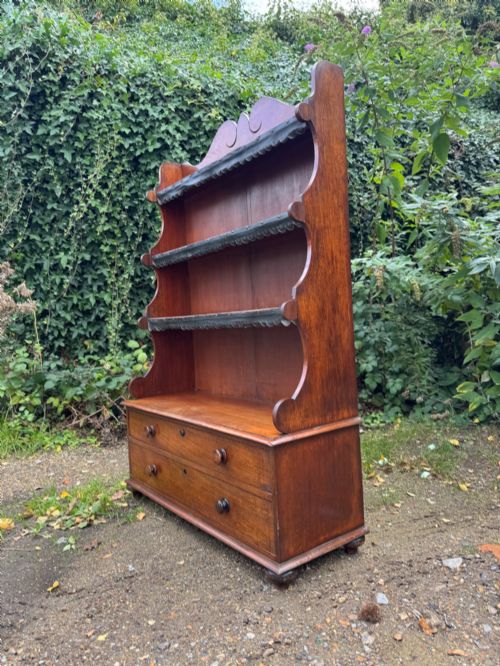
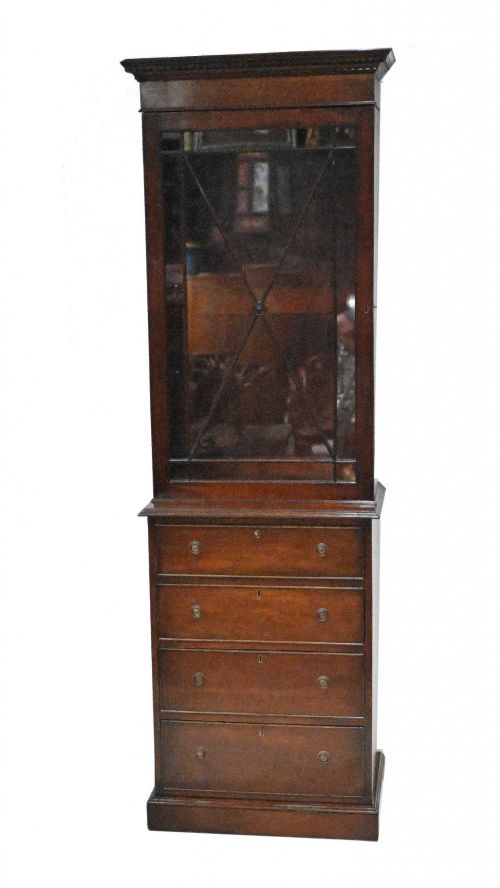
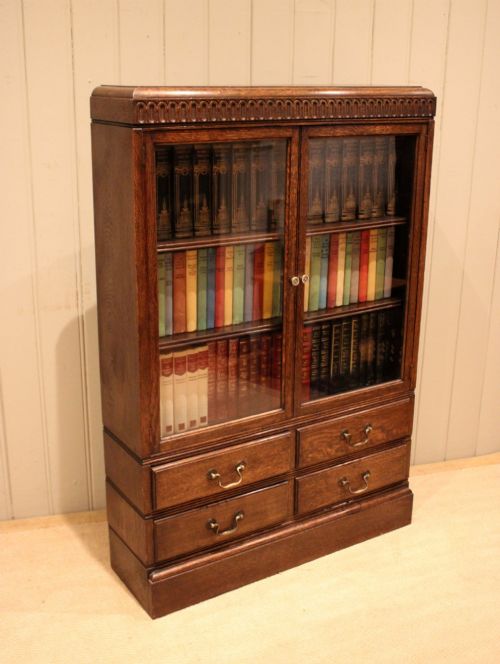
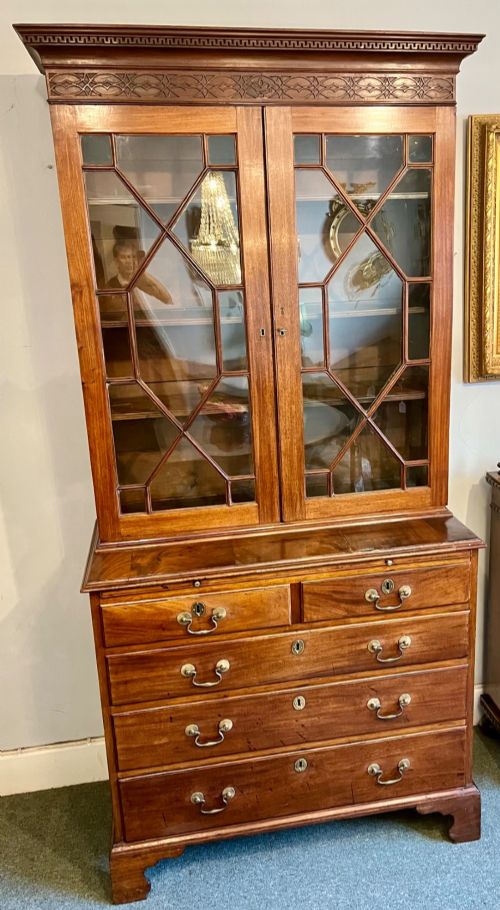
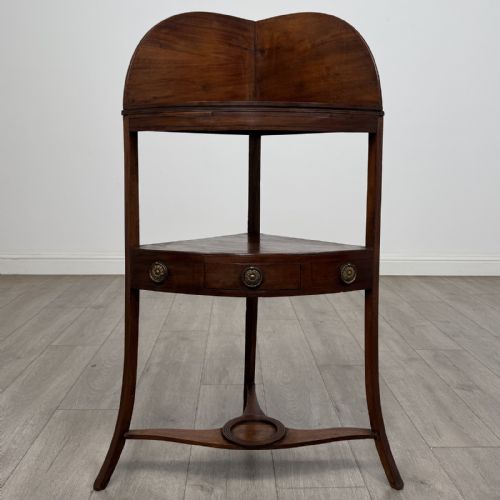
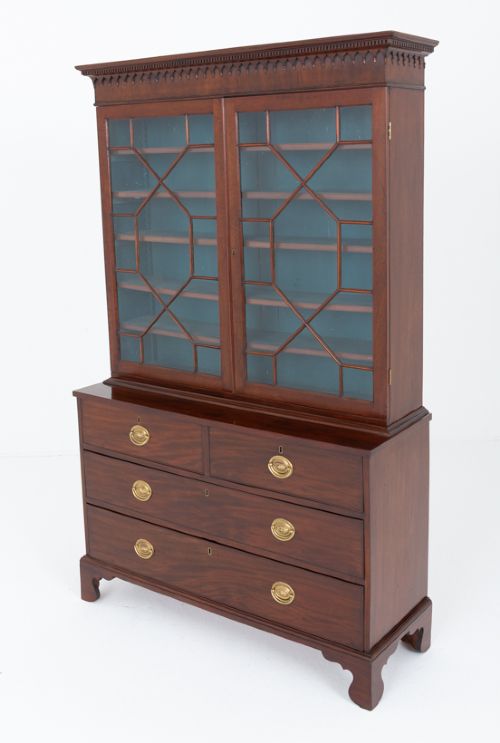
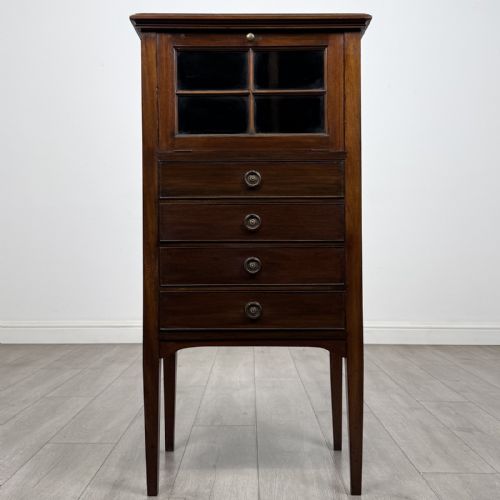
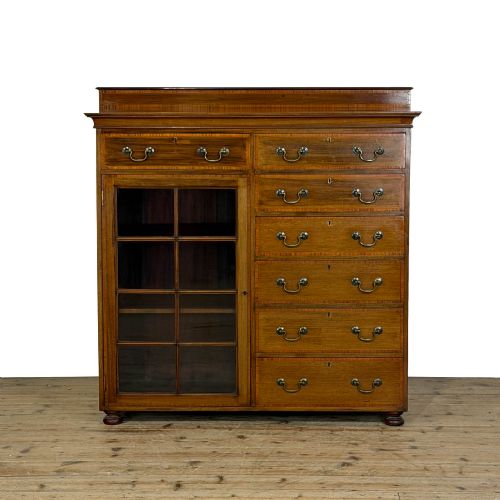
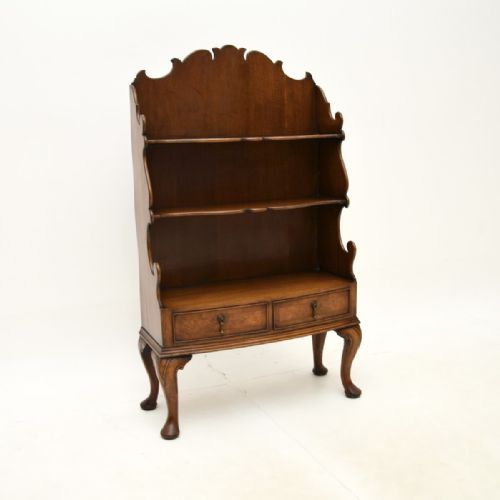
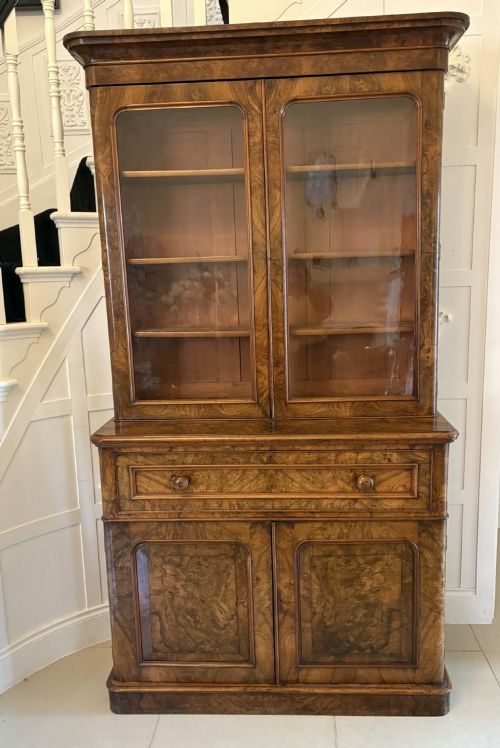
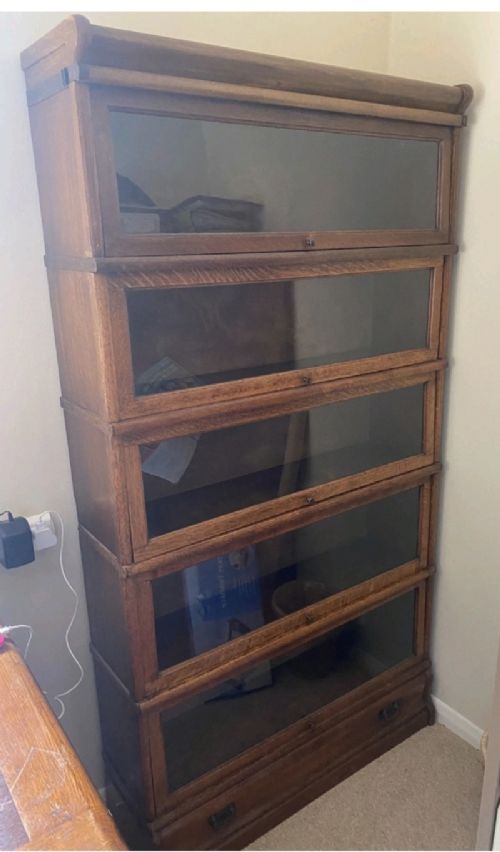
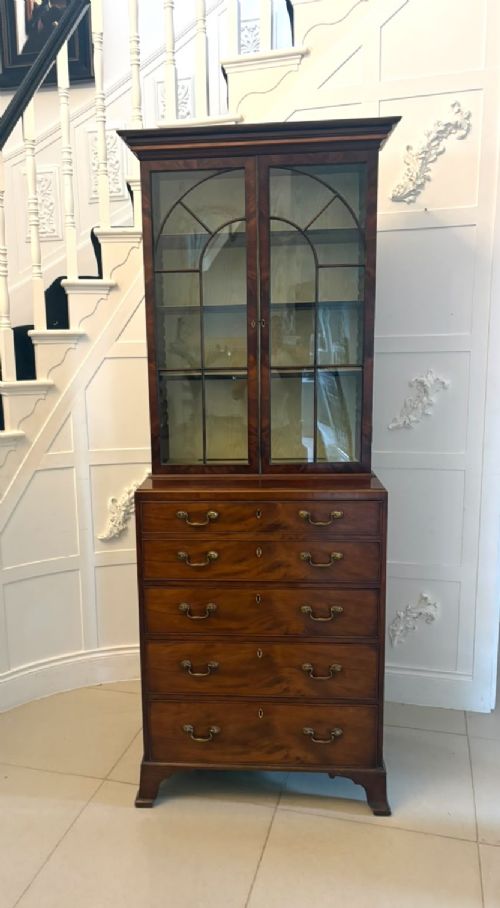
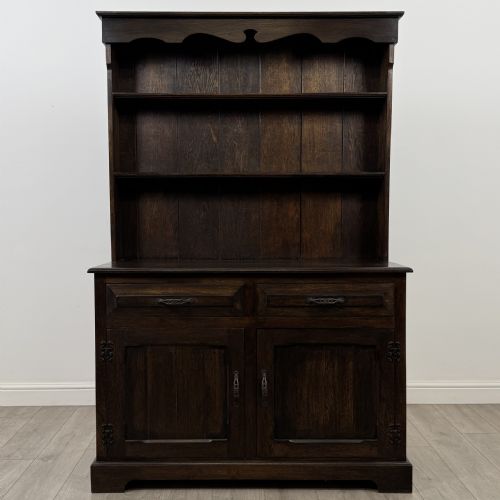
Vintage display drawers encompass multi-compartment shop fittings, collector's cabinets, and drawer-equipped bookcases spanning the Georgian, Victorian, and Edwardian periods.
Shoppers seeking vintage display drawers frequently encounter pine shop fittings with numerous small compartments alongside mahogany and oak cabinets fitted with glazed doors or lower storage drawers.
Origins range from English country workshops to metropolitan cabinet makers, utilising traditional timbers like mahogany, oak, and walnut to create functional storage furniture.
How they were made
Cabinet makers constructed these pieces using dense hardwoods such as mahogany, oak, and burr walnut, often pairing them with secondary softwoods like pine for internal drawer framing.
Glazing techniques utilised bevelled or plain glass panes set into wooden frames, while hardware incorporated cast brass handles, hinges, and occasional chrome details on later pieces.
Joinery methods relied on traditional dovetailing for drawers and mortise and tenon frames for structural integrity, complemented by turned wooden supports and carved galleries.
Vintage Display Drawers Retail Price Guide 2026
Typical asking prices for vintage display drawers among the pieces listed under this phrase on Sellingantiques today, from the lower quarter to the upper quarter. They describe what is for sale here now, not the wider market.
What varies in quality
Superior examples distinguish themselves through choice timber selections, such as figured burr walnut veneers or finely grained mahogany, rather than plain utility hardwoods.
The precision of internal drawer construction and the crispness of hand-carved mouldings, turned pillars, and applied brass embellishments indicate the original maker's skill level.
Proportion and balance dictate worth, separating standard utilitarian workshop output from pieces bearing refined architectural details and superior structural joinery.
James Winter and Sons·Globe Wernicke·Dudley and Co·Gillows
The Vintage Display Drawers Glossary
- Gallery
- A raised ornamental border running along the top edge of a cabinet or stand, designed to prevent items from sliding off.
- Astragal
- A small semi-circular moulding used in glazed cabinet doors to hold individual glass panes in a grid pattern.
- Secretaire
- A cabinet or bookcase incorporating a pull-down writing drawer fitted with small interior compartments and pigeonholes.
- Haberdashery
- Commercial shop furniture featuring numerous small drawers or glass fronts originally utilised for storing and displaying drapery goods.
- Whatnot
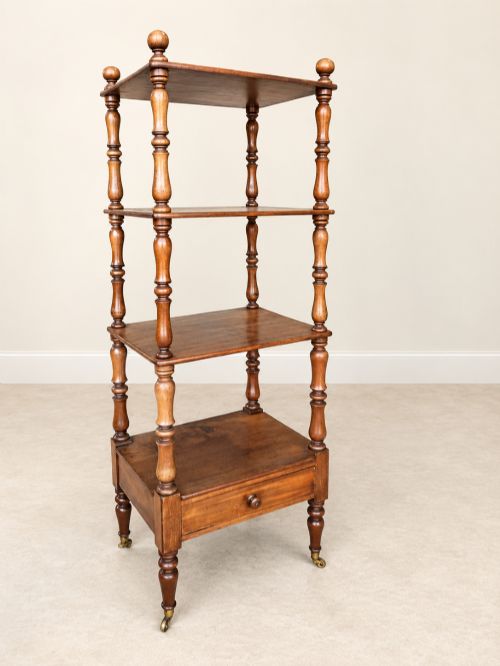
- An open set of multi-tiered shelves supported by slender columns or turned posts, used for displaying ornaments.
Vintage Display Drawers: Frequently Asked Questions
How do I date a cabinet?
Dating relies on observing construction methods, timber choices, and prevailing stylistic details such as Edwardian inlaid mahogany or heavier Victorian proportions. Secondary woods inside drawers often provide clear clues to the manufacturing era.
Hardware styles, including brass pulls and escutcheons, also help narrow down the period when combined with the overall structural design of the piece.
Where should I place a shop fitting?
Large multi-drawer shop fittings serve well as statement kitchen islands or sideboard storage units in open-plan living areas. Their numerous compartments offer practical organisation for small household items.
Ensure adequate wall space and clearance for drawers to pull out fully without obstructing room traffic or interior pathways.
Are glazed doors original?
Checking the glass panes for slight bubbles, waviness, and thickness variations helps determine if the glazing is period-correct. Older glass reflects light unevenly compared to modern float glass.
Examine the putty or wooden glazing bars to ensure they match the age and wear patterns of the surrounding cabinet frame.
How do I care for antique pine?
Maintain waxed pine surfaces by applying natural beeswax sparingly and buffing gently with a soft cloth to preserve the finish. Avoid placing timber furniture near direct heat sources or strong sunlight.
Dust regularly with a dry cloth and address minor spills immediately to prevent moisture rings from forming on the polished wood.