




Vintage Dessert Knife
These vintage dessert knife examples bring tactile elegance to the table, offering tactile pleasure and period craftsmanship that collectors prize.
Vintage Dessert Knife
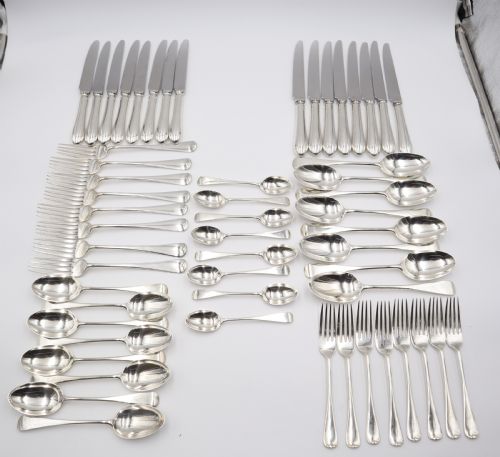
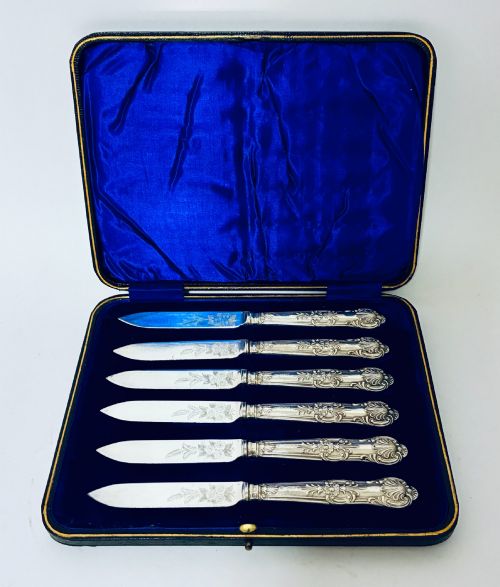
When you search for a vintage dessert knife, you enter a diverse field of fruit knives, serving cutlery, and cutlery sets spanning the nineteenth and twentieth centuries. These utensils appear in single pieces, pairs, and boxed sets.
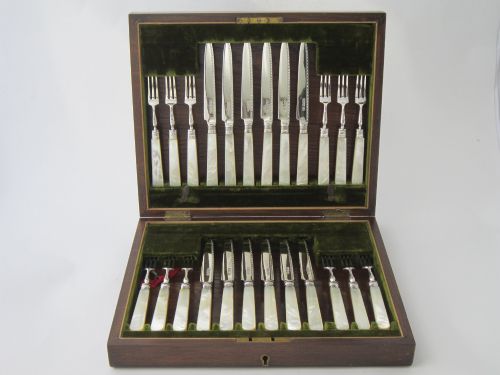
The versions you are most likely to meet on this page hail from the Victorian, Edwardian, and Art Deco periods, alongside specific decades such as nineteen ten and nineteen thirty. Formats range from cast silver blade fruit serving knives to oak cased canteens.
Origins stretch across British workshops and nineteenth century European makers, including Dutch or Southern Netherlands pieces. Buyers encounter both individual implements and complete cased sets designed for formal dining.
Materials and construction
The listings record solid silver, sterling silver, silver plate, and silver gilt paired with organic handles like mother of pearl and agate. Steel and velvet also feature alongside wooden storage cases.
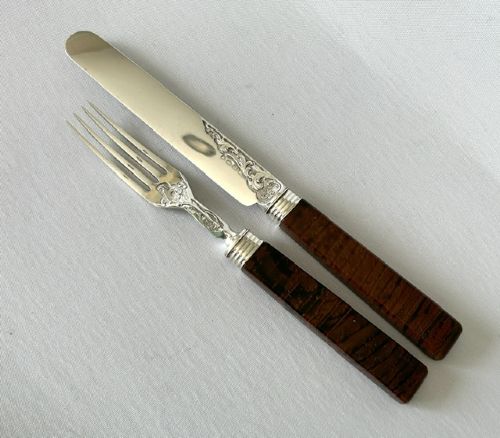
Blades and handles rely on traditional metalworking and carving techniques, utilising cast silver for specialised fruit serving knives. Makers combined durable steel and precious metals with shaped natural shell and stone.
Vintage Dessert Knife Retail Price Guide 2026
Typical asking prices for vintage dessert knife among the pieces listed under this phrase on Sellingantiques today, from the lower quarter to the upper quarter. They describe what is for sale here now, not the wider market.
Even the humblest fruit knife received a mother of pearl handle, proving that Victorians insisted on luxury even when tackling an apple.
Recognising quality in the range
Quality separates through the integrity of the materials and the crispness of the metalwork, distinguishing solid sterling or silver gilt from plated alternatives. The integration of high grade mother of pearl or agate handles elevates a piece above standard production.
Cased sets complete with original velvet linings and fitted wooden boxes occupy the upper tier of the range. Finer examples display meticulous casting and balance in the blade, whether in British or nineteenth century European pieces.
The Vintage Dessert Knife Glossary
- Silver gilt
- Silver that has been plated with a thin layer of gold on its surface. This technique provides a rich golden appearance while retaining the underlying silver structure.
- Mother of pearl
- The iridescent internal layer of certain mollusc shells used traditionally for knife handles. It offers a smooth, shimmering texture that resists moisture.
- Agate
- A fine grained ornamental stone of chalcedony, valued for its natural banding and colour variations. It creates durable, decorative handles on nineteenth century cutlery.
- Canteen
- A fitted box, chest, or case designed specifically to store a complete set of cutlery. These wooden enclosures often feature velvet or satin interiors.
Vintage Dessert Knife: Frequently Asked Questions
What is a vintage dessert knife used for?
These knives were traditionally designed for consuming fruit, pastry, or desserts at the conclusion of a formal meal. Their smaller scale and specialised blades suited the refined dining customs of the Victorian and Edwardian eras.
Today, collectors utilise them for actual dining or display, appreciating the tactile quality they bring to modern table settings.
How do I care for silver and pearl knives?
Silver components require gentle cleaning with a specialised polish to maintain their lustre without abrading the metal. Mother of pearl handles should be washed by hand in warm soapy water and dried immediately.
Store these pieces in lined boxes or dry environments away from direct sunlight to protect the natural materials from extreme temperature shifts.
How do I date a set of knives?
Dating relies on hallmarks stamped onto the silver components, which indicate the assay office, standard of metal, and year of production. Stylistic markers such as Art Deco geometric lines or Victorian ornamentation also offer clear chronological clues.
Box construction and the type of materials utilised help narrow down the decade of manufacture when hallmarks are absent.
Are cased sets harder to find?
Complete cased sets survive less frequently because individual items were easily misplaced or separated from their original storage boxes over decades of use. Oak canteens and fitted velvet boxes preserved the cutlery more effectively.
Finding a matched set with its original container remains a notable marker of a well preserved collection.