

Vintage Desk Organizer
A vintage desk organizer brings order to correspondence and writing tools through practical craftsmanship spanning the nineteenth and twentieth centuries.
Vintage Desk Organizer
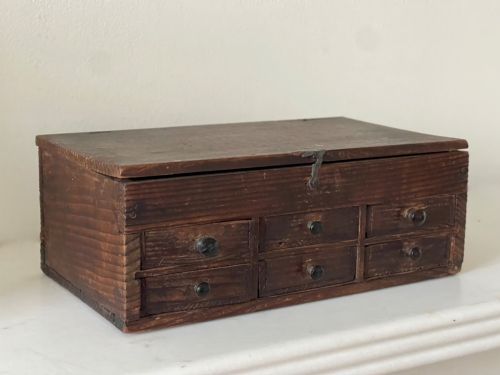
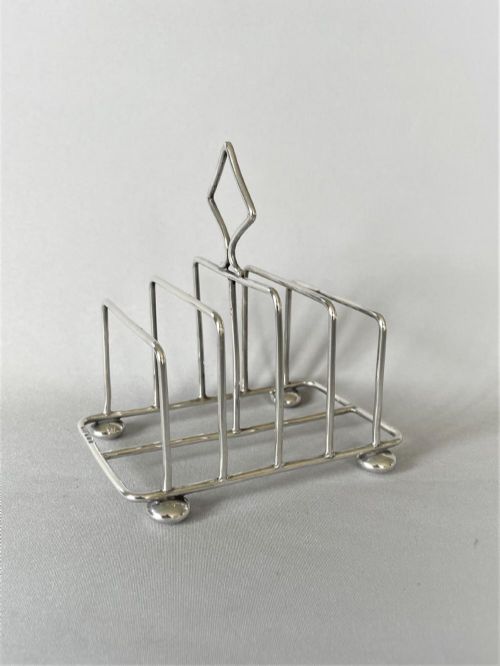
A vintage desk organizer encompasses a variety of tabletop accessories designed to keep stationery, letters, and writing implements in order. The selection includes stationery cabinets, letter racks, book slides, and desk tidies spanning the Victorian, Edwardian, and Art Deco periods.
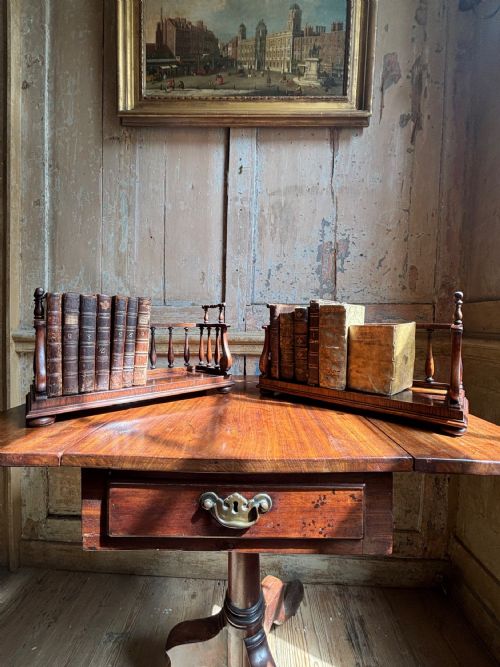
Buyers frequently encounter wooden stationery boxes, oak letter boxes, and extending book slides in mahogany, oak, and walnut. These functional pieces reflect the administrative needs of past households and offices.
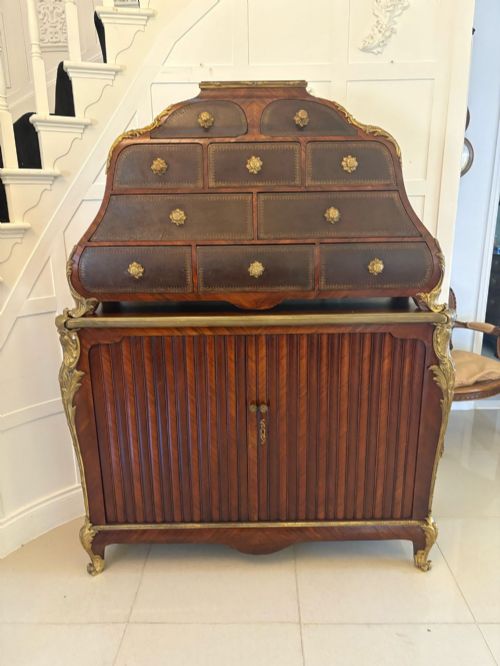
Originating largely from British and European workshops, these organizers range from simple country house oak letter boxes to elaborate French ormolu-mounted cartonnier cabinets and bronze-fitted desk stands.
Materials and Technique
Carpenters and cabinetmakers utilised dense hardwoods such as mahogany, oak, walnut, and rosewood, frequently employing dovetailed joints and hinged lids to construct durable stationery boxes and cabinets.
Metalwork played a significant role, with brass, bronze, copper, and cast iron forming inkstands, pen rests, and decorative mounts. Artisans also incorporated leather, glass, and early plastics like Bakelite and Catalin into later twentieth-century designs.
Surface decoration involved marquetry inlay, ormolu mounts, cold-painted finishes, and papier-mâché, combining structural utility with the prevailing stylistic tastes of Victorian Gothic Revival, Arts and Crafts, and Art Deco movements.
Vintage Desk Organizer Retail Price Guide 2026
Typical asking prices for vintage desk organizer among the pieces listed under this phrase on Sellingantiques today, from the lower quarter to the upper quarter. They describe what is for sale here now, not the wider market.
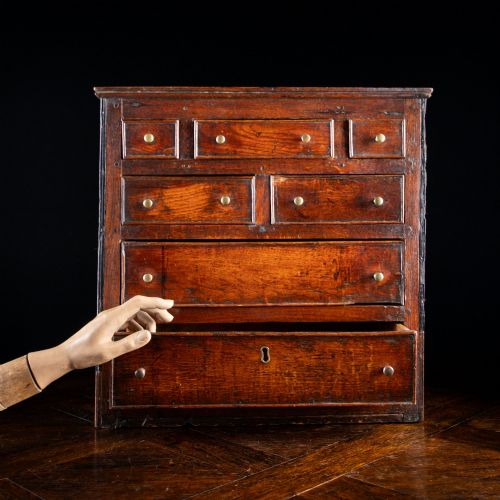
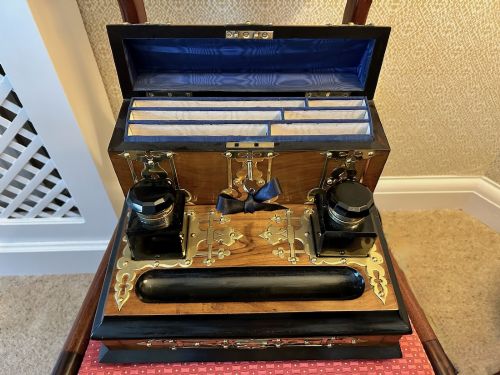
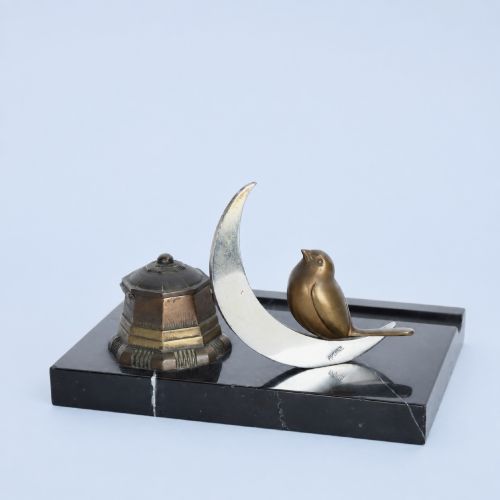
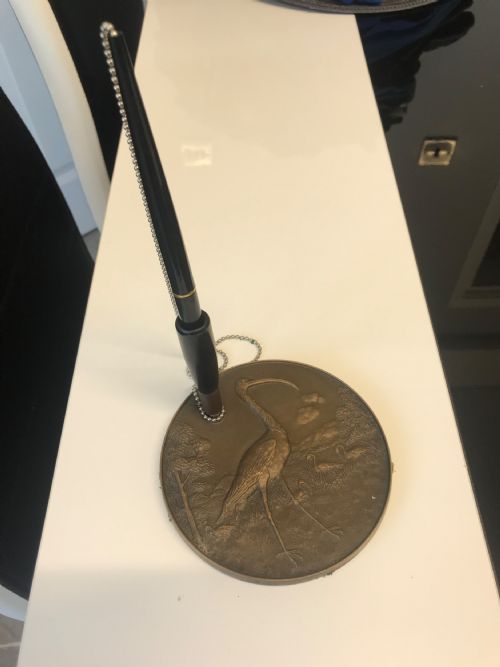
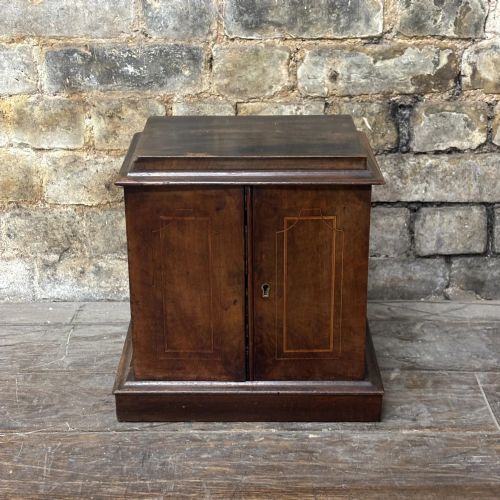
A gamekeeper's cabinet stands ready for estate paperwork, while an ibis bird gazes permanently across a bronze pen rest.
Quality and Execution
The distinction between standard and superior pieces rests on the choice of timber and the precision of joinery. Finer stationery cabinets feature solid hardwoods with book-matched veneers and tightly fitted internal pigeon holes rather than thin plywood or softwood construction.
Hardware and decorative elements dictate the upper tier of the range. Heavy cast bronze mounts, functioning locks with original keys, hand-chased ormolu, and integrated silver-plated inkwells signal superior workshop production.
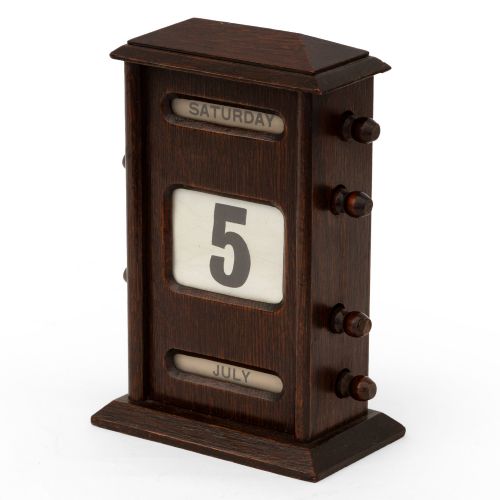
Design ambition separates basic utility items from exceptional decorative pieces. The presence of specialised mechanisms, such as extending book slides or perpetual calendars, combined with artistic metalwork or inlay, elevates a piece above standard desk accessories.
Elkington·A.Cohen & Co Ltd London·Hermes, Paris·Gillows
The Vintage Desk Organizer Glossary
- Cartonnier
- A cabinet designed for holding papers, documents, or stationery, often fitted with multiple open shelves or drawers. These tall storage units frequently feature ornate ormolu mounts.
- Stationery Box
- A desk accessory with a hinged lid or fall front designed to hold writing paper and envelopes upright. They often include internal dividers and compartments.
- Book Slide
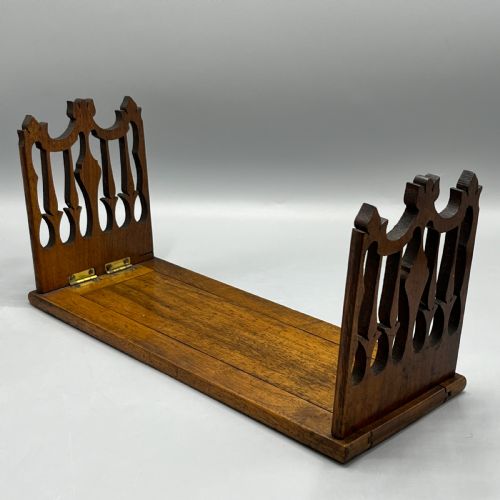
- An extending rack used to hold a small row of books upright on a desktop. The design usually incorporates sliding sections to adjust the length.
- Desk Tidy
- A multipurpose desk accessory featuring compartments for inkwells, pens, stamps, and small stationery items. They combine several writing desk requirements into one base.
- Ormolu
- Gilded bronze ornamentation applied to furniture and decorative objects. This decorative technique was popular in French and English cabinetmaking during the nineteenth century.
Vintage Desk Organizer: Frequently Asked Questions
What is a vintage desk organizer?
A vintage desk organizer is a desktop accessory created to hold writing materials, letters, and implements. These items include stationery boxes, letter racks, inkstands, and tabletop cabinets.
They were essential fixtures in nineteenth and early twentieth-century studies, offices, and writing rooms. Their primary function was keeping correspondence and documents sorted before the digital era.
How do I date a wooden desk tidy?
Dating involves examining the wood species, construction methods, and hardware. Victorian pieces often use solid mahogany or oak with hand-cut dovetails, while Edwardian examples frequently feature inlaid details and brass galleries.
Twentieth-century pieces may incorporate newer materials like Bakelite or feature Art Deco geometric lines. Comparing the style of hinges, locks, and handles also helps narrow down the period of manufacture.
How were stationery cabinets used?
Stationery cabinets sat on top of a desk to store writing paper, envelopes, and sealing wax. The fall front or hinged lid opened to reveal tiered pigeon holes and small drawers.
In period offices and homes, they kept correspondence organised and private. Many included lockable doors to secure confidential documents.
How do I care for antique wood and brass?
Antique wood benefits from occasional application of microcrystalline wax to nourish the grain and protect the finish. Avoid placing wooden pieces in direct sunlight or near heat sources to prevent warping.
Brass and bronze mounts should be dusted gently with a soft cloth. Avoid harsh chemical cleaners that strip the natural aged patina from the metal.