




Vintage Desk Calendar
These vintage desk calendar pieces bring practical timekeeping and date tracking to a workspace, combining period craftsmanship with daily utility.
Vintage Desk Calendar
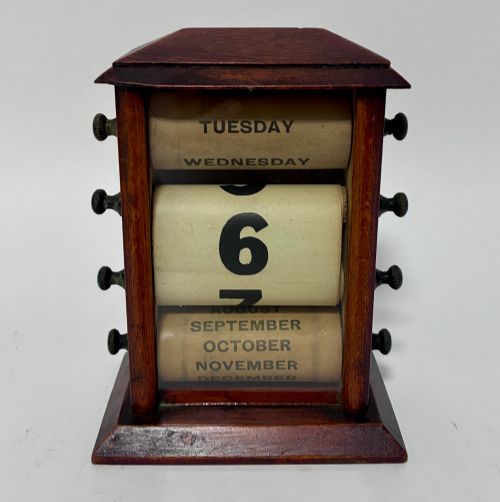
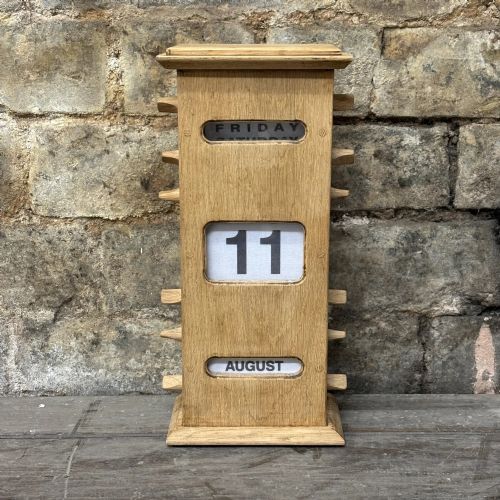
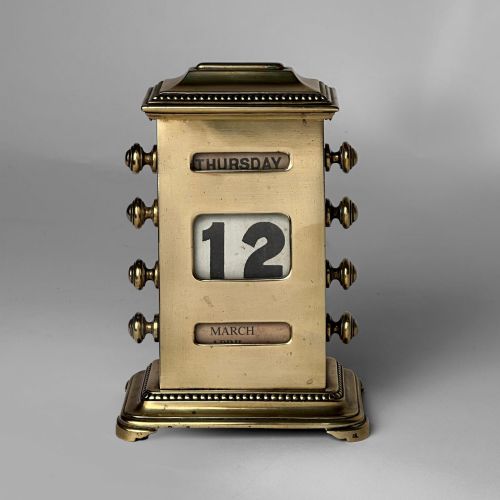
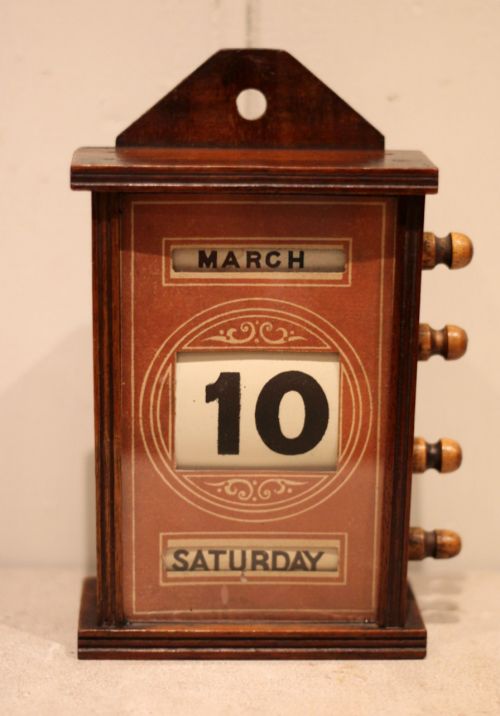
A vintage desk calendar serves to track dates on a working surface, appearing in various forms from simple perpetual blocks to combined clock and calendar units. Buyers searching for a vintage desk calendar encounter functional desktop accessories designed to organise a study or office.
The selections span multiple eras, with specimens originating from the eighteenth, nineteenth, and twentieth centuries. Oak, mahogany, and walnut woods frequently form the body of these pieces, alongside brass, silver, glass, and bakelite.
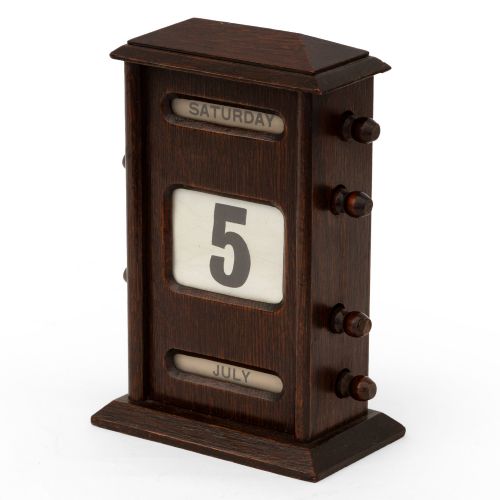
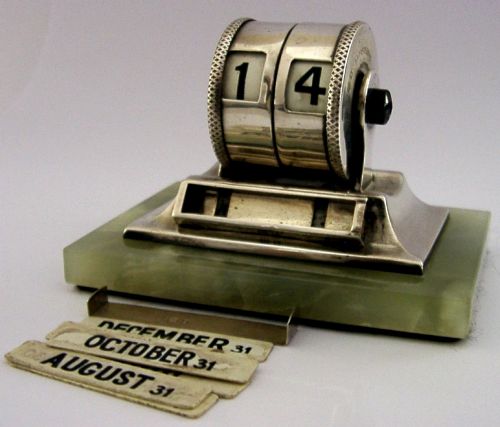
Common iterations include perpetual calendars made of dark oak, silver models from the art deco period, and brass designs featuring Egyptian decoration. Wall-mounted calendars and complex carriage clocks with date work also appear within the selection.
How they were made
Materials like oak, mahogany, and walnut provide sturdy wooden frames, while metals such as brass, gun metal, and sterling silver form structural housings and trim. Glass protects delicate dials and paper components, and bakelite appears in later twentieth-century Streamline designs.
Craftsmen utilised casting for brass elements and precision metalwork for internal date gears and clock mechanisms. Woodworkers shaped timber into stationery cabinets, desk stands, and perpetual calendar blocks, incorporating decorative panels of green onyx or tortoiseshell.
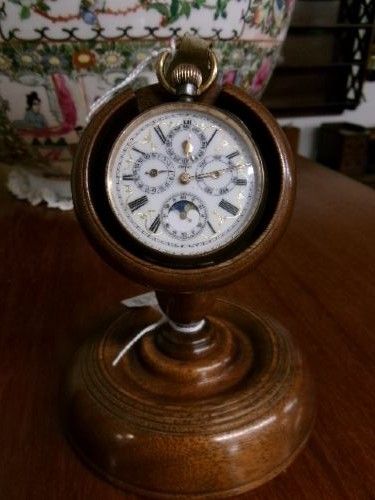
Some calendars display the moon's face on the desk, proving even a date needs a bit of personality.
What varies in quality
Quality rests in the choice of materials and the complexity of the mechanism, distinguishing simple wooden blocks from elaborate pieces combining clocks, moonphase displays, and alarm functions. Superior items employ precious metals, fine hardwoods, and named maker components.
Refinement in the casting of brass decoration, the integrity of silver hallmarks, and the precision of the date-changing mechanism define the upper tier of these accessories. Lesser examples rely on simpler construction without integrated timekeeping complications.
William Tonks of Birmingham·Minton Hollins·Louis Goret Paris·L Epee·Jaeger LeCoultre·J F Bautte Et Cie·Asprey London
The Vintage Desk Calendar Glossary
- Perpetual calendar
- A calendar designed to show the day and date indefinitely without requiring resetting for shorter months. This mechanism adjusts mechanically for varying month lengths.
- Art Deco
- A design style popular in the nineteen-twenties and thirties characterised by streamline forms and geometric patterns. Pieces from this era often utilise bakelite, chrome, and green onyx.
- Carriage clock
- A portable spring-driven clock developed in the nineteenth century for travelling use. Many examples incorporate date work and alarm complications.
- Boulle
- A form of marquetry using brass and tortoiseshell inlaid in intricate patterns. This technique decorates high-end nineteenth-century English and French pieces.
- Moonface
- A dial feature showing the phases of the lunar cycle graphically. This complication appears on select pocket watches and desk clocks.
Vintage Desk Calendar: Frequently Asked Questions
How do perpetual calendars work?
Perpetual calendars utilise internal gear trains or adjustable cards to display the correct day and date continuously. These mechanical systems account for the varying number of days in different months.
Operators manually or mechanically advance the indicators as each day passes, ensuring the correct alignment of date numbers and day names throughout the year.
Are these calendars still accurate to use?
Perpetual date mechanisms function reliably for tracking days and dates regardless of the year of manufacture. The mechanical gear systems remain operational when handled with standard care.
Models that include integrated clocks may require servicing by a horologist to ensure timekeeping accuracy, particularly for complex movements like grande sonnerie or alarm clocks.
What materials were commonly used?
Maker workshops constructed these pieces from traditional cabinet timbers including oak, mahogany, and walnut. Metal elements typically involved cast brass, sterling silver, gun metal, and later chrome.
Decorative accents frequently featured green onyx, glass panels, tortoiseshell, and ceramic tiles produced by factories such as Minton Hollins.
How do I identify an art deco piece?
Art deco items from the nineteen-twenties and thirties display streamline geometry, symmetrical forms, and modern industrial materials. Bakelite and chrome frequently appear alongside polished green onyx bases.
These designs reject traditional ornamentation in favour of clean architectural lines, often bearing marks indicating British or continental manufacture.