




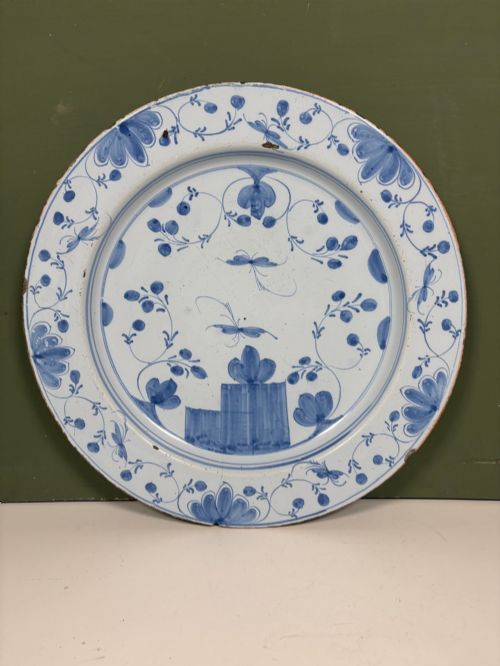

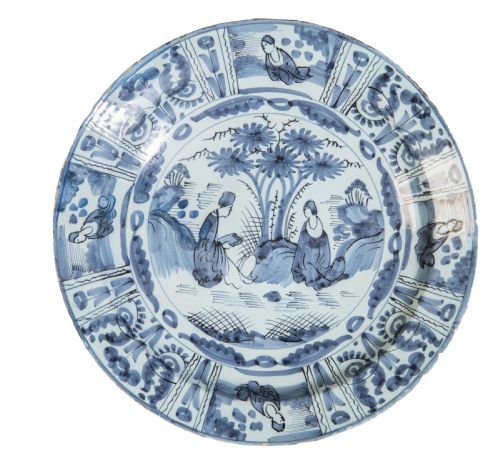


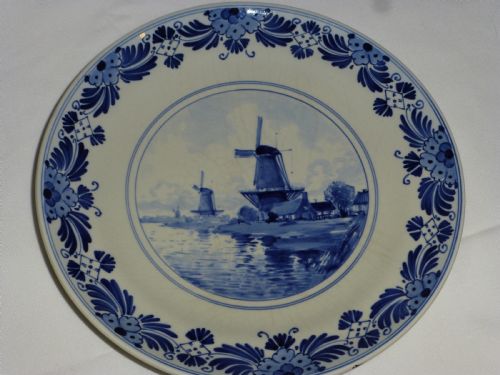

Vintage Delftware Plate
These vintage delftware plate selections bring tin-glazed earthenware into modern rooms through blue and white, manganese, and polychrome palettes.
Vintage Delftware Plate
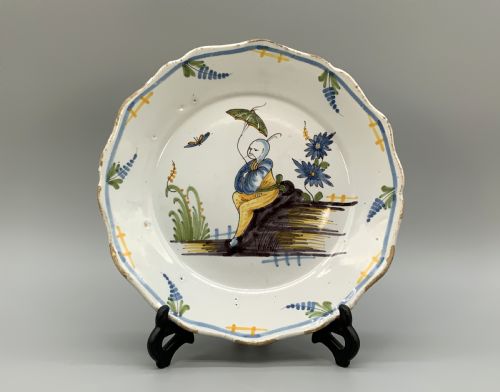
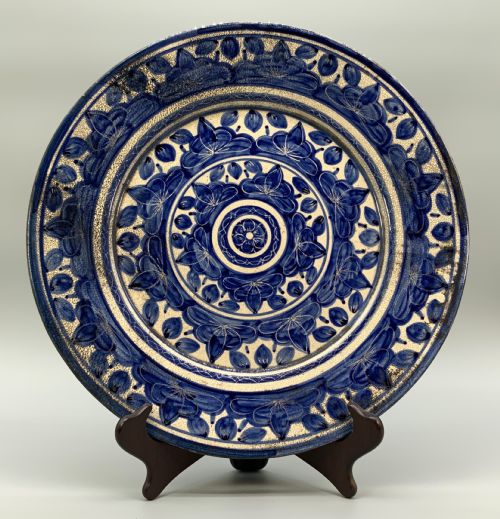
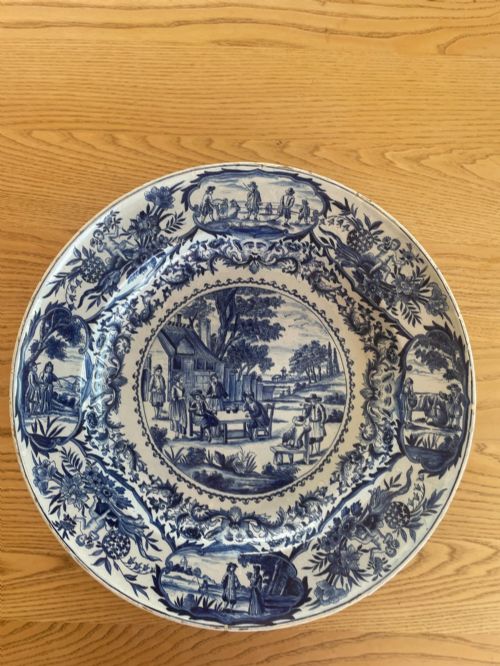
When you search for vintage delftware plate, you encounter decorative chargers, wall chargers, and shallow bowls from the seventeenth, eighteenth, and nineteenth centuries. The majority of these pieces originate from Dutch workshops, alongside English polychrome examples and French faience pieces.
The forms range from large decorative chargers designed for display to smaller domestic plates and shallow bowls. Continental and Moorish style influences appear across the selection alongside traditional Dutch Delft and Georgian forms.
Materials and construction
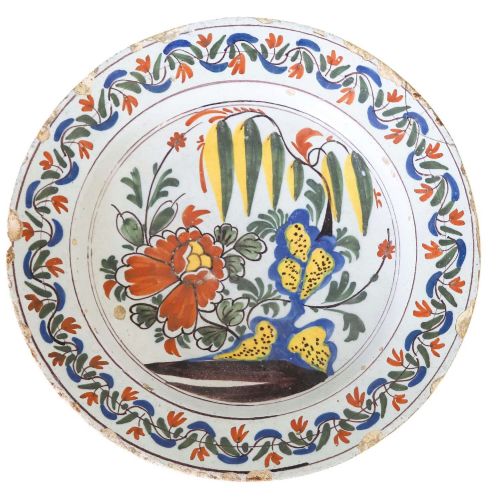
Potters built these items using earthenware covered in a tin glaze that creates the characteristic opaque white surface. Cobalt oxide and cobalt pigment provide the traditional blue and white decoration, while manganese and yellow pigments deliver polychrome effects.
Makers applied hand-painted floral decoration and Chinoiserie motifs directly onto the unfired or fired glaze before a final kiln transformation. Grand feu techniques fixed these mineral colours firmly into the tin glaze during high-temperature firing.
Vintage Delftware Plate Retail Price Guide 2026
Typical asking prices for vintage delftware plate among the pieces listed under this phrase on Sellingantiques today, from the lower quarter to the upper quarter. They describe what is for sale here now, not the wider market.
Manganese pigment gives some eighteenth-century plates a rich plum tone that makes a change from standard blue.
What separates the grades
The refinement of the hand-painted brushwork distinguishes standard domestic plates from ambitious decorative chargers. Crisp cobalt pigment application and balanced polychrome palettes demonstrate greater control during the painting process.
The consistency of the tin glaze and the complexity of the motifs, such as intricate floral or Chinoiserie designs, indicate the skill of the original workshop.
The Vintage Delftware Plate Glossary
- Tin-glazed earthenware
- Earthenware pottery covered with an opaque white glaze containing tin oxide. This surface serves as the absorbent ground for cobalt and other mineral pigments.
- Charger
- A large decorative plate intended primarily for wall display or sideboard presentation rather than table service. These oversized dishes frequently measure significantly more than standard dining plates.
- Faience
- European tin-glazed earthenware produced in France and other continental centres. The term often describes wares made outside traditional Dutch and English potteries.
- Grand feu
- A high-temperature ceramic firing technique that fuses painted mineral colours directly into the raw glaze. This method produces deep integration of manganese, blue, and polychrome pigments.
- Polychrome
- Decoration utilising multiple distinct colours rather than a single hue like blue and white. These examples incorporate manganese, yellow, and other pigments alongside standard blue.
Vintage Delftware Plate: Frequently Asked Questions
How were delft chargers used originally?
These large dishes served primarily as decorative wall chargers or sideboard displays in prosperous homes rather than everyday tableware.
Their substantial size and hand-painted motifs made them prestige items for showing off wealth and artistic taste to visitors.
How do I hang a heavy charger?
Use professional, coated wire hanger systems designed specifically for heavy earthenware plates to distribute weight evenly.
Ensure the wall fixing anchors securely into solid masonry or stud work rather than relying on standard plaster plugs.
What is the difference between delft and faience?
Delft specifically denotes tin-glazed earthenware produced in Dutch workshops, whereas faience is the broader continental term used largely for French and other European wares.
Both employ similar tin-glaze and pigment techniques on an earthen body.
How can I tell an eighteenth-century plate from a nineteenth-century one?
Eighteenth-century examples often display looser, more spontaneous hand-painted floral or Chinoiserie brushwork combined with characteristic glaze pooling.
Nineteenth-century pieces tend to show greater uniformity in the ceramic body and more rigid application of the cobalt pigment.