






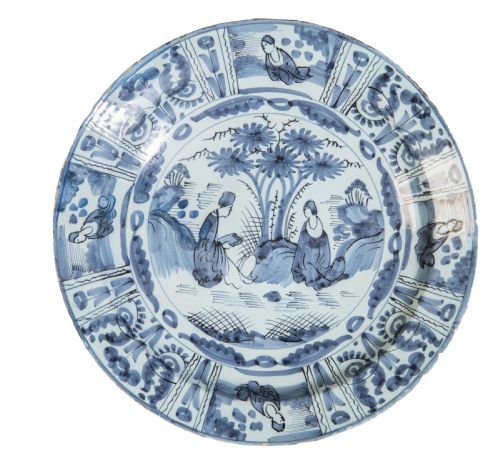


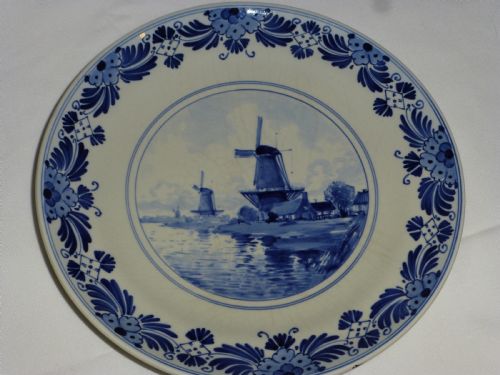

Vintage Delft Charger Plate
These vintage delft charger plates are large tin-glazed earthenware dishes that bring striking cobalt blue or polychrome painted scenes to your walls and tables.
Vintage Delft Charger Plate
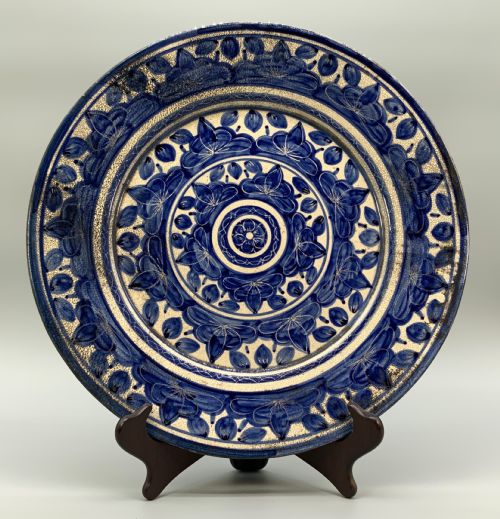
A vintage delft charger plate is a large decorative dish produced across various European centres, most notably in the Netherlands, England, and France, drawing on styles from Dutch Baroque to Moorish influences. These sizeable pieces, often termed wall chargers or decorative plates, were designed primarily for display rather than dining.
The pieces on this page span several centuries, reaching from the seventeenth century through to the nineteenth century, with a notable concentration of eighteenth-century examples. You will encounter both grand wall plates and smaller plates, executed in classic blue and white as well as manganese and polychrome palettes.
How they were made
Makers shaped these items from earthenware, applying a tin glaze that provided a smooth, opaque white surface for hand-painted decoration. Painters then applied cobalt oxide and other pigments directly onto the unfired or raw glaze, allowing the colours to fuse during the firing process.
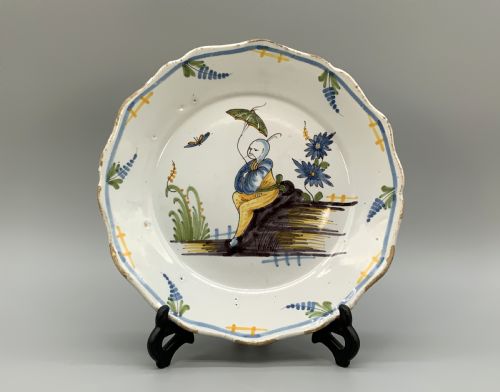
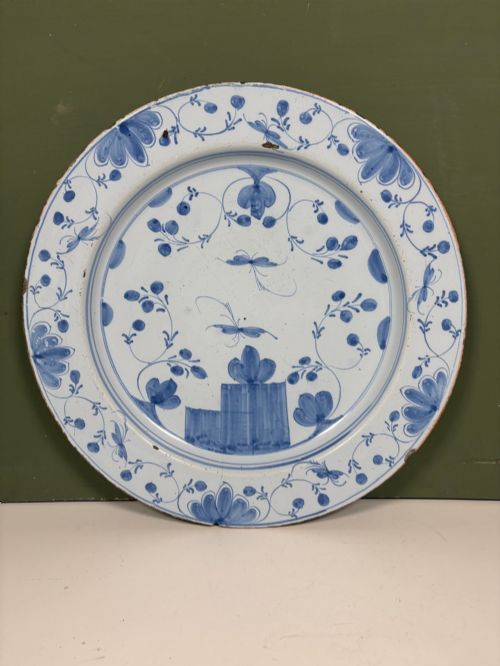
Grand feu techniques enabled certain workshops to fire complex manganese and polychrome designs at high temperatures, fixing the pigments firmly within the glaze. Other pieces feature hand-painted floral motifs and Chinoiserie scenes rendered in delicate brushwork across the wide central wells and borders.
Vintage Delft Charger Plate Retail Price Guide 2026
Typical asking prices for vintage delft charger plate among the pieces listed under this phrase on Sellingantiques today, from the lower quarter to the upper quarter. They describe what is for sale here now, not the wider market.
Materials recorded across these items involve cobalt oxide and cobalt pigment applied to create traditional blue and white schemes, alongside manganese and polychrome.
What varies in quality
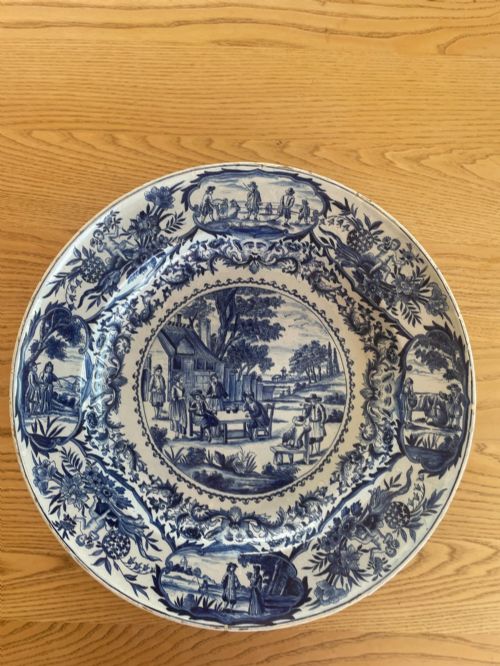
Quality rests principally in the crispness and ambition of the hand-painted decoration, ranging from simple border lines to intricate floral and figurative compositions. Finer pieces display confident brushwork and rich, deep cobalt pigments or varied polychrome hues that retain their vibrancy across the surface of the charger.
The overall potting weight, the evenness of the tin glaze application, and the depth of the dish also distinguish standard utility wares from superior decorative chargers. Pieces that exhibit careful control during the high-temperature firing maintain clearer painted details and a more uniform glaze finish.
The Vintage Delft Charger Plate Glossary
- Tin-Glazed Earthenware
- Pottery fired from clay and coated with an opaque white glaze containing tin oxide. This technique forms the essential white canvas for traditional delft painting.
- Charger
- A large decorative plate or dish traditionally intended for display on a sideboard or wall rather than for individual table service. These substantial vessels measure significantly larger than standard dining plates.
- Cobalt Oxide
- A metallic pigment used to produce the deep blue colour characteristic of classic delftware. Painters apply this mineral before firing, where it reacts with the glaze to create rich tones.
- Polychrome
- Decoration employing multiple colours beyond the traditional blue and white. On these plates, such palettes often include manganese, yellow, and green pigments.
- Manganese
- A metallic oxide pigment producing rich purplish-brown or reddish-brown tones. Potters utilised this mineral for distinct pictorial details and secondary framing lines.
- Chinoiserie
- European artistic interpretations of Chinese decorative motifs and pictorial styles. These designs frequently appear on eighteenth-century plates depicting imaginative landscapes and figures.
Vintage Delft Charger Plate: Frequently Asked Questions
How do I hang a heavy charger safely?
Large chargers require secure support, usually in the form of a coated spring hanger that grips the rim evenly without putting undue pressure on the earthenware body.
Alternatively, many collectors display them on sturdy plate stands or inside dedicated wall-mounted cabinets to protect the edges from accidental knocks.
Are these plates meant for daily dining?
These pieces are historic decorative objects with soft earthenware bodies and tin glazes that are susceptible to scratching and staining from cutlery and food acids.
Displaying them on walls or surfaces preserves the hand-painted surfaces and prevents unnecessary wear to the historic glaze.
How can I tell an eighteenth-century plate apart from a nineteenth-century one?
Eighteenth-century examples often display deeper potting variations, looser foot rims, and hand-ground pigments that interact organically with the tin glaze during firing.
Later nineteenth-century plates tend to show more uniform manufacturing standards and crisper, sometimes harder-edged transfer or painted details.
Why do some plates have holes in the foot ring?
Makers frequently pierced the unglazed foot rim prior to firing so that a cord could be threaded through for wall hanging. This period practice allows collectors today to display the charger securely using traditional methods.