

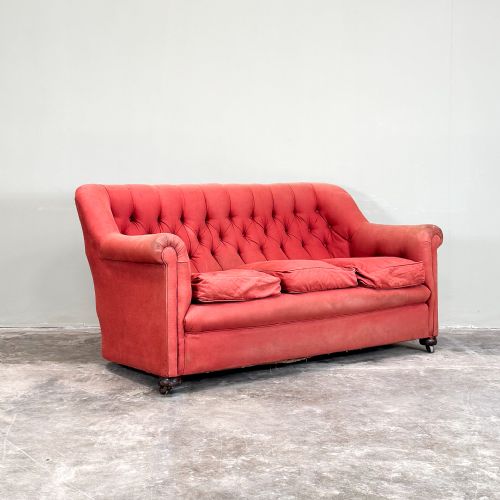


Vintage Deep Seat Settee
A vintage deep seat settee offers deep comfort and generous proportions, spanning Victorian leather chesterfields to Edwardian country house styles.
Vintage Deep Seat Settee
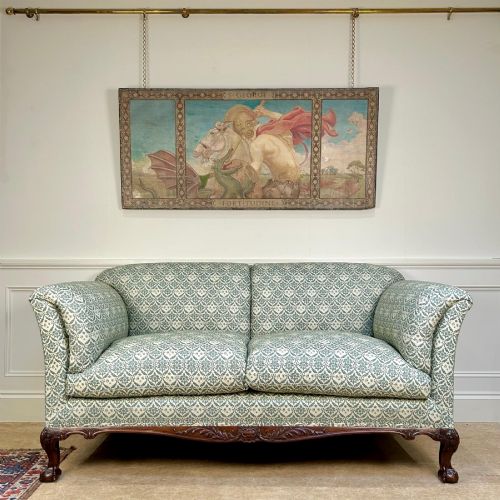
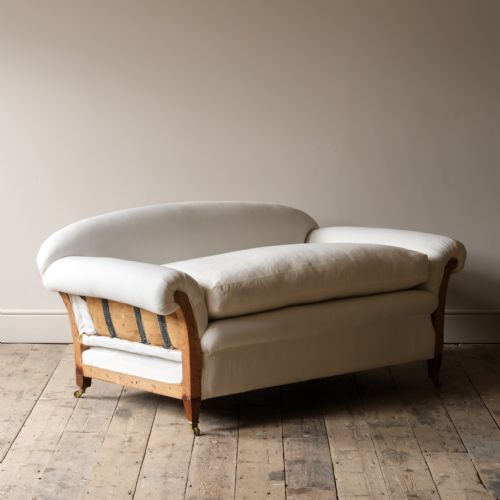
A vintage deep seat settee provides a substantial seating platform designed for relaxation, appearing across periods from the nineteenth century through to the nineteen-thirties. Buyers searching for a vintage deep seat settee encounter various forms including two-seater and three-seater sofas, alongside distinct country house models and chesterfields.
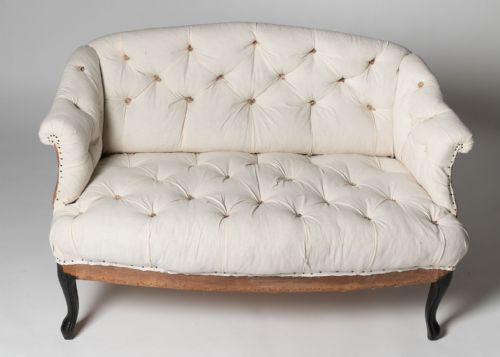
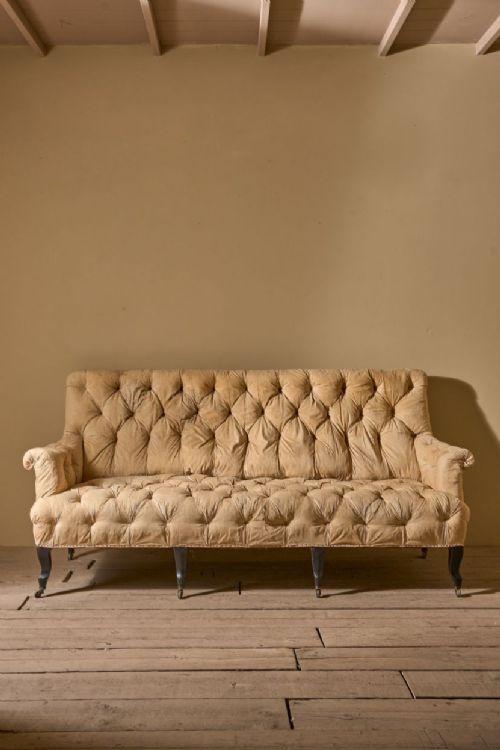
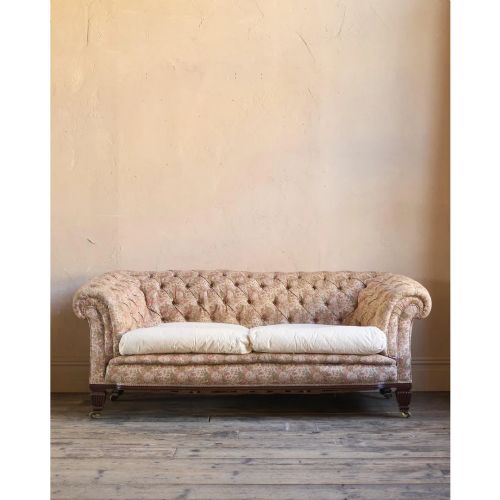
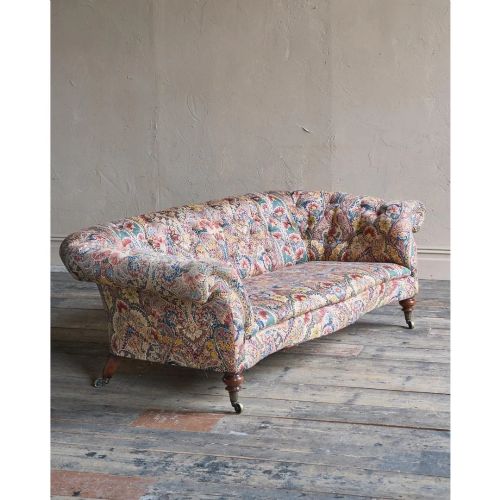
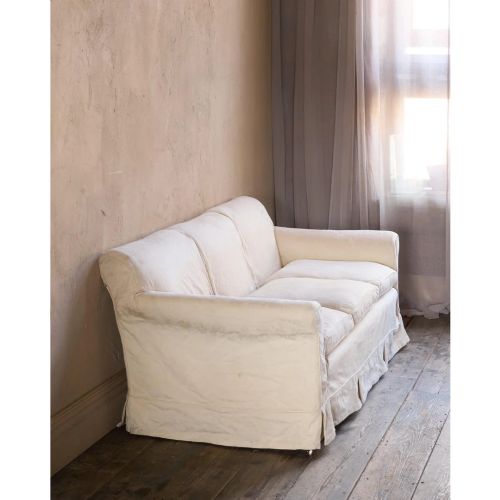
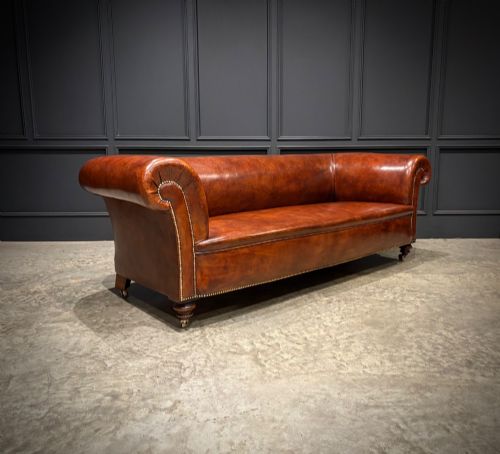
The selection on this page ranges from early nineteenth-century Regency examples and Victorian pieces in brown leather or mahogany frames to Edwardian and nineteen-thirties country house sofas. These items frequently display traditional upholstery methods, buttoned backs, and specific forms such as the ottoman couch or window seat.
Makers and origins recorded in the listings include Howard and Sons and Gillows, alongside pieces attributed to English workshops. The prevalent styles encompass Victorian, Edwardian, Napoleon III, and traditional English country house aesthetics.
How they were made
Construction relies on timber and mahogany frames that provide structural support for deep seating proportions. Wood serves as the primary skeleton for these settees, often paired with brass details.
Upholstery materials recorded in the evidence include leather, velvet, calico, hessian, and original ticking. Button-backed techniques appear frequently across nineteenth-century and later pieces, alongside lined and un-restored upholstery states.
Vintage Deep Seat Settee Retail Price Guide 2026
Typical asking prices for vintage deep seat settee among the pieces listed under this phrase on Sellingantiques today, from the lower quarter to the upper quarter. They describe what is for sale here now, not the wider market.
Some nineteenth-century settees arrive complete with their original ticking, whispering secrets of long-ago afternoon naps.
What varies in quality
Quality variation is visible in the integrity of the timber frame and the preservation of original upholstery materials like leather, ticking, or calico. Pieces retaining un-restored original surfaces differ significantly from those with later recovering.
The execution of button-backed detailing and the refinement of wood or mahogany framing distinguish workshop-produced pieces by makers such as Howard and Sons or Gillows from standard vernacular output.
Howard and Sons·Gillows
The Vintage Deep Seat Settee Glossary
- Chesterfield
- A traditional style of sofa characterised by equal height arms and back, frequently featuring deep button tufting and leather upholstery. This form has remained a staple of British seating design since the nineteenth century.
- Calico
- A plain-woven textile typically used as an inner lining or base cover beneath top upholstery fabrics on antique seating. It provides a stable foundation for stuffing and springs.
- Hessian
- A coarse woven fabric made from jute fibres, traditionally employed in traditional upholstery for webbing and internal padding containment. It offers durability and structural support within the frame.
- Ticking
- A tightly woven cotton or linen fabric historically used to contain feather or down fillings in cushions and mattresses. Original ticking is often sought after by collectors for its authenticity.
- Button back
- An upholstery technique where buttons are pulled deep into the padding in a diamond pattern to secure the filling and create a tufted surface. This method is common on Victorian and Edwardian settees.
Vintage Deep Seat Settee: Frequently Asked Questions
What is a deep seat settee?
A deep seat settee is a sofa built with an extended seating depth designed for lounging and comfort. These pieces often feature generous proportions and traditional sprung or stuffed construction.
They appear in various historic styles, from Victorian leather chesterfields to nineteen-thirties country house seating.
How do I identify a Victorian sofa?
Victorian sofas are identified by their nineteenth-century manufacturing traits, heavy timber or mahogany frames, and specific upholstery styles like button-backed velvet or brown leather. Period pieces often show traditional joinery and materials such as hessian and calico beneath the surface.
Makers like Gillows and Howard and Sons operated during these eras and produced distinctive designs.
What is original ticking upholstery?
Original ticking is the historic striped cotton or linen fabric used to cover the internal padding and cushions of antique furniture. Finding a piece with original ticking indicates that the internal stuffing has not been replaced.
Collectors value this preservation for its historical accuracy.
Are these settees comfortable for daily use?
These settees are designed with deep proportions intended for relaxed seating. Their construction relies on traditional materials like horsehair, springs, and feather fillings.
Comfort levels depend on the specific padding and whether the piece has been maintained or restored over time.