


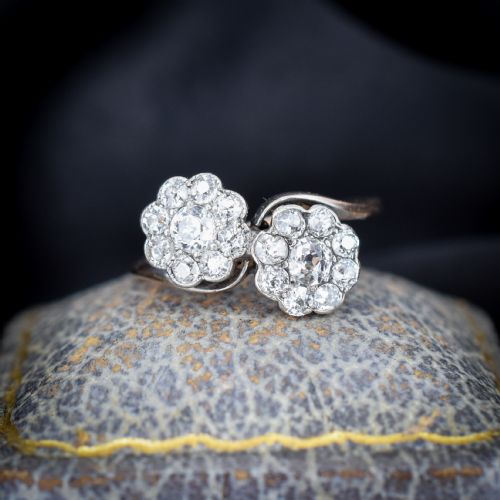

Vintage Daisy Cluster Ring
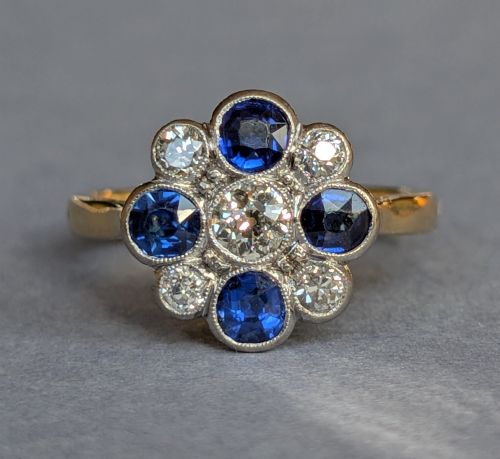
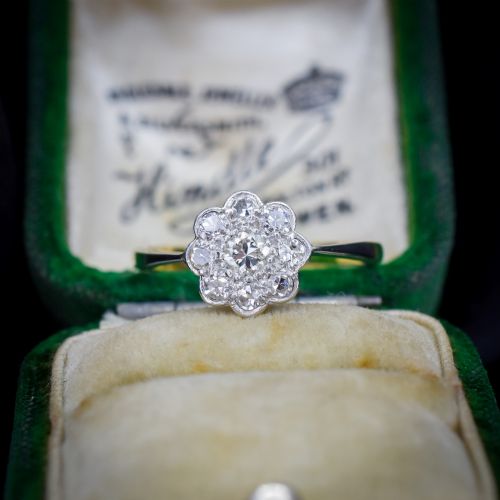
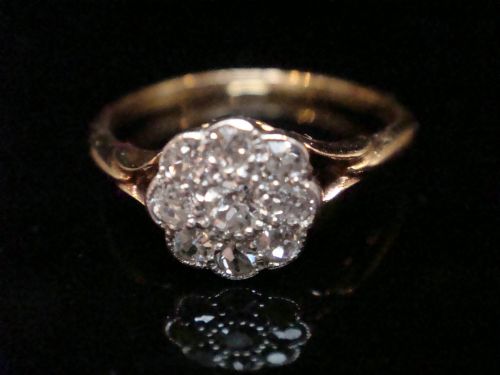
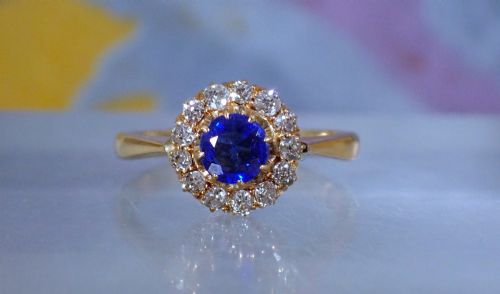
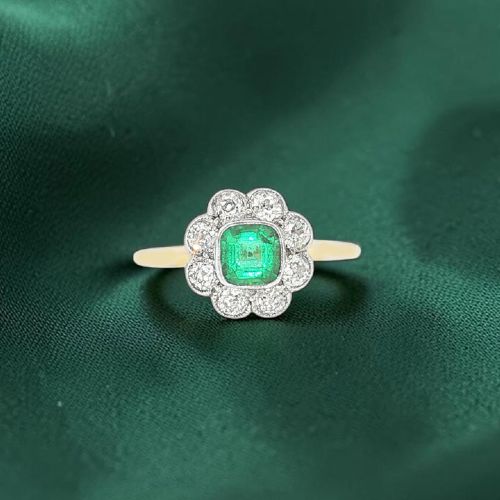
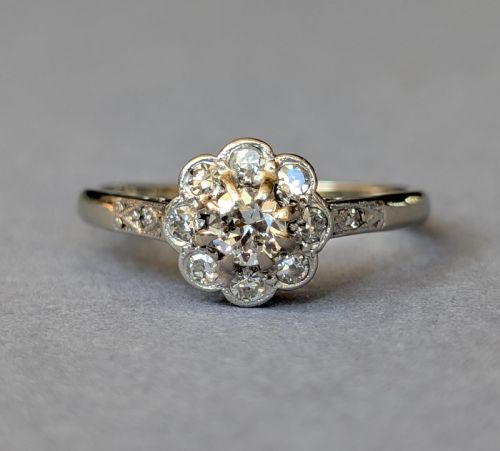
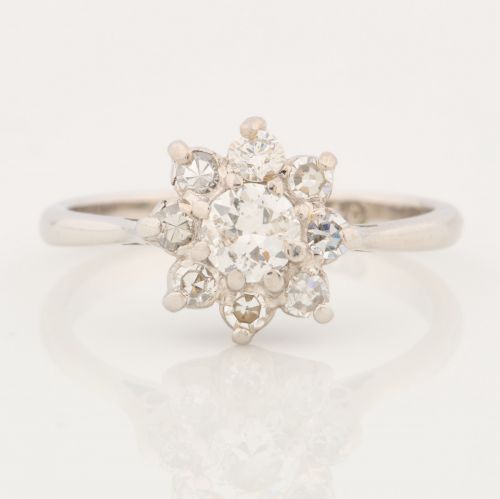
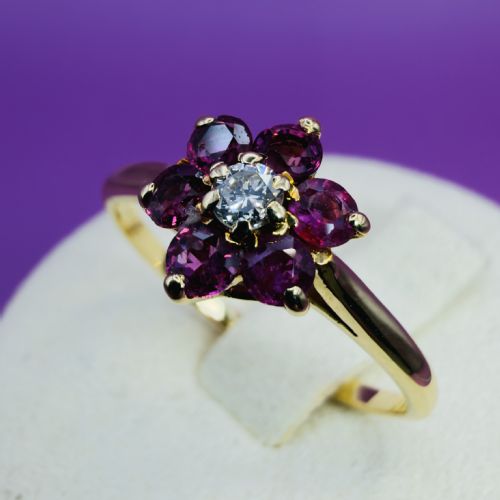
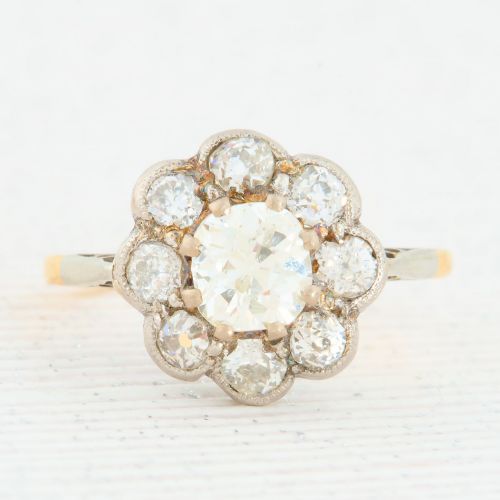
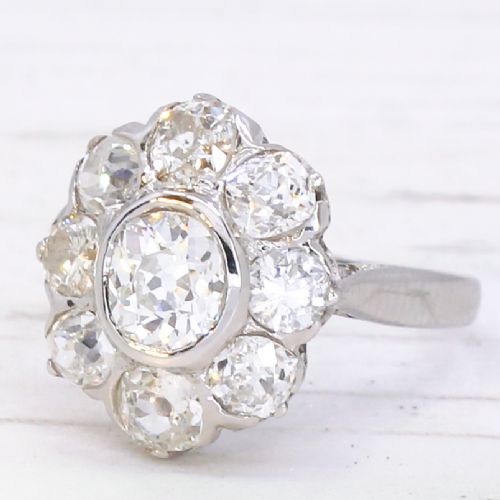
A vintage daisy cluster ring brings together a central gemstone surrounded by smaller stones, creating a floral motif cherished across Edwardian and Art Deco periods.
Vintage Daisy Cluster Ring
The prevailing form on this page combines an 18ct yellow or white gold shank with a platinum setting holding old-cut diamonds around a central gem. Alongside diamonds, jewellers utilised sapphires, rubies, emeralds, and pearls to create the colourful floral centres of these cluster designs.
Most pieces date from the early twentieth century, showing influences from Edwardian refinement and geometric Art Deco styling. The configuration remains popular for engagements and everyday wear due to the low profile and broad sparkle of the clustered stones.
How they were made
Goldsmiths utilised 18ct yellow gold, white gold, and platinum, frequently combining yellow gold shanks with platinum-topped settings to enhance the whiteness around diamonds. This dual-metal construction characterises many Edwardian and Art Deco examples.
Master craftsmen set stones using old-cut diamonds, including old European and mine cuts, secured in claw, collet, or delicate millgrained settings. The central gemstone sits higher or flush within a border of smaller matching gems, forming the structured daisy head.
What varies in quality
The overall standard depends on the matching and carat weight of the peripheral stones relative to the central gem, alongside the precision of the claw work and metal geometry. Uniformity in stone size and colour within the cluster elevates the piece.
The delicacy of the gallery work underneath the cluster and the preservation of original millgraining along the platinum edges distinguish finer workshops from standard production.
The Vintage Daisy Cluster Ring Glossary
- Daisy cluster
- A ring design featuring a central gemstone encircled by a ring of smaller stones resembling flower petals. This floral configuration is traditional in antique and vintage engagement rings.
- Old cut
- A diamond facet style hand-cut before modern machinery, characterised by a smaller table, higher crown, and open culet. These stones produce a softer, candlelight sparkle.
- Millgrain
- A decorative border of tiny raised metal beads along the edge of a setting, typical in Edwardian and Art Deco jewellery. It adds a refined texture to platinum mounts.
- Toi et Moi
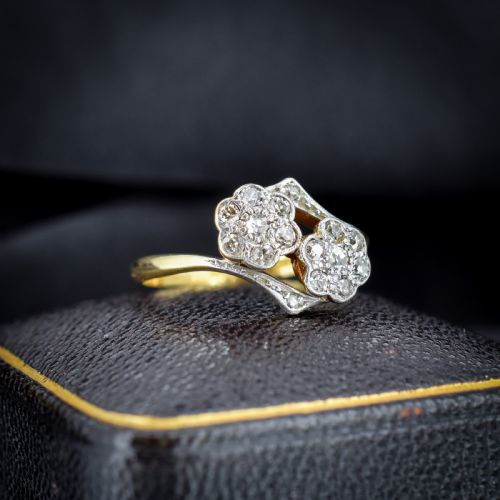
- French for you and me, denoting a ring design featuring two main stones set close together. Some vintage cluster variations incorporate twist shanks reminiscent of this style.
- Target ring
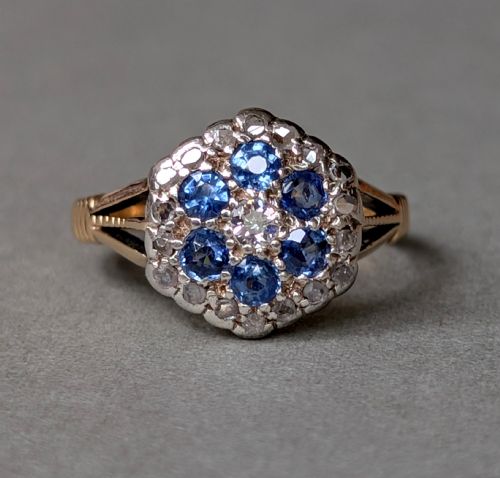
- A specific type of cluster ring featuring concentric circles of contrasting gemstones, often sapphires and diamonds, creating a bullseye visual effect.
Vintage Daisy Cluster Ring: Frequently Asked Questions
What is a daisy cluster ring?
A daisy cluster ring is a historic jewellery design where a central gemstone is completely encircled by a border of smaller stones. This arrangement creates a distinct floral motif resembling the petals of a flower.
Such rings became popular during the Victorian era and reached widespread acclaim throughout the Edwardian and Art Deco periods. They are frequently chosen as vintage engagement rings for their distinctive shape and brilliant surface coverage.
How do I date a vintage cluster ring?
Dating a cluster ring involves examining the metal combinations, stone cut styles, and manufacturing techniques used in the setting. Edwardian pieces often combine yellow gold with platinum-topped settings and delicate millgrain decoration.
Art Deco examples tend to feature geometric platinum mounts and old-cut diamonds arranged in sharp symmetry. Hallmarks and assay marks stamped inside the shank also provide official clues to the year of manufacture.
Can I wear a vintage daisy ring daily?
Many people wear these antique rings daily, provided the setting is secure and the stones remain tightly held by their original claws. Platinum and 18ct gold provide durable foundations suitable for everyday activities.
Regular inspection by a jeweller helps ensure that the prongs holding the cluster stones do not wear down over time. Removing the ring during heavy manual work prevents unnecessary impact on the older gems.
Are old cut diamonds different from modern ones?
Old cut diamonds are hand-faceted stones cut prior to the standardisation of modern brilliant cuts in the early twentieth century. They exhibit smaller table facets, deeper pavilions, and open culets that catch ambient light uniquely.
This historical cutting method gives the diamonds in vintage cluster rings a distinct, warmer glow rather than the sharp white brilliance of modern stones.