





Vintage Cutlery Tray
These vintage cutlery tray examples are practical timber carriers designed for domestic service, offering a tactile link to period country houses and kitchens.
Vintage Cutlery Tray
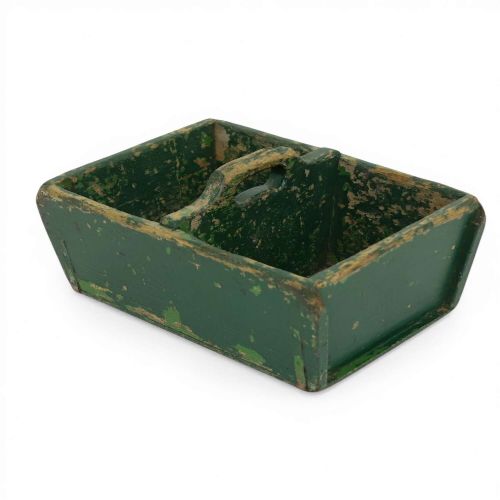
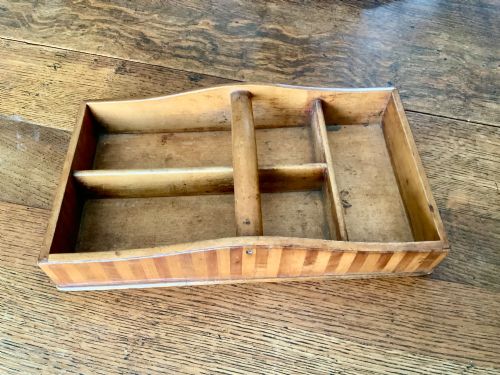
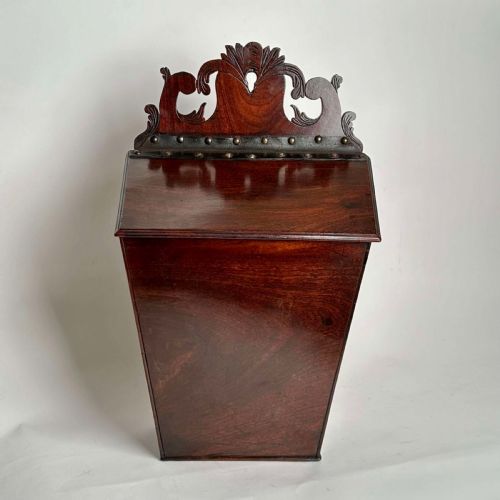
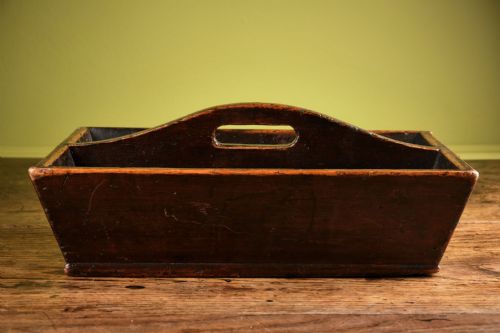
A vintage cutlery tray takes the form of a divided wooden box or shallow trough, often fitted with a central upright handle for carrying knives, forks, and spoons between the pantry and the dining table. These pieces encompass Georgian mahogany boxes alongside robust 19th-century pine trays from Welsh vernacular and Scandinavian country traditions.
Beyond formal dining service, the category extends to housekeeper's carries, butler's work boxes, and garden trugs fashioned in oak, fruitwood, and painted surfaces. The versions most commonly encountered on this page date from the Georgian, Victorian, and Edwardian eras, reflecting both formal country house utility and simpler rural craftsmanship.
Materials and construction methods
Cabinet makers relied predominantly on dense hardwoods like mahogany and walnut for formal pieces, whilst regional joiners utilised accessible domestic timbers including pine, oak, fruitwood, and sycamore. Construction frequently employed dovetailed joints at the corners to withstand the daily weight of metal cutlery and constant movement around the estate.
Surface treatments range from polished mahogany and waxed oak to surviving red paint and brass fittings such as carrying handles or edge trim. Simpler artisan pieces display exposed grain and hand-planed surfaces, whereas plated items incorporate Sheffield metalwork techniques.
A sturdy costermonger's trug sits ready to haul garden produce or household clutter with centuries of honest wear.
Distinguishing quality and execution
Quality rests upon the selection of timber and the precision of the joinery, where finely cut dovetails and well-proportioned dividers separate formal pieces from rougher utilitarian objects. The presence of original brass hardware, uncompromised internal partitions, and retained surface patination significantly elevate a piece.
The distinction between a humble vernacular trug and a refined Georgian box lies in the deliberate choice of materials, such as figured mahogany versus plain pine, and the subtlety of the handling by the maker.
Creswick
The Vintage Cutlery Tray Glossary
- Dovetail
- A joint formed by interlocking wedge-shaped fingers, commonly used at the corners of trays and boxes to ensure rigid and durable construction. This technique requires precise hand cutting by the maker.
- Trug
- A shallow wooden basket or tray traditionally used for carrying garden produce, tools, or household items. In vernacular pieces, this term often describes open-topped carrying vessels.
- Vernacular
- Architecture and objects created by local artisans using traditional methods and regional materials, without formal academic styling. Welsh and Scandinavian examples on this page reflect this practical tradition.
- Sheffield Plated
- A method of fusing a thin sheet of silver to a thicker copper base, developed in the 18th century. This technique appears on metal-trimmed knife trays from the period.
- Work Box
- A portable container outfitted for household tasks, sewing, or carrying domestic implements. These items frequently overlap in form with deep cutlery trays and butler's carries.
Vintage Cutlery Tray: Frequently Asked Questions
What is a vintage cutlery tray used for?
These pieces served originally to transport knives, forks, and spoons from the kitchen or pantry to the dining table in large households. They also functioned as general utility boxes for household tasks and garden gatherings.
Today, they find purpose on sideboards and kitchen islands for holding everyday utensils, napkins, or stationery. Their divided compartments make them practical desktop organisers or display containers.
How do I tell Georgian from Victorian trays?
Georgian pieces often feature dense mahogany with fine dovetailing and restrained, elegant proportions intended for formal dining rooms. They prioritise dark polished hardwoods and understated brass details.
Victorian and Edwardian items frequently expand into regional pine, oak, and fruitwood vernacular forms, including painted finishes and open trug designs. These later examples lean towards robust utility and country kitchen practicality.
Are these trays suitable for daily use?
Solid construction in hardwoods like mahogany, oak, and pine allows these pieces to handle regular everyday tasks. Their original purpose demanded durability under heavy loads of metalware.
Care should be taken to protect antique wood and old painted surfaces from excessive moisture and harsh modern cleaners. Treating the timber with appropriate wax preserves the finish during daily handling.
What materials are typical for these trays?
The evidence shows a strong preference for native and imported timbers, led by mahogany, pine, oak, fruitwood, and sycamore. Metal elements appear in brass handles and old Sheffield plating.
Some regional items feature surface treatments like red paint, whilst others rely on the natural grain of walnut or unpainted softwood. Each material dictates the character and weight of the specific carrier.