

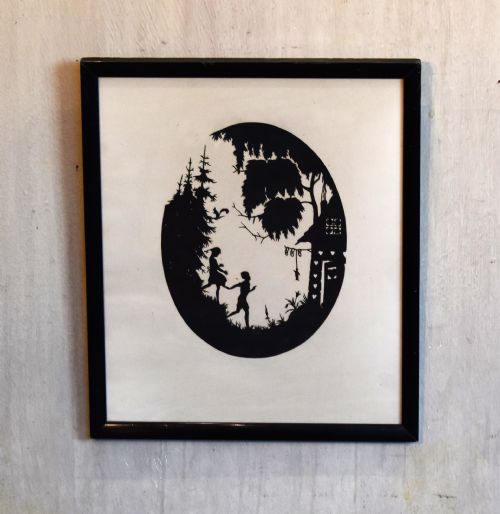


Vintage Cut Paper Silhouette
A vintage cut paper silhouette captures a crisp profile in monochrome, offering an intimate glimpse into historical likenesses.
Vintage Cut Paper Silhouette
A vintage cut paper silhouette is a framed likeness typically created from black paper mounted against a pale background, capturing a subject in profile. These works range from individual portraits of gentlemen and young girls to group family scenes involving people and animals.
The versions most commonly met on this page date from the nineteenth century, including pieces produced during the Regency period and around eighteen eighty. Subjects span single portraits of a male or child alongside narrative works such as a Gothic Hansel and Gretel scene.
How they were made
Framed presentation is integral to the construction, utilising protective glass to preserve the fragile paper media and underlying card or backing materials over the decades.
Vintage Cut Paper Silhouette Retail Price Guide 2026
Typical asking prices for vintage cut paper silhouette among the pieces listed under this phrase on Sellingantiques today, from the lower quarter to the upper quarter. They describe what is for sale here now, not the wider market.
Someone once cut a tiny witch into the woods of a Hansel and Gretel silhouette just to see if the children were paying attention.
What varies in quality
Quality rests upon the precision of the knife work and the liveliness of the silhouette's outline, which separates a spirited likeness from a stiff or clumsy profile. The addition of subtle watercolour embellishments or ink highlights demonstrates superior skill in the artist.
The choice of framing contributes significantly to the overall merit, with period maple frames and original glass providing greater authenticity than later replacements.
Bateman·Augustin Edouart·Alfred Darbyshire
The Vintage Cut Paper Silhouette Glossary
- Profile
- A side view of a human or animal head, which is the standard perspective for silhouette portraiture. Capturing an accurate profile requires a keen eye for proportion and contour.
- Portrait miniature
- A small-scale painting or silhouette designed for intimate viewing rather than large wall display. These compact works frequently incorporate delicate framing materials like maple or gilt.
- Gilt
- A thin layer of gold applied to wood or metal surfaces to add decorative brilliance. It is commonly found framing nineteenth-century artwork.
- Folk art
- Artistic work produced from an indigenous culture or peasant society, often lacking formal academic training. Pieces in this style emphasise direct observation and traditional craft methods.
Vintage Cut Paper Silhouette: Frequently Asked Questions
How do I identify a nineteenth-century silhouette?
Nineteenth-century silhouettes often feature handmade paper mounted in modest wooden or maple frames, sometimes accompanied by handwritten ink inscriptions or signatures on the backing.
Examination of the paper texture and the framing materials helps confirm the era of production.
Were all silhouettes created as single portraits?
While individual portraits of gentlemen and children are common, group scenes depicting multiple people and animals also exist within this tradition.
Narrative compositions, such as literary or Gothic illustrations, offer a different visual dynamic compared to standard portraiture.
How should I display framed paper silhouettes?
These delicate works require placement away from direct sunlight to prevent the paper and any watercolour pigments from fading over time.
Maintaining stable indoor humidity levels protects both the historic paper and the original wooden or gilt framing.
Did artists sign these cut paper works?
Some pieces bear artist signatures or attributions written directly on the mount or reverse, pointing to known practitioners of the craft.
Unsigned works remain frequent, reflecting a period when many silhouettes were produced anonymously or by travelling profile artists.