



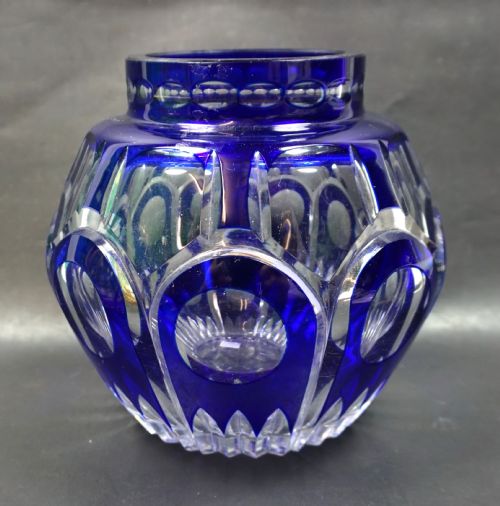


Vintage Cut Overlay Glass
Vintage cut overlay glass brings together layered crystal and precision wheel cutting to create striking pieces of coloured tableware and display items.
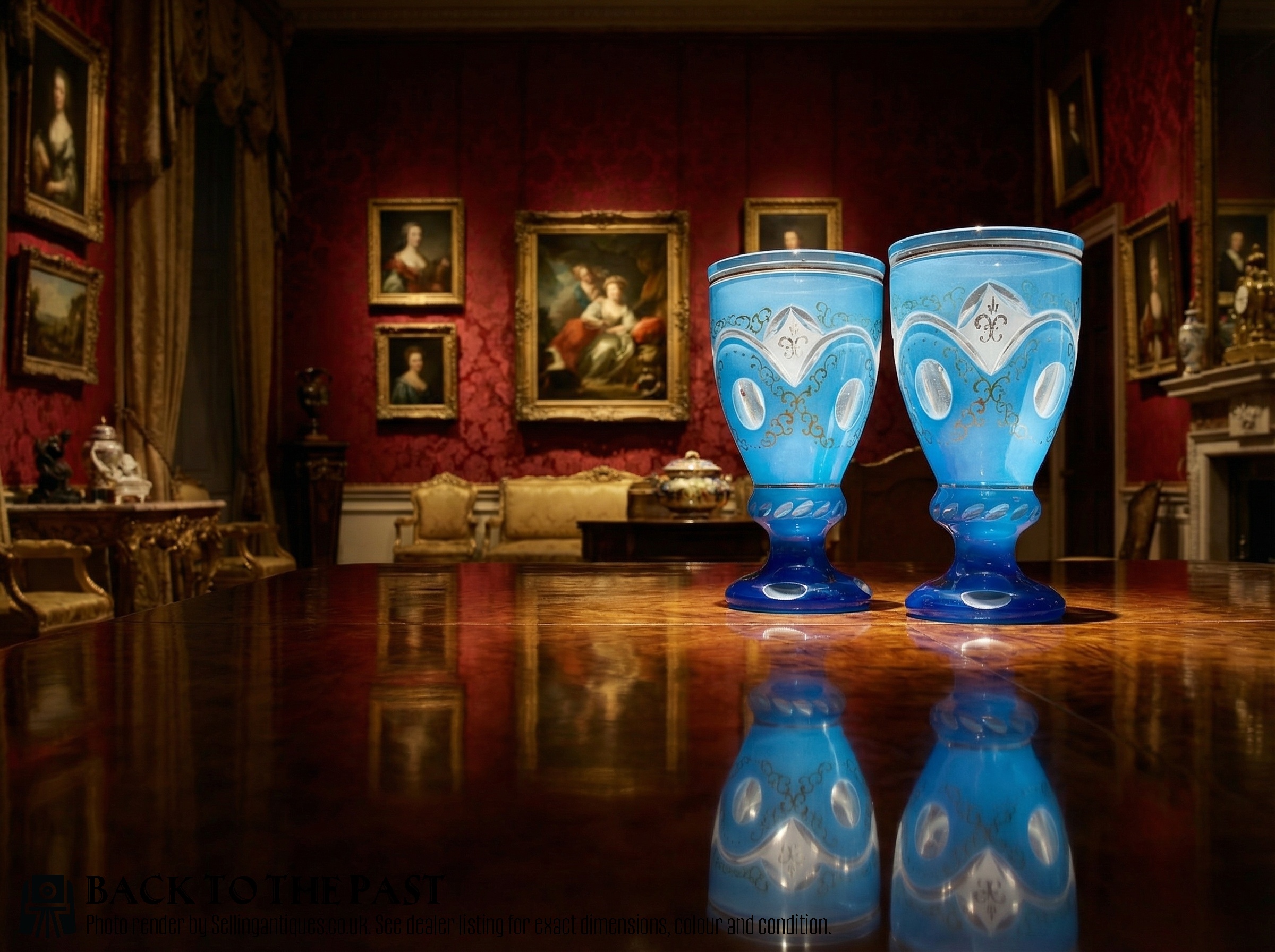
Vintage Cut Overlay Glass
Vintage cut overlay glass encompasses functional and decorative objects created by fusing a layer of coloured glass over a clear crystal base before cutting through the outer layer to reveal the contrasting transparent metal beneath. When buyers search for vintage cut overlay glass, they encounter items originating from the nineteenth and twentieth centuries, spanning Victorian, Edwardian, and Art Deco periods.
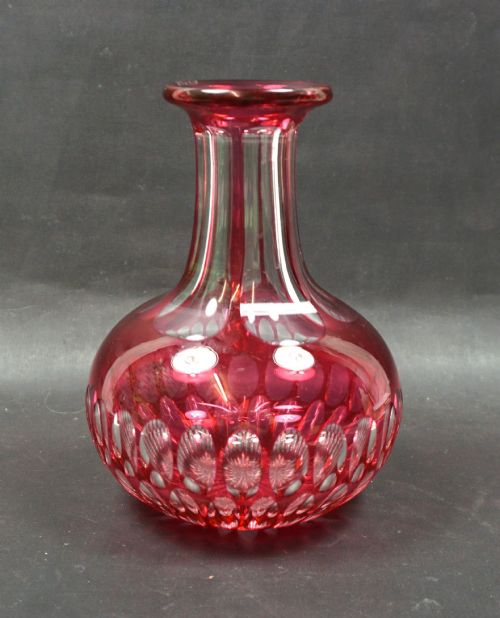
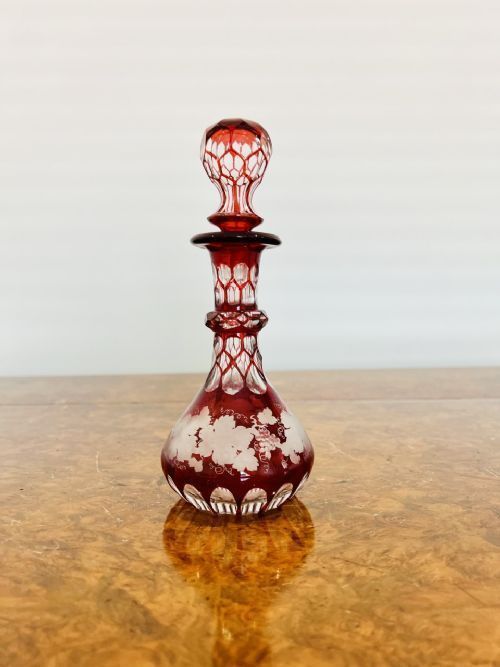
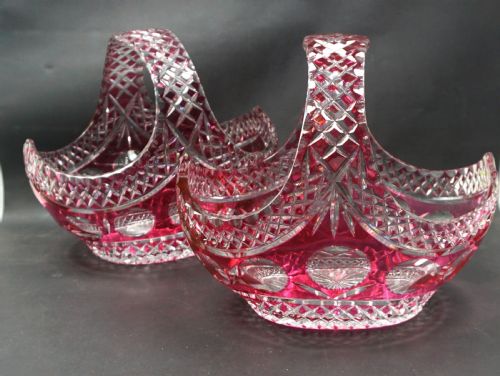
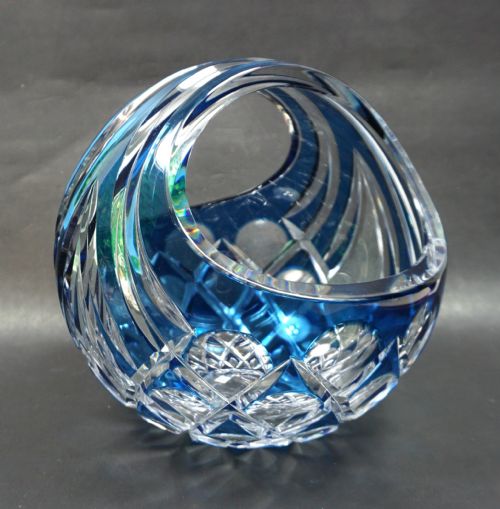
The most frequent forms found within these listings include hock glasses, decanters, scent bottles, vases, and baskets, produced by European makers in England, France, and Belgium. These pieces utilise bold hues such as cranberry, ruby, cobalt blue, green, and amethyst, often enhanced with cut geometric patterns or delicate engraved foliage.
How vintage cut overlay glass was made
The creation of these objects relies on a cased glass technique where a molten gather of coloured glass is gathered over a clear crystal body during the blowing process. Artisans then cool the piece before applying deep wheel cuts through the outer coloured casing to expose the clear crystal layer underneath.
Many items incorporate additional decorative elements such as silver mounts, sterling silver collars, or surface gilding applied to the glass or metal components. Engravers frequently embellish the cut surfaces with motifs including birds, vines, and convolvulus flowers using hand tools.
Some Victorian scent bottles double as hidden pocket companions for smelling salts during long carriage rides.
What varies in quality in vintage cut overlay glass
The standard of an item rests upon the precision of the wheel cutting and the depth of the contrast between the outer coloured layer and the inner crystal. Superior examples display crisp, sharp facets with clean transitions where the coloured glass has been removed.
Distinction also arises from the complexity of the design, such as double or triple cased layers of glass and fine hand engraving rather than purely geometric flutes. Maker attribution, original stoppers, and integrated silver mounts or hallmarked hardware further elevate the standing of a piece.
Baccarat·Val St. Lambert·Joseph Simon·Charles Graffart·Hasset & Harper·St Louis Massenet·Moser·Otto Prutscher·Meyr’s Neffe
The Vintage Cut Overlay Glass Glossary
- Overlay glass
- Glass formed by fusing two or more distinct layers of different colours, allowing artisans to cut through the outer stratum to create contrasting patterns.
- Cased glass
- A method where a glass vessel is encased within one or more outer layers of coloured glass during manufacture.
- Hock glass
- A traditional tall-stemmed wine glass specifically utilised for white wine or hock, frequently produced in coloured cut crystal variants.
- Champagne coupe
- A shallow, broad-bowled stemmed glass designed for sparkling wine, often decorated with cut overlay panels.
- Spirit bottle
- A heavy glass vessel fitted with a stopper, intended for holding liqueurs or spirits on a sideboard.
Vintage Cut Overlay Glass: Frequently Asked Questions
What is cut overlay glass?
Cut overlay glass consists of a clear crystal base covered by a distinct layer of coloured glass. Artisans cut geometric or floral patterns through this outer layer to expose the clear crystal underneath.
This technique creates a sharp two-tone visual effect prized by collectors of nineteenth and twentieth century decorative glassware.
How do I clean these items?
These pieces require gentle hand washing in warm water using mild soap to preserve the delicate glass surfaces and any silver mounts. Dishwashers should be avoided because thermal shock and harsh detergents can damage older crystal and metallic components.
Care should also be taken around fitted stoppers and silver collars to prevent moisture entrapment.
Are these items safe for drinks?
Most vintage decanters, hock glasses, and wine coupes remain suitable for serving beverages provided they are thoroughly cleaned beforehand. Decanters used for long-term storage should be monitored since older glass compositions can react with certain liquids.
Items featuring sterling silver mounts or gilt details require extra care during use and washing.
How do I identify periods?
Period identification relies on observing the stylistic traits, cutting patterns, and associated hardware of each object. Victorian and nineteenth century pieces often feature heavy hand engraving and deep ruby or cranberry hues, while Art Deco items from the 1930s lean towards geometric forms and specific factory marks.
Silver mounts bearing city assay office marks and date letters also provide precise dating for English and European pieces.