




Vintage Cut Glass Inkwell
A vintage cut glass inkwell brings tactile weight to a desk, holding heavy crystal and polished metal from the nineteenth and twentieth centuries.
Vintage Cut Glass Inkwell
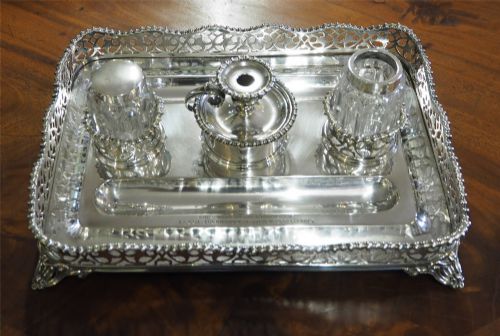
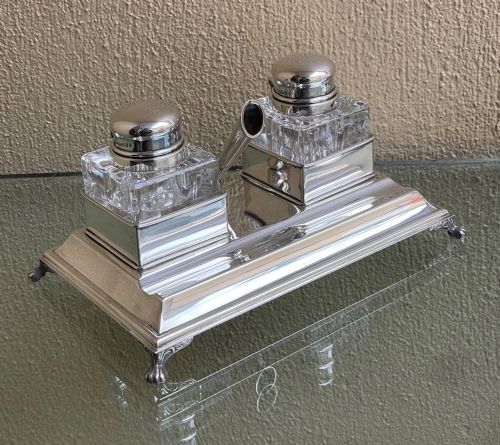
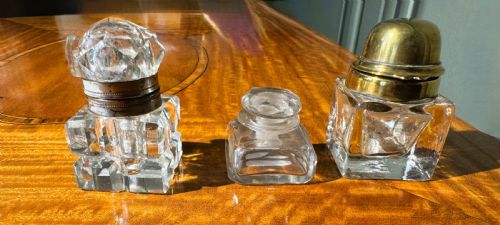
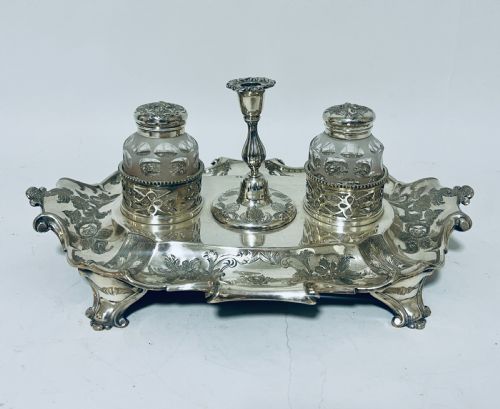
A vintage cut glass inkwell is a desk accessory designed to hold liquid ink safely while providing a stable dipping surface for a quill or nib pen. These pieces range from simple standalone vessels to elaborate desk sets featuring multiple glass bottles mounted on stands made of brass, oak, mahogany, or silver plate.
Buyers on this page are most likely to encounter Victorian and Edwardian examples, alongside occasional Art Deco and mid-century pieces. The glass bodies typically feature deep geometric facet cuts or hobnail patterns designed to catch the light on a library or study desk.
Materials extend beyond the central glass vessel to include sterling silver lids, silver-plated mounts, brass collars, and fitted wooden trays. Some variations incorporate novelty elements such as cornucopia horns, grand tour brasswork, or figural bronze animals paired with crystal wells.
How they were made
The heavy glass bodies were shaped by blowing or pressing molten metal into moulds before skilled artisans applied wheel-cutting techniques to carve deep facets and linear patterns into the surface. This mechanical and manual cutting created thick, robust walls capable of withstanding daily use and the pressure of a pen nib.
Metal components such as hinged lids, collars, and stands utilised traditional casting, stamping, and smithing methods in brass, sterling silver, or silver plate. Silver mounts were frequently hallmarked to indicate purity and origin, while wooden bases in oak and mahogany were joined and polished to frame the glass securely.
Some nineteenth-century desk companions feature gilded bronze chicks blinking with tiny glass eyes while guarding the ink.
What varies in quality
Quality rests in the crispness of the glass cutting and the weight of the material, where sharper facet edges and heavier lead crystal indicate superior craftsmanship. Thick, clear glass with minimal internal bubbles demonstrates better raw material selection during manufacturing.
The integration of the metal mounts dictates the overall standard of the piece, with solid sterling silver lids and heavy cast brass or bronze fittings outperforming thin plated alternatives. Secure hinges, well-fitted collars, and maker attribution add significant distinction to an inkwell.
Elkington·Tiffany and Co·James Cartland and Sons·Asprey
The Vintage Cut Glass Inkwell Glossary
- Cut glass
- Glassware shaped and patterned by holding the vessel against a rotating abrasive wheel. This process produces sharp, clean geometric facets.
- Inkstand
- A fitted tray or stand holding one or more inkwells, often with additional spaces for pens, stamps, and sanders. They form complete desktop writing stations.
- Sterling silver
- An alloy consisting of ninety-two point five percent silver and seven point five percent other metals, typically copper. It is commonly used for hinged inkwell lids and decorative mounts.
- Silver plate
- A base metal such as copper, brass, or nickel silver coated with a thin layer of pure silver through electroplating or older Sheffield plating methods.
- Facet cut
- A style of cutting flat planes into the surface of glass or crystal at precise angles. It creates multiple reflective surfaces that catch natural light.
Vintage Cut Glass Inkwell: Frequently Asked Questions
How do I clean a vintage cut glass inkwell?
Wash the glass vessel gently with warm soapy water and a soft cloth to remove dried ink residue inside the chamber. Avoid submerging metal mounts or wooden stands to protect the original finishes and silver plating.
Dry the glass thoroughly with a lint-free cloth before reassembling the inkwell. Use appropriate metal polish sparingly on silver or brass only if necessary, keeping it away from the glass surface.
Can I still use these inkwells for writing?
Many vintage inkwells remain fully functional for modern dip pens and fountain pen use, provided the glass body is free from internal cracks. Ensure the lid seals properly to prevent any accidental leakage if you plan to keep ink stored inside.
For valuable or antique pieces with delicate silver hinges, modern use is often restricted to decorative display. Acidic modern inks should be washed out promptly after use to prevent staining the glass or corroding metal collars.
How do I date a Victorian inkwell?
Examine the metal mounts for British silver hallmarks, which record the exact assay office, standard, and year of manufacture. Stylistic clues such as heavy Victorian brasswork or Edwardian silver plating also help narrow down the production period.
Inspect the manufacturing marks on the bottom of the glass or the construction methods of the wooden base. Hand-cut glass facets and traditional joinery point toward nineteenth-century production.
What is the difference between an inkwell and an inkstand?
An inkwell is the individual glass or ceramic vessel designed specifically to contain the liquid ink. It may stand alone or fit directly into a designated recess.
An inkstand refers to the complete desk set, which includes one or more inkwells mounted together on a shared tray made of wood, metal, or papier-mâché.