


Vintage Curios Display Table
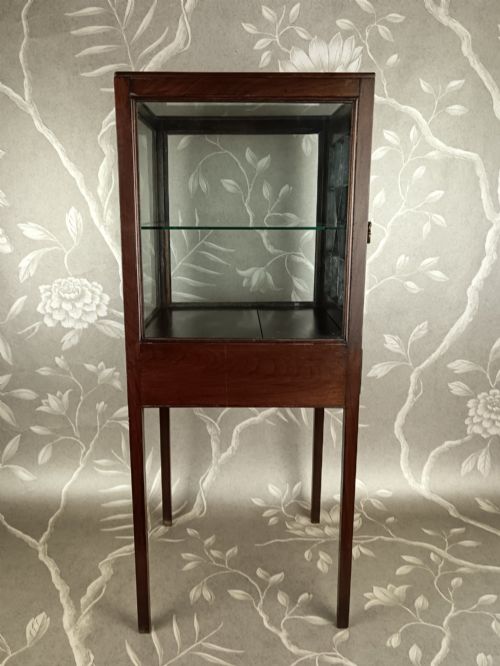
These vintage curios display tables are glazed showcases designed to exhibit small treasures inside a timber frame.
Vintage Curios Display Table
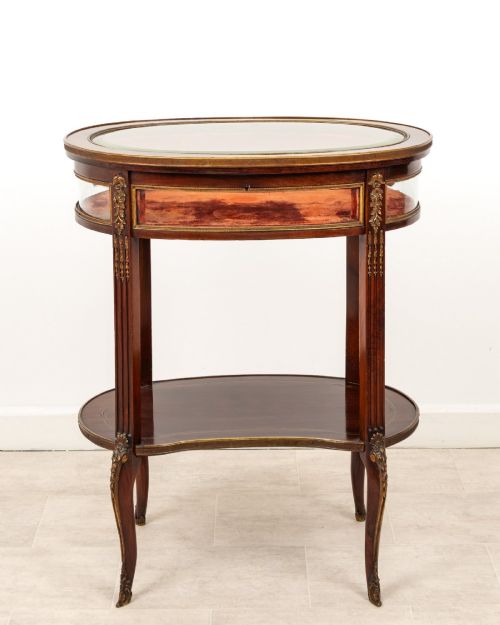
A vintage curios display table serves as a purposeful stage for small collectibles, medals, and precious items beneath a protective glass cover. These pieces appear in forms such as bijouterie tables, display cabinets, and table top cases.
The evidence shows examples spanning the Georgian and Victorian eras, alongside Edwardian, French Louis XVI style, and early twentieth-century pieces. Mahogany forms the backbone of these constructions, often accompanied by satinwood or kingwood veneers.
Makers and workshops of the period produced both freestanding tables on slender legs and compact glazed cases intended for tabletops. The overarching form prioritises visibility from above, turning personal collections into permanent interior displays.
Materials and Construction
Makers relied heavily on solid mahogany and mahogany veneers to build the structural frames, occasionally incorporating satinwood or kingwood for decorative contrast. Timber selection dictated the weight and fineness of the legs and mouldings.
Glass panels form the viewing surfaces, held securely within hinged or fixed frames to protect the interior contents from dust. Brass mounts, ormolu details, and inlaid stringing provide decorative articulation to the polished timber surfaces.
Interiors frequently feature fabric linings such as velvet, felt, or satin to cushion the objects on display. These textile bases contrast with the external woodwork and provide a soft backdrop for small curiosities.
The listings show mahogany as the dominant timber, paired with glass, brass, and velvet across Edwardian and Georgian forms.
Distinctions in Quality
Quality rests upon the crispness of the timber carving and the precision of any inlay work integrated into the frame. Tables featuring detailed brass mounts or ormolu display a higher level of workshop ambition than plain commercial equivalents.
The refinement of the leg joinery and the snugness of the glazed lid determine the structural integrity of the piece over time. Superior examples utilise carefully selected veneers and balanced proportions that elevate a functional case into a decorative furnishing.
Quincy Showcase Works Illinois
The Vintage Curios Display Table Glossary
- Bijouterie table
- A specialised display table featuring a glazed compartment designed for holding small valuable trinkets and curiosities. These tables often stand on slender legs with hinged glass tops.
- Ormolu
- Gilded bronze ornamentation applied to the exterior of furniture for decorative effect. It appears frequently on French and continental influenced pieces.
- Vitrine
- A glass-fronted cabinet or display case used for exhibiting objects. The term encompasses both tall standing cabinets and low display surfaces.
- Inlay
- A technique where pieces of contrasting timber, such as satinwood, are inserted into the primary wood surface to form decorative patterns. This adds visual complexity to the furniture top or apron.
Vintage Curios Display Table: Frequently Asked Questions
What fits inside a vintage curios display table?
These glazed compartments suit small collectables like pocket watches, medals, coins, and delicate trinkets that benefit from being viewed closely from above without handling.
Deepers cabinets accommodate slightly taller curiosities, while shallow bijouterie tables keep flat or miniature items neatly arranged against a fabric base.
How do I clean the interior fabric lining?
Original velvet, felt, or satin linings require gentle surface dusting with a soft brush rather than liquid cleaners to preserve the textile fibres.
Avoid harsh chemicals near the timber frame or glass mounts when maintaining the display area.
Are these tables sturdy enough for daily use?
Most examples rely on slender legs designed for supporting decorative objects rather than heavy loads or frequent movement across rooms.
Placing them in stable positions away from direct foot traffic protects the glass top and delicate woodwork from accidental knocks.
How do I distinguish Edwardian pieces from earlier styles?
Edwardian examples frequently incorporate satinwood inlays, lighter mahogany tones, and refined revival styling typical of the early twentieth century.
Earlier Georgian and Victorian pieces tend to display denser timber grains, heavier carvings, or structural proportions characteristic of the nineteenth century.