



Vintage Crystal Tantalus
A vintage crystal tantalus locks away the spirits while keeping them in plain sight.
Vintage Crystal Tantalus
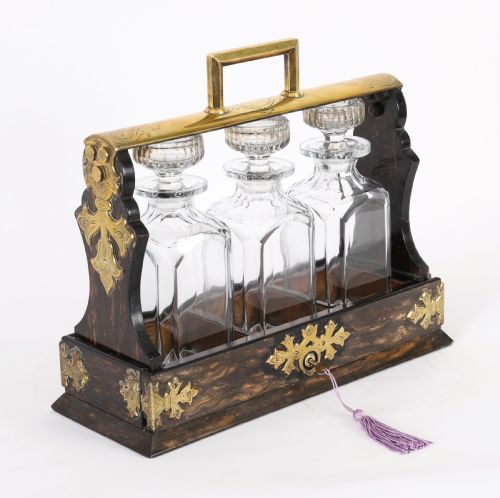
When you search for a vintage crystal tantalus, you encounter secure locking decanter frames designed to restrict access to spirits during the Victorian, Edwardian, and Art Deco periods. These drinking service pieces take the form of wooden or metal stands fitted with cut crystal decanters and secure locking mechanisms.
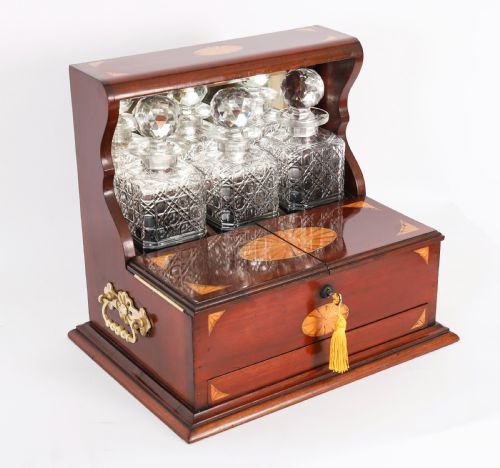
The pieces appearing on this page span from the nineteenth century through the nineteen-thirties, encompassing straightforward oak two-bottle frames alongside elaborate games compendiums and French liqueur caskets. Oak, coromandel, and satinwood form the primary chassis materials, paired with silver plate, brass, and chrome mountings.
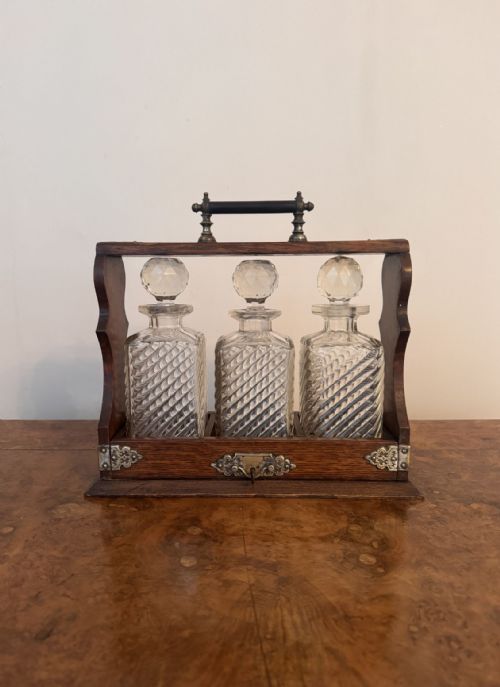
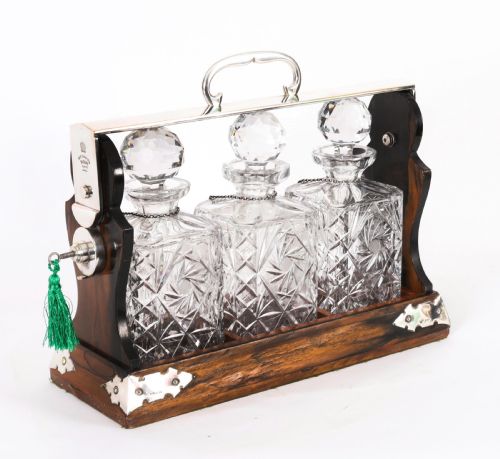
Most examples you meet on this page use three cut crystal or glass decanters held firmly beneath a metal locking bar that requires a key to release. Alongside traditional upright frames, the selection includes barrel dispensers, liqueur sets, and modernist chrome designs.
How they were made
Cabinetmakers constructed the frames from dense hardwoods like oak and exotic coromandel, often incorporating satinwood inlay and brass mounts. These wooden bodies house precision-engineered locking mechanisms in silver plate, brass, or chrome that engage the stoppers to prevent removal of the bottles.
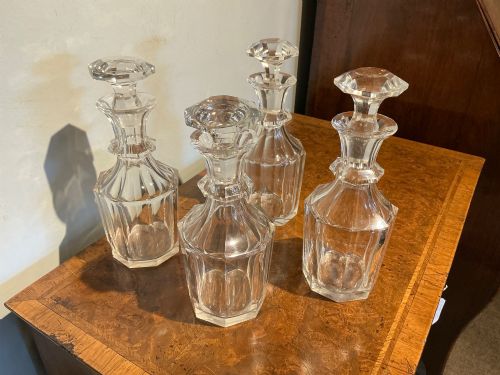
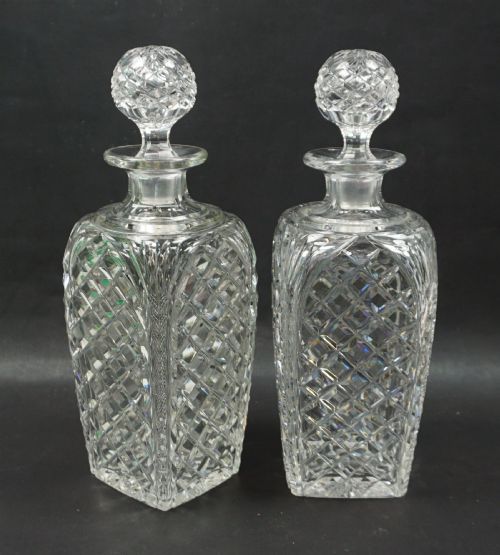
The vessels themselves utilise heavy cut crystal or glass, frequently shaped into square sections or tapered forms designed to sit snugly within the frame. Metalworkers cast and plated the carrying handles, frames, and lock assemblies to withstand frequent handling in the dining room or drawing room.
Listings feature oak, coromandel, and satinwood alongside cut crystal, silver plate, and brass across Victorian, Edwardian, and Art Deco periods.
What varies in quality
The standard of cabinetwork and the weight of the metal plating distinguish the finer examples from everyday production. Frames featuring substantial coromandel timber, intricate marquetry, and fully integrated games compendiums represent higher tiers of craftsmanship than plain oak models.
The clarity and depth of the cut crystal decanters, alongside the complexity of the locking mechanism and the presence of original maker hallmarks, mark the distinction between standard and superior pieces. Original working keys and matching sets of cut crystal bottles elevate the integrity of the whole object.
Betjemann·Elkington·The Goldsmith Co·Hukin and Heath·Jacques Adnet
The Vintage Crystal Tantalus Glossary
- Tantalus
- A locking drink decanter stand designed to display spirits while preventing unauthorized access. The name draws on the mythological figure of Tantalus, who was kept just out of reach of food and water.
- Cave a liqueur
- A French fitted box or casket containing a set of liqueur decanters and glasses. These portable drinking cabinets often feature decorative wood veneers and ornate metal mounts.
- Games compendium
- A multi-functional box combining a spirit tantalus with compartments for playing cards, dice, and board games. These luxury pieces catered to Victorian and Edwardian leisure habits.
- Silver plate
- A layer of silver fused to a base metal such as copper or brass, commonly used for the locking bars, handles, and frames of nineteenth-century pieces.
- Coromandel
- A dense, dark exotic hardwood with contrasting light streaks, utilised for high-end Victorian cabinetwork and luxury tantalus frames.
Vintage Crystal Tantalus: Frequently Asked Questions
What is a vintage crystal tantalus?
A vintage crystal tantalus is a secure locking frame that holds glass decanters of spirits. The mechanism locks the stoppers in place so the bottles cannot be removed without a key.
Originating in the Victorian era, these pieces served as a practical safeguard for household owners wishing to limit access to expensive liqueurs and spirits by domestic staff.
How do you open a tantalus?
Opening a tantalus requires turning a small key in the lock mechanism located at the end of the metal retaining bar. Once unlocked, the bar pivots or lifts upward to release the glass stoppers.
Many antique examples still retain their original working locks, though finding replacement keys requires specialised locksmith attention due to vintage tolerances.
What are games compendium tantalus sets?
Games compendium tantalus sets combine a spirit storage frame with built-in compartments for playing cards, counters, and board game equipment. These elaborate pieces served as all-in-one entertainment centres for Edwardian drawing rooms.
Cabinetmakers housed these accessories within oak or coromandel boxes featuring folding lids and secure locking mechanisms for both the bottles and the games.
How do you clean cut crystal decanters?
Cleaning cut crystal decanters involves using warm water and mild detergent with non-abrasive bottle brushes to reach internal residues. Harsh chemicals and sudden temperature changes can damage the antique glass surface.
Allowing the decanters to dry completely upside down prevents water spots from forming within the intricate cut patterns of the crystal.