


Vintage Cruet Set
A vintage cruet set holds the table's salt, pepper and sauces, bringing period silver and cut glass directly to the dining room.
Vintage Cruet Set
A vintage cruet set combines matching bottles, jars or shakers inside a fitted stand for the dining table. These domestic pieces organise condiments within easy reach of guests during meals.
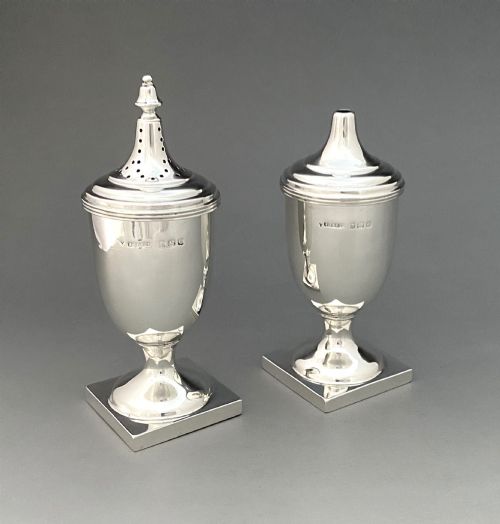
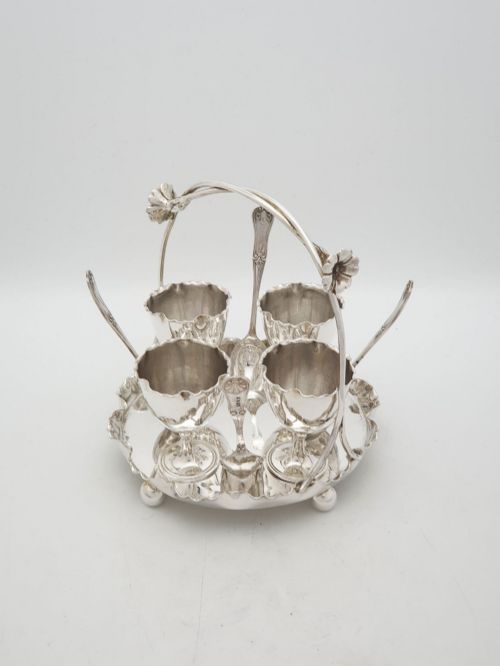
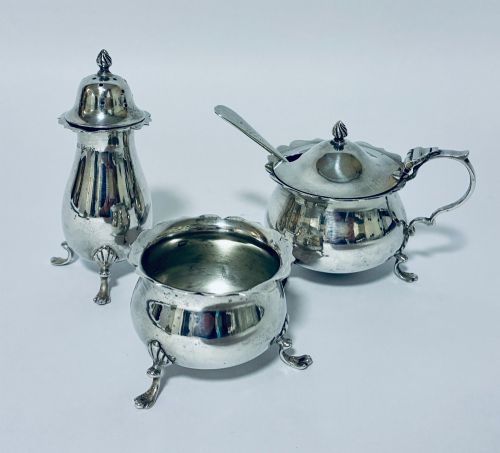
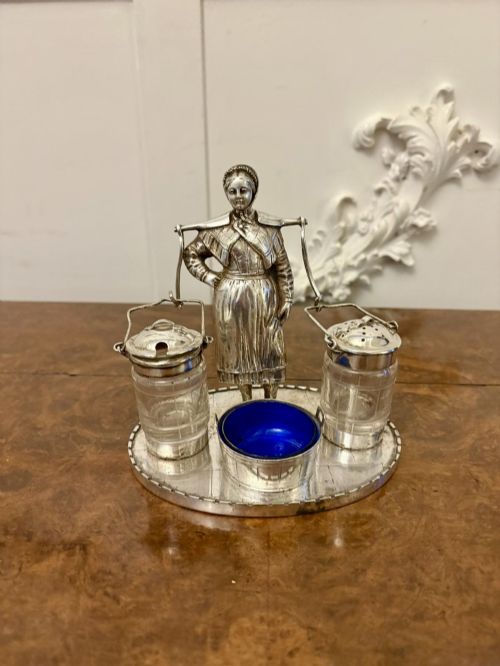
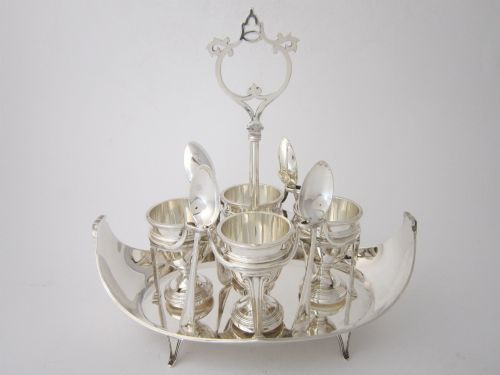
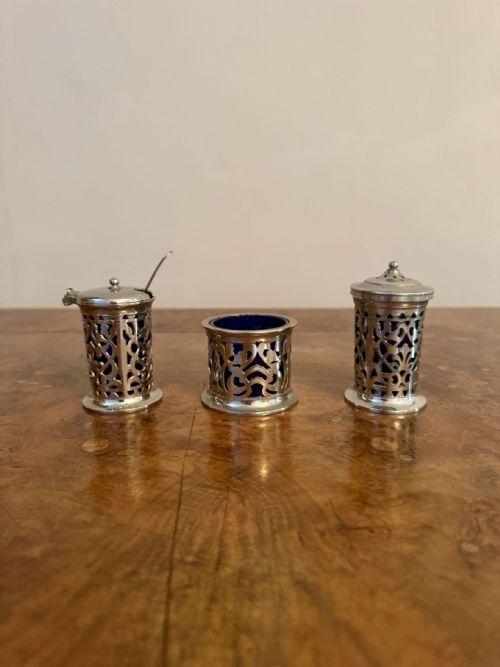
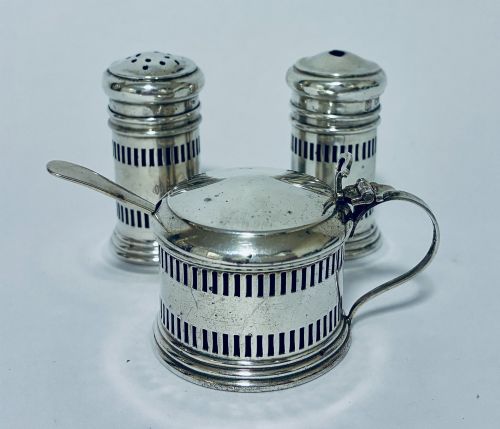
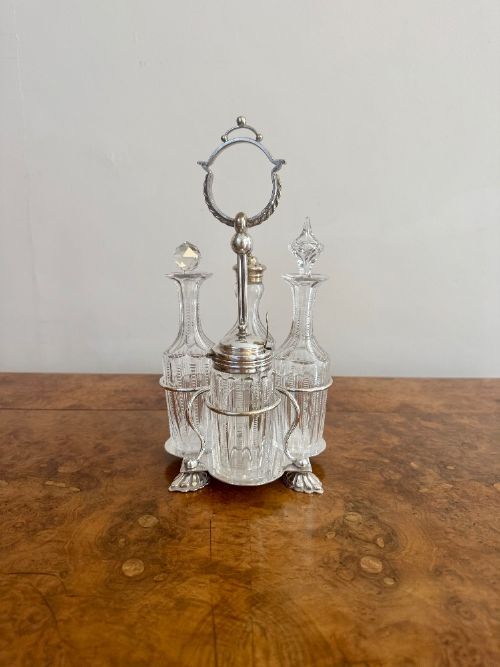
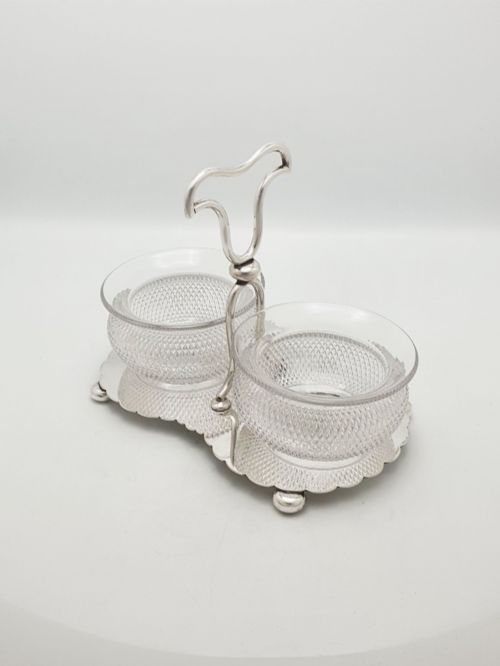
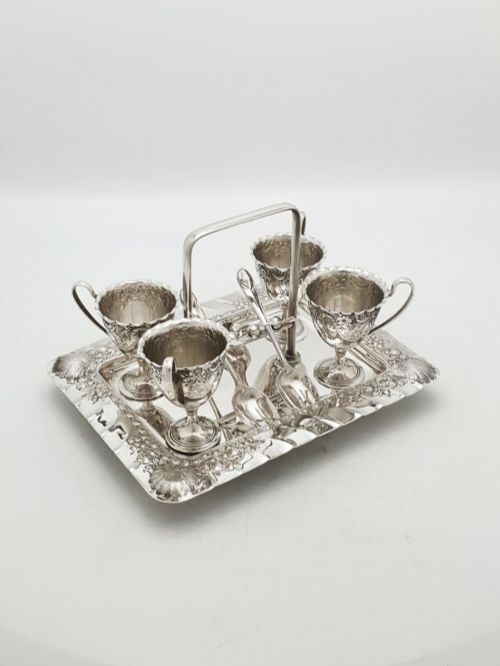
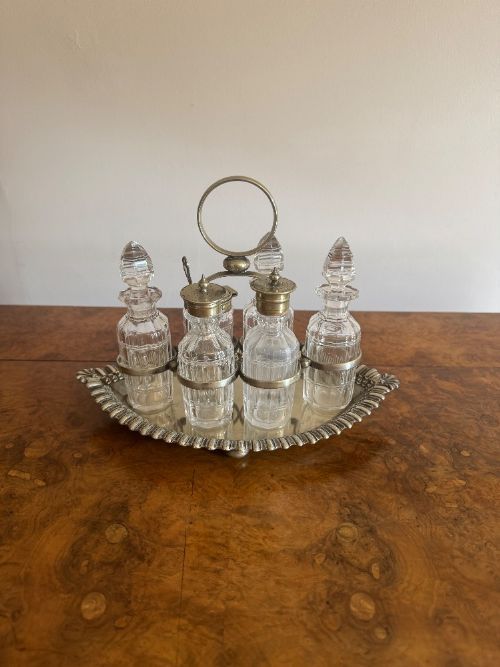
Edwardian silver plated examples appear most often on this page, alongside Georgian, Victorian, Art Deco and mid-century designs. Formats range from large multi-bottle stands and egg cruets to small three-piece condiment sets.
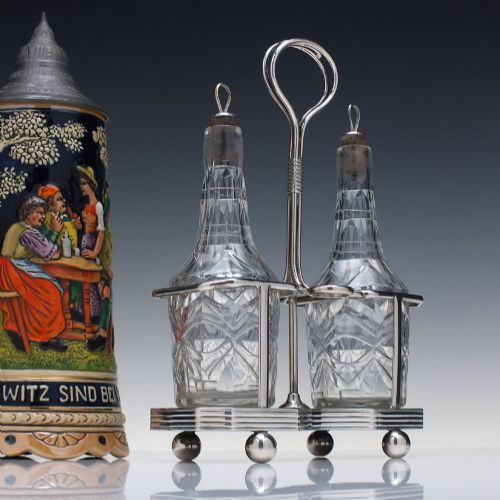
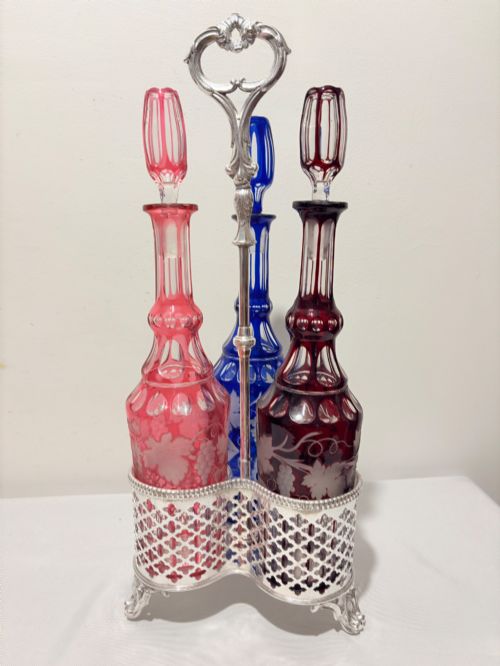
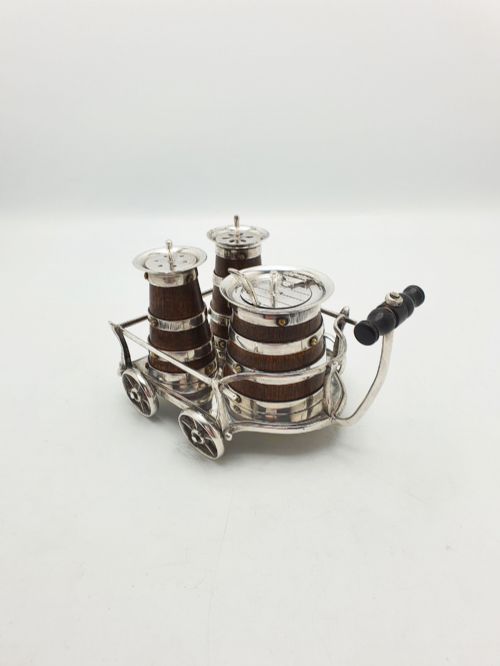
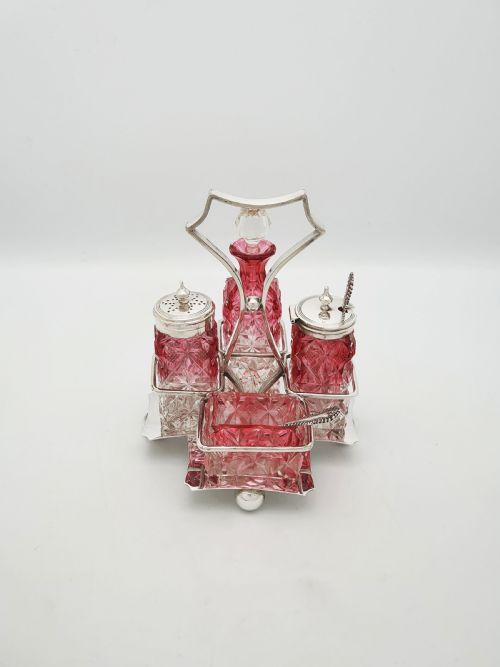
Holders take the form of frames, stands, decanter carriers or carved oak barrels. Individual containers use cut glass, cranberry flashed glass, sterling silver or silver plate.
How they were made
Silversmiths shaped sterling silver or silver plate over base metals to form frames, mounts and bottle collars. Sheffield plate technique appears on earlier pieces from the nineteenth century.
Glass bottles and bowls relied on hot glass blowing followed by hand cutting or moulding to create panels and flutes. Fitted inserts often paired clear or coloured glass with precious metal lids and spoons.
Vintage Cruet Set Retail Price Guide 2026
Typical asking prices for vintage cruet set among the pieces listed under this phrase on Sellingantiques today, from the lower quarter to the upper quarter. They describe what is for sale here now, not the wider market.
Materials recorded across the inventory include sterling silver, silver plate, cut glass, oak, velvet and satin.
What varies in quality
Substance in the metal frame separates standard production from finer work. Weighty silver plating, solid sterling construction and thick lead crystal bottles distinguish superior examples.
Completeness dictates utility, as matching sets retain their original number of bottles, shakers and spoons. Elaborate mounts, embossed detailing and unusual novelty forms indicate higher maker ambition.
Goldsmith & Silversmith's·Walker & Hall·Bricks & Sons·William Neale & Son
The Vintage Cruet Set Glossary
- Cruet set
- A matched group of bottles or shakers held in a frame for serving condiments at the table. This term covers standard sauce bottles as well as specialised egg and decanter stands.
- Silver plate
- A layer of silver bonded to a base metal core such as copper or nickel silver. This technique provided the look of solid silver at a lower cost for domestic dining wares.
- Cut glass
- Glass decorated by grinding facets or patterns into the surface using a rotating wheel. Heavy lead crystal versions refract light brightly through the sides of condiment bottles.
- Egg cruet
- A specialised table stand designed to hold boiled eggs alongside individual salt cellars and spoons. These frames often include fitted rings to secure eggcups during breakfast service.
- Condiment set
- A collection of open salt pots, pepper shakers and mustard pots used together for seasoning food. They sit either in a small matching tray or directly on the table.
Vintage Cruet Set: Frequently Asked Questions
What is a cruet set used for?
A cruet set holds seasonings like salt, pepper, mustard, oil and vinegar for use at the dining table. The bottles and shakers sit together in a shared metal or wooden frame for easy transport.
Historically, these sets kept condiments organised between courses. Today they function as both decorative table centrepieces and practical servers for everyday meals.
How do I date a silver plated cruet?
Dating relies on stylistic clues, maker marks and manufacturing techniques found on the metal frame. Edwardian and Victorian examples often feature ornate embossed decoration or specific handle shapes.
Sheffield plate indicates an older nineteenth-century origin before electroplating became common. Hallmarks on sterling silver components provide precise assay office years.
Are all the bottles original to the stand?
Many sets survive with matched replacement bottles gathered over time to complete the stand. Checking glass tint, cut patterns and base wear helps determine if the components started together.
Stands designed for specific numbers of bottles will show uniform fit in the frame rings. Minor variations in glass thickness often point to assembled rather than original sets.
How do I clean antique silver plate?
Silver plate requires gentle cleaning with a specialist silver cloth or mild polish to preserve the thin metal layer. Avoid abrasive cleaners that wear down the plating over time.
Glass bottles remove from the frame for washing in warm soapy water. Thorough drying prevents moisture from trapping against metal collars and mounts.