

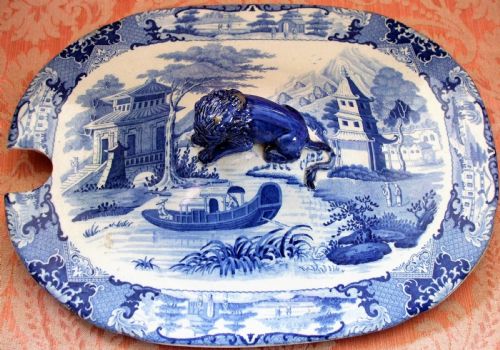


Vintage Covered Soup Tureen
These vintage covered soup tureen examples bring stately 19th Century service and grand dining rooms to mind.
Vintage Covered Soup Tureen
A vintage covered soup tureen serves as a grand table centrepiece designed for holding broth, sauce or soup during formal meals. When searching for a vintage covered soup tureen, buyers encounter large earthenware and porcelain vessels equipped with matching lids and sometimes ladles or stands.
The pieces on this page span the Georgian, Regency, Victorian and Edwardian periods, alongside Chinese Export and early 20th Century examples. Most common are 19th Century English transferware and ironstone vessels featuring classical blue and white scenes or bamboo patterns.
How they were made
Potters shaped these vessels from earthenware, ironstone and porcelain, often applying intricate blue and white transfer printing or hand-painted details. Makers such as Mason's utilised durable ironstone, whilst others employed fine porcelain and glaze finishes.
Vintage Covered Soup Tureen Retail Price Guide 2026
Typical asking prices for vintage covered soup tureen among the pieces listed under this phrase on Sellingantiques today, from the lower quarter to the upper quarter. They describe what is for sale here now, not the wider market.
Listings feature 19th Century, Regency, Georgian, Edwardian and 1920s eras, alongside materials such as earthenware, porcelain, silver plate and cut glass.
What varies in quality
Quality rests in the crispness of the transfer print, the delicacy of moulded handles and the preservation of any gilding or glaze. Finer pieces demonstrate precise Chinese Export painting or crisp ironstone moulding by established potteries.
The presence of accompanying ladles, stands or matching covers elevates a piece's completeness. Simpler earthenware vessels offer domestic utility, whilst elaborate Victorian and Regency examples showcase advanced ceramic artistry.
Robert Hamilton·Coalport·Coalbrookdale·Mappin and Webb·Richard Ginori·Ridgways·Copeland and Garrett
The Vintage Covered Soup Tureen Glossary
- Transferware
- Earthenware or porcelain decorated by printing a design from a copper plate onto paper, then transferring it to the ceramic body before glazing. This technique allowed intricate blue and white scenes to be replicated consistently.
- Ironstone
- A patented heavy earthenware developed in the 19th Century for its durability and resistance to chipping. It formed a sturdy base for utilitarian and decorative soup tureens.
- Chinoiserie
- European artistic style reflecting Chinese motifs and landscapes, frequently seen on 19th Century English pottery. It combines traditional European shapes with Oriental pastoral scenes.
- Broth Cup
- A small lidded vessel akin to a miniature tureen, designed for individual servings of soup or broth. These porcelain pieces often date from the mid-19th Century.
- Serveware
- Tableware categories that include tureens, platters and bowls used for presenting food at the dining table. These items coordinate visually across a dining service.
Vintage Covered Soup Tureen: Frequently Asked Questions
What is a soup tureen used for?
A soup tureen functions as a large serving bowl with a fitted lid, designed to keep broth or soup warm at the dining table. Servers would ladle the contents into individual bowls for guests.
Today, these vessels serve primarily as decorative centrepieces, sideboards displays or storage containers in traditional dining spaces.
How do I date an antique tureen?
Dating relies on maker marks, ceramic bodies like ironstone or soft-paste porcelain, and stylistic periods such as Regency or Victorian. Transfer print styles and motifs also offer chronological clues.
Examining the underside for impressed factory marks or printed potters' names narrows down the exact decade of manufacture.
What is ironstone pottery?
Ironstone is a heavy, durable type of earthenware patented in the 19th Century to imitate Chinese porcelain. It resists chipping much better than standard pottery.
Potters favoured ironstone for large serving pieces like soup tureens because the material tolerated heavy daily use in busy Victorian kitchens.
Are ladles usually included?
Some antique tureens retain their original ceramic or silver plated ladles, whilst others survived the decades separated from their serving spoons. Matching stands and under-dishes also appear with select listings.
Finding a complete set with both lid, ladle and stand is less common than discovering the tureen body alone.