




Vintage Cottage Garden Art
Vintage cottage garden art brings rural tranquility indoors through traditional paintings that celebrate rural domesticity and floral landscapes.
Vintage Cottage Garden Art
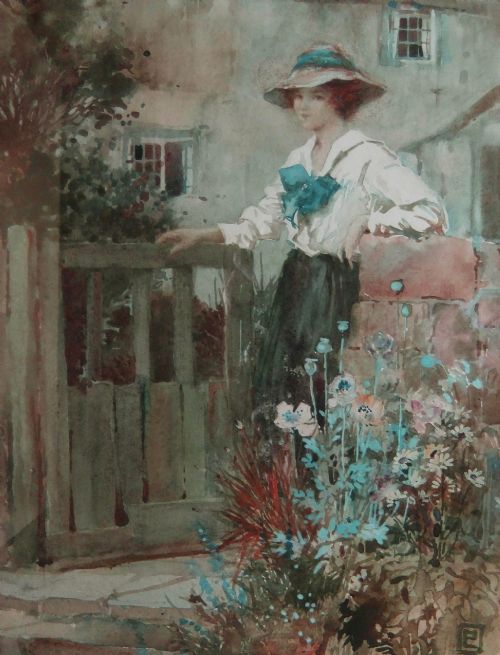
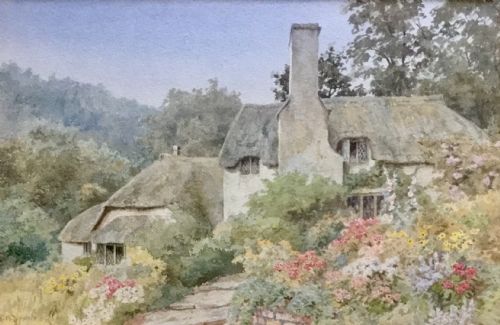
Vintage cottage garden art encompasses framed paintings and watercolours that capture domestic rural scenes, floral displays, and country houses. These works span from the Victorian period through early twentieth-century movements like British Impressionism and Edwardian Pastoral.
The most common pieces on this page are delicate watercolours and rich oil paintings on canvas or paper. Artists of these periods focused on walled gardens, thatched cottages, and rural pastimes.
Buyers choose these artworks to introduce a calm, nostalgic atmosphere into contemporary interiors. Each piece offers a specific window into historical English countryside life.
Materials and techniques
Artists worked primarily in oil paint or watercolour on prepared canvas, paper, or panel supports. Watercolours allowed for translucent washes of colour that suited bright floral subjects, while oil paints provided depth and texture for heavier garden foliage and architectural elements.
Many surviving pieces retain their original or period frames, frequently constructed from wood with gilt finishes. These frames were selected to complement the tonal palette of the artwork within.
Listings span from the Victorian era through the 1940s, featuring watercolours and oil paintings on paper and canvas.
Factors that distinguish quality
Quality in these works rests on the artist's handling of light, atmospheric perspective, and botanical detail within the composition. Stronger pieces demonstrate confident brushwork and a balanced integration of architecture and planting.
The preservation of the paper or canvas also dictates the standing of a piece. Well-maintained watercolours retain their original pigment intensity without excessive fading, while oil paintings show stable surfaces free from disruptive cracking.
Percy Lancaster·Owen Bowen·Ernest Higgins Rigg·Kershaw Schofield·Lilian Stannard·Herbert Royle·Arthur Claude Strachan·John Abernethy Lynas-Gray·Thomas Nicholson Tyndale·Jane Utley·Theresa Sylvester Stannard·George Frederick Nicholls·Arthur H Buckland·Minnie Smythe·John F. Pasmore
The Vintage Cottage Garden Art Glossary
- Watercolour
- A painting method in which the paints are made of pigments suspended in a water-based solution. This technique produces luminous, transparent washes.
- Gilt wood
- Wood that has been treated with a thin layer of gold leaf or metallic gilt finish. It was frequently used for traditional picture framing.
- British Impressionism
- A painting style developed in the late nineteenth and early twentieth centuries that focused on natural light and everyday scenes. Practitioners applied broken brushstrokes to capture fleeting outdoor moments.
- Mixed media
- An artwork combining two or more distinct artistic materials or graphic mediums on a single support. This approach creates varied surface textures.
- Victorian Rural Genre
- Artistic subject matter depicting scenes of everyday country life during the reign of Queen Victoria. These works often idealised agricultural labour and domestic routines.
Vintage Cottage Garden Art: Frequently Asked Questions
What subjects appear in vintage cottage garden art?
These paintings depict traditional thatched cottages, walled floral gardens, country houses, and rural figures tending to plants or animals.
The compositions often reflect idealized rural life in England during the late nineteenth and early twentieth centuries.
Are these pieces original paintings?
Yes, the works listed are original hand-painted art created in mediums such as watercolour, oil, and mixed media.
They are distinct from modern mass-produced prints or photographic reproductions.
How should I frame and display these artworks?
Many pieces come in their original wooden or gilt frames, which should be preserved if structurally stable. Display them away from direct sunlight to protect delicate watercolours and oil pigments from fading over time.
How can I tell the period of a painting?
Dating relies on recorded artist lifespans, stylistic indicators such as Impressionist brushwork, and physical framing materials.
Purchasing records and signatures also help establish the decade of creation.