

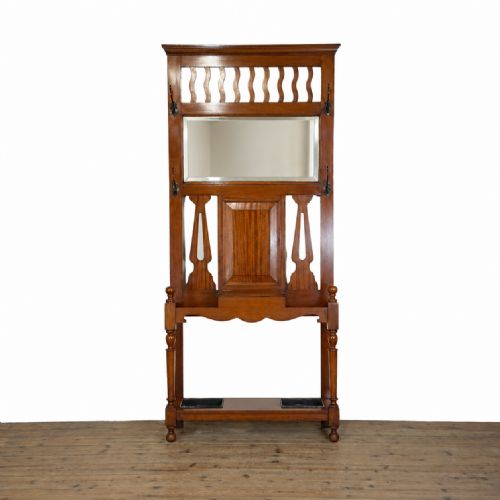
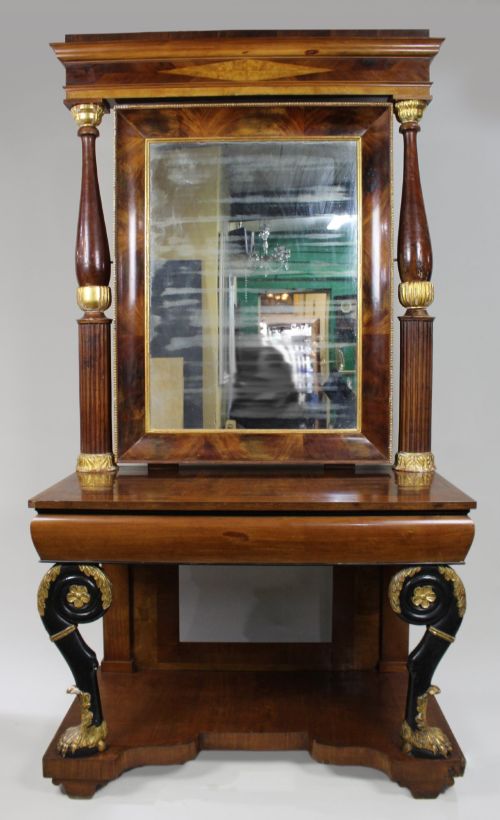
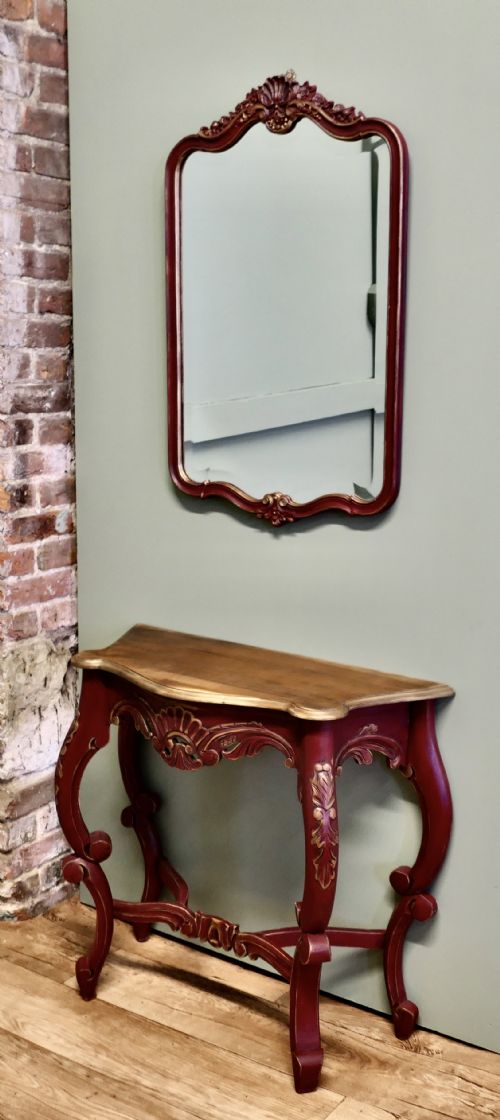
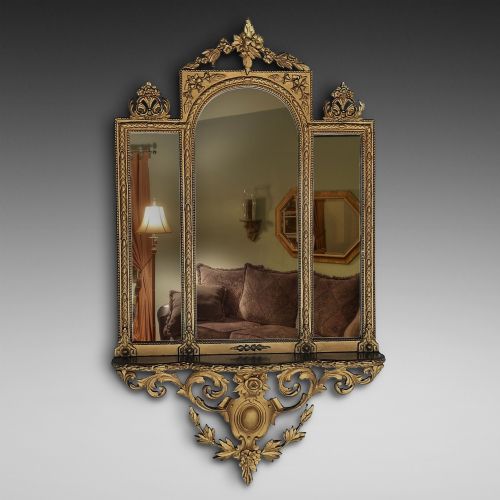


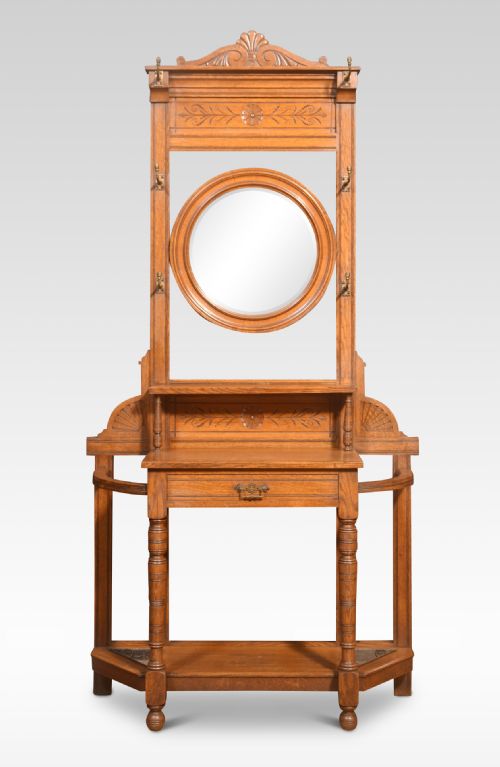


Vintage Console Mirror
A vintage console mirror brings instant architectural depth to a room, pairing reflective glass with a matching console table or shelf for a grounded, elegant display.
Vintage Console Mirror
A vintage console mirror encompasses wall-hanging glasses with integrated shelves, matching table and mirror sets, and grander console combinations designed for hallways and living spaces. These pieces emerge from periods including the Victorian and Edwardian eras, alongside early twentieth-century designs influenced by Georgian, Regency, and Rococo revivals.
The most common formats on this page pair carved wooden frames with either standalone wall mirrors or complete console arrangements, often incorporating functional surfaces beneath the glass. Walnut, oak, and mahogany appear frequently as primary timbers, frequently accompanied by marble tops on the table bases.
Origins span British craftsmanship and continental European workshops, particularly French designs from around nineteen hundred. Buyers encounter everything from narrow hall stands to elaborate giltwood pier tables with matching overmantel mirrors.
Materials and construction methods
Makers utilised solid timbers such as mahogany, oak, walnut, and rosewood, often applying parcel-gilt details or carved ornamentation to define the frame styles. Giltwood frames provide reflective brightness, while heavier woods like oak and mahogany offer structural stability for console tables and hall stands.
Mirror glass is set within rebated wooden frames or held by decorative metal elements, sometimes accompanied by polished marble inserts on the console surfaces. Inlaid veneers and carved decorative motifs demonstrate the joinery techniques standard to nineteenth and early twentieth-century workshops.
Vintage Console Mirror Retail Price Guide 2026
Typical asking prices for vintage console mirror among the pieces listed under this phrase on Sellingantiques today, from the lower quarter to the upper quarter. They describe what is for sale here now, not the wider market.
Pieces span the nineteenth century through to the nineteen-twenties, including Victorian and Edwardian examples.
Distinctions in quality
Superior examples display crisp, hand-carved detailing on the wooden frames and well-figured grain in timbers like walnut and mahogany. The integration between the console table and the matching mirror reveals the design cohesion intended by the maker.
The weight and clarity of the mirror glass, alongside the quality of the stone on marble-topped tables, separate standard utility pieces from finer decorative commissions. Original gilding and intact structural joints further elevate the standing of a piece.
Ellen E Houghton of Minton
The Vintage Console Mirror Glossary
- Console table
- A table designed to stand against a wall, frequently supported by brackets or legs at the front. These often accompany matching wall mirrors in grand hallways or reception rooms.
- Pier mirror
- A tall mirror specifically designed to hang on the pier of wall space between windows. They frequently pair with narrow console tables positioned directly beneath.
- Overmantel mirror
- A large mirror intended for placement above a fireplace mantelpiece. They share decorative traits with console mirrors from the same periods.
- Parcel-gilt
- A decorative technique where selected portions of a wooden object are covered in gold leaf. This highlights specific carved details against a contrasting timber background.
- Hall stand
- A piece of hallway furniture combining a mirror, coat hooks, and umbrella stands. Some examples incorporate tiled panels or small shelves.
Vintage Console Mirror: Frequently Asked Questions
Where should I place a console mirror?
These pieces suit narrow entrance halls, reception rooms, and dining spaces where floor space is limited. Pairing the mirror with its matching console table creates a dedicated focal point.
Ensure the wall structure can support the weight of the frame, particularly for heavier oak, walnut, or marble-topped combinations.
How do I identify a Victorian console mirror?
Victorian examples often draw on Rococo or classical revivals, featuring darker timbers like mahogany and walnut alongside ornate carved frames. Look for substantial construction and traditional joinery methods appropriate to the nineteenth century.
Later Edwardian and nineteen-twenties pieces tend towards lighter oak framing or simpler geometric lines, reflecting changing interior tastes.
Are the console table and mirror always sold together?
Many listings present matching sets where the table and wall mirror were designed as a unified suite. Other entries feature wall-hanging mirrors with integrated small shelves rather than separate floor-standing tables.
Check individual descriptions to confirm whether the furniture includes a matching base or functions as a wall-mounted unit.
How do I care for antique mirror glass?
Clean the mirror glass gently using a soft cloth and mild cleaning solutions, avoiding harsh chemicals that could damage the surrounding wooden frame. Protect antique silvering on the glass by keeping pieces away from damp environments.
Maintain wooden and giltwood frames with dry dusting to preserve the original surface finish.