



Vintage Compact Mirror Case
These vintage compact mirror case examples are portable vanity accessories from the early to mid-twentieth century, prized by collectors for their intricate metalwork and colourful enamelling.
Vintage Compact Mirror Case
When you search for a vintage compact mirror case, you encounter portable cosmetic containers designed for powder and mirror use during the twentieth century. The selections available encompass powder compacts, vanity cases, and combination cases that integrated lipstick holders or card compartments.
The majority of pieces date from the nineteen-twenties and nineteen-thirties, reflecting the geometric and decorative shifts of the period. Art Deco designs predominate alongside regional expressions such as Persian filigree and Chinese export silver.
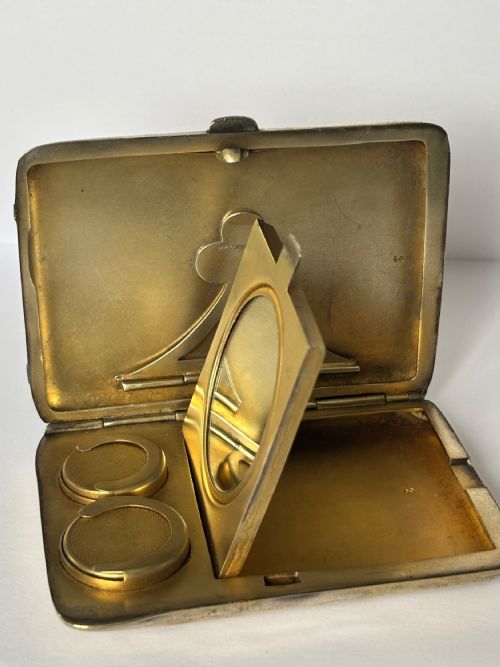
Most examples function as pocket or handbag items for ladies, constructed to hold loose powder and include an interior mirror. Some rarer combinations incorporate precious stones, sovereign holders, or specialised suede linings.
How they were made
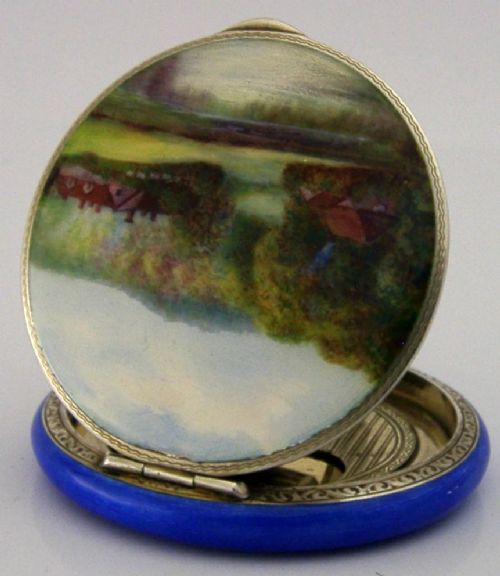
Metals form the structural foundation of these accessories, utilising sterling silver, silver-gilt, brass, gilt metal, chrome, and nine-carat yellow gold. Smiths applied engine turning to cast surfaces to create repeating geometric patterns beneath translucent coatings.
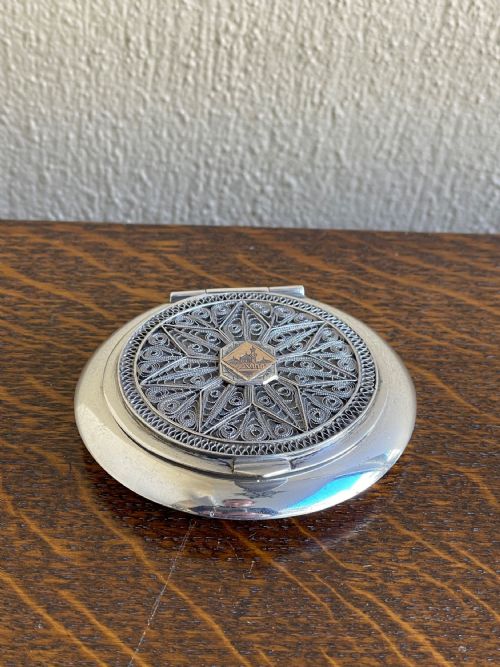
Enamel work defines the decorative surface of many pieces, employing guilloché techniques where patterns are engraved into the metal before vitreous colour is applied. Filigree wirework appears on specific regional items, soldered into delicate openwork lattices.
Materials documented across the inventory include mirror glass, enamel, brass, gilt metal, sterling silver, and nine-carat yellow gold.
What varies in quality
The distinction between standard commercial pieces and superior items rests on the complexity of the metallurgy and the precision of the surface decoration. Hand-painted enamel panels and intricate engine turning indicate finer workshops.
Association with documented makers such as Cartier, Henry Matthews, or Richard Hudnut elevates the standing of an item. The integration of precious gemstones like rubies and diamonds alters the tier of the object entirely.
Henry Matthews·Giuliano Spinelli Florence·Cartier·Richard Hudnut·Houbigant
The Vintage Compact Mirror Case Glossary
- Guilloché enamel
- A decorative technique where metal is precision-machined with a repetitive pattern under translucent enamel. This method creates a shimmering depth that catches light from different angles.
- Silver-gilt
- Silver that has been coated with a thin layer of gold on its surface. This treatment provides the visual warmth of gold while utilising a silver base structure.
- Engine turned
- A mechanical surface decoration method using a rose engine lathe to engrave intricate geometric lines into metal. It provides a tactile, light-reflecting finish found on many metal cases.
- Filigree
- Delicate jewellery metalwork made from fine threads of silver twisted and soldered together in open patterns. It gives a lace-like appearance to the lid or body.
- Combination case
- A multi-functional vanity accessory designed to hold powder alongside items like lipsticks, cards, or coins. These pieces represent more complex manufacturing standards of the era.
Vintage Compact Mirror Case: Frequently Asked Questions
What materials were used?
Makers utilised a range of metals including sterling silver, silver-gilt, brass, chrome, and nine-carat yellow gold. Mirror glass provided the internal reflection, while enamel and precious stones added decorative colour.
Surface finishes frequently combined engine-turned engraving with blue or multi-coloured enamel coatings. Some regional pieces featured fine silver filigree work.
How do I date them?
Dating relies on stylistic markers such as Art Deco geometric motifs, assay office hallmarks, and manufacturer stamps. Pieces from the nineteen-twenties and thirties often display distinct modernist or jazz-age influences.
Makers' marks stamped into the metal provide specific attribution. Reference books on silver smiths and vanity cases help pinpoint the exact year of production.
Were they meant for daily use?
Original owners carried these items in handbags or evening purses for powder touch-ups and quick mirror checks. Combination formats allowed users to consolidate lipstick and cards into one accessory.
Today, collectors handle them as display objects or delicate vanity items. The inner compartments still retain traces of their original cosmetic purpose.
What is guilloché enamel?
Guilloché is a decorative process where a mechanical lathe engraves a precise geometric pattern into a metal base. Transparent enamel is then fired over the engraving so the pattern shows through.
This technique creates a reflective, shimmering surface that changes appearance depending on the light. It appears frequently on lids from the interwar period.