




Vintage Club Fender Seat
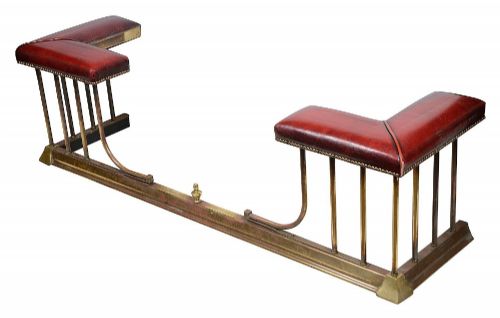
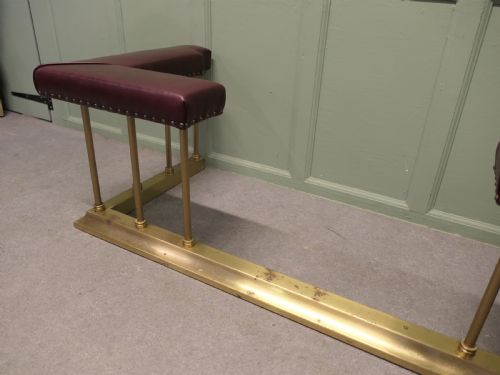
A vintage club fender seat provides a low, upholstered fireside perch framed in brass, steel, iron or oak.
Vintage Club Fender Seat
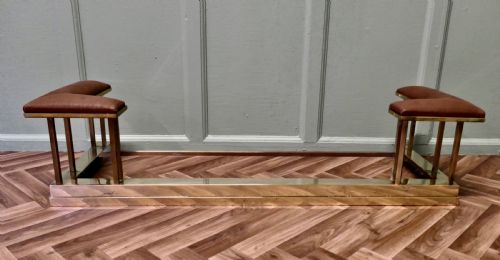
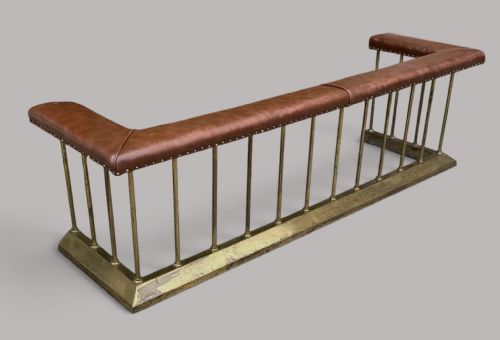
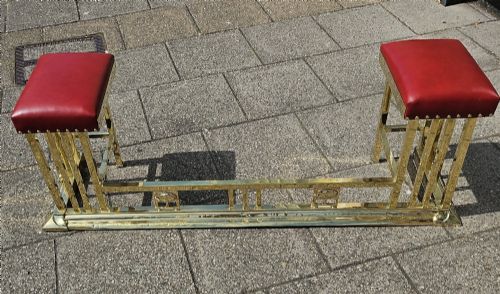
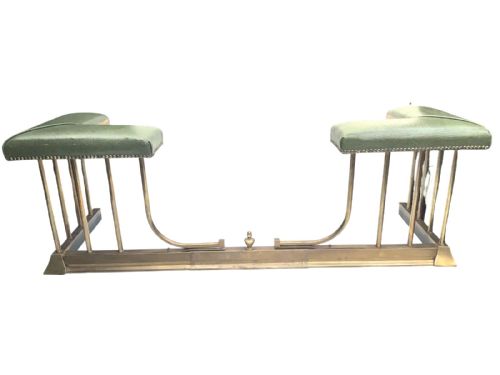
A vintage club fender seat is a low hearthside bench that combines metal framework with padded upholstery for fireside seating. These sturdy structures frame the fireplace opening while providing convenient low perches for warming by the fire.
The selections available here range from substantial nineteenth-century designs to early twentieth-century examples spanning the Victorian, Edwardian, and Art Deco periods. Brass and leather dominate the forms, alongside robust alternatives in steel, iron, copper, and oak.
Buyers frequently encounter polished brass frameworks paired with tan or green leather Chesterfield-style cushions. Variations also include adjustable widths, Arts and Crafts carved details, and paired configurations suited to larger country house hearths.
How they were made
Makers constructed the structural frames using heavy-gauge brass tubing, forged iron, or seasoned oak, often joining components with mechanical fasteners or traditional joinery. Steel and copper also appear as primary metals, providing the rigidity required for daily fireside use.
The upholstered top rails utilise durable leathers or woven fabrics stretched over padded foundations. Master craftsmen built these seats to withstand the heat of the hearth and the weight of regular sitters without compromising the underlying metalwork.
The listings span multiple periods from the nineteenth century through the 1940s, featuring metals like brass, steel, iron, and copper alongside oak and leather.
What varies in quality
The calibre of a vintage club fender seat depends heavily on the gauge of the metal tubing and the substance of the internal frame. Lighter tubular brass contrasts with thick, heavy cast iron or substantial oak timbers that offer superior heft and stability.
Upholstery finish and leather selection define the upper tier of execution. Hand-finished buttoning, premium hide thickness, and the retention of original patination on both the metal and leather separate ordinary examples from exceptional ones.
William Birch
The Vintage Club Fender Seat Glossary
- Club fender
- A low fireside seat built around a fireplace opening with upholstered top rails. This form originated in British gentlemen's clubs to maximise warmth close to the hearth.
- Chesterfield seat
- An upholstered bench style featuring deep button tufting across the leather surface. This classic padding method provides firm support and a traditional aesthetic.
- Art Deco
- A decorative style characterised by sleek geometric lines and stylised motifs that emerged during the early twentieth century. These examples bring a streamlined appearance to the traditional hearth.
- Extender
- A mechanical feature allowing the fender width to adjust for different fireplace dimensions. This functional addition helped fit standard units to varying hearth openings.
Vintage Club Fender Seat: Frequently Asked Questions
What is a club fender seat?
A club fender seat is a traditional fireside bench featuring a metal frame and padded top cushions that surrounds the hearth.
It allows people to sit close to the fire while keeping logs and ash contained within the fireplace opening.
How do I choose the right size?
Measure the width and depth of your fireplace hearth before browsing available pieces.
Some models feature adjustable extenders to help match specific hearth dimensions.
How do I care for the leather?
Maintain the leather upholstery by applying a suitable nourishing balm periodically to prevent drying.
Keep the seating away from direct excessive heat sources to preserve the hide.
Are these fenders adjustable?
Certain examples include adjustable mechanisms designed to alter the overall width of the metal frame.
This construction allowed historical pieces to fit various hearth sizes in different rooms.
How do I clean the metal frame?
Polish brass and copper components gently using appropriate metal cleaners to maintain their finish.
Iron and steel parts benefit from light dusting and occasional protective wax applications.