

Vintage Cityscape Art
Vintage cityscape art captures the character of historic streets and waterways through the brush of past painters.
Vintage Cityscape Art
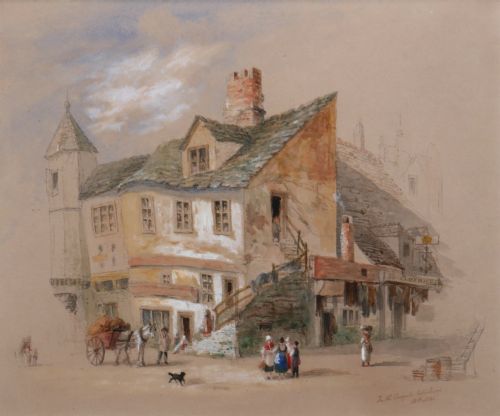
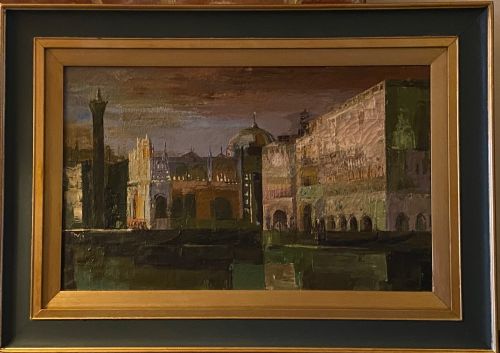
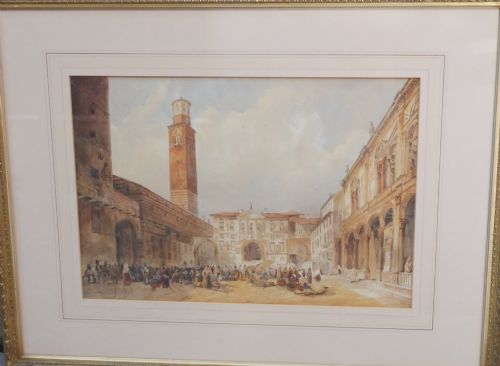
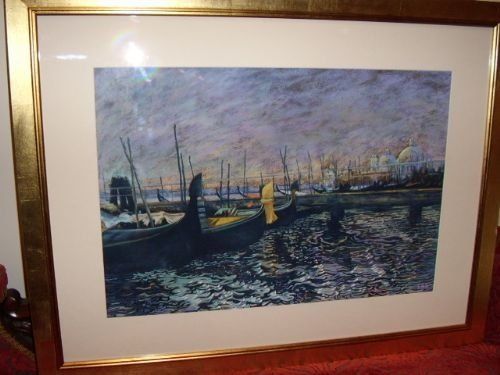
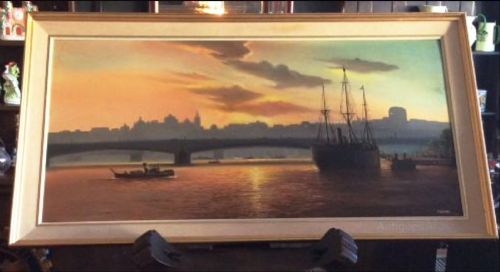
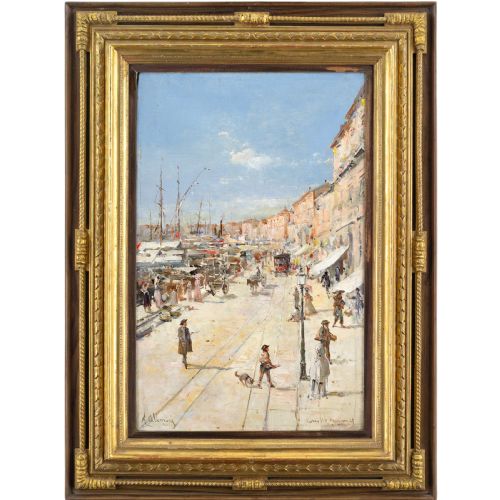
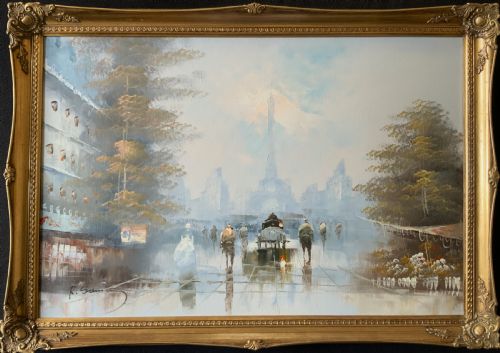
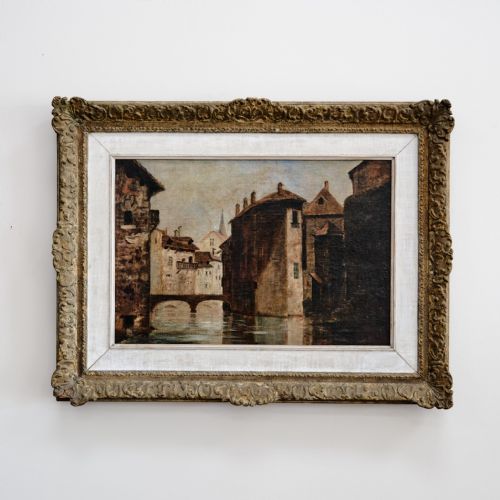
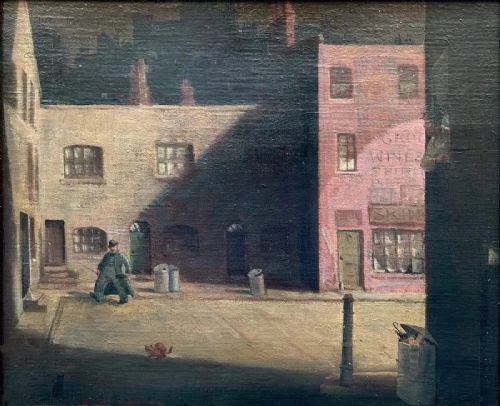
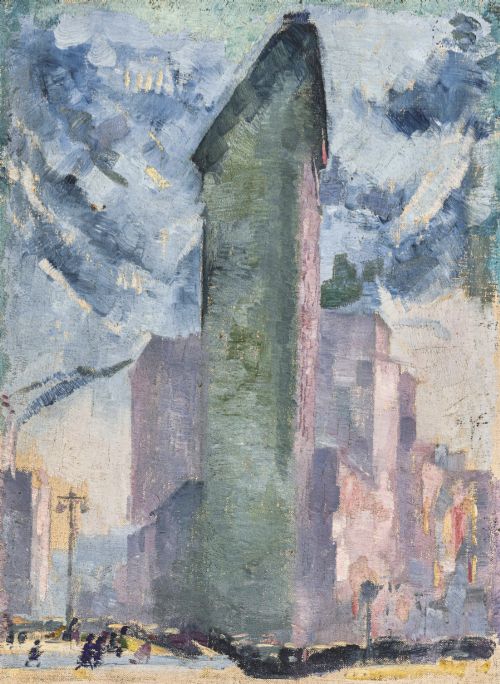
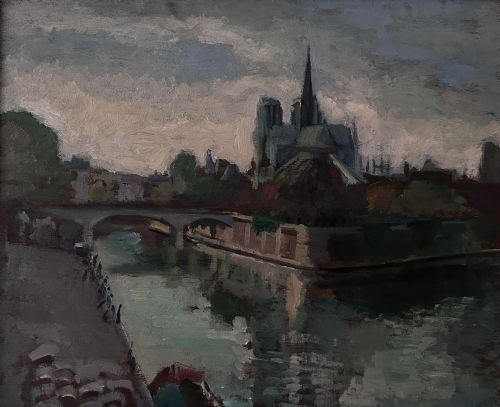
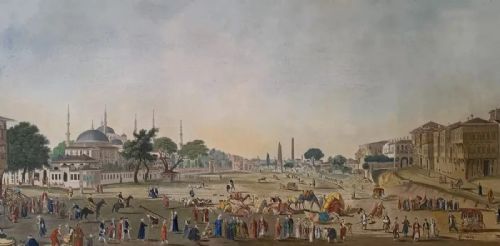
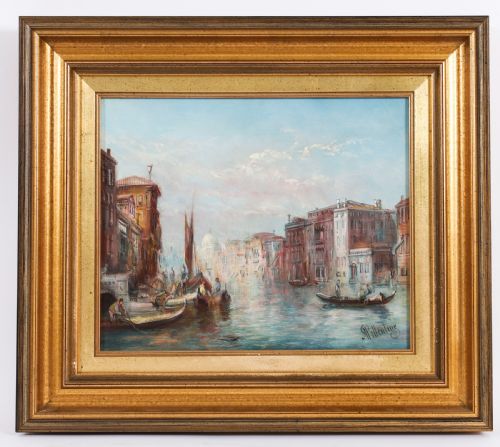
Vintage cityscape art spans oil paintings, watercolours and drawings depicting urban views, street scenes and architectural landmarks. The selection ranges from nineteenth-century watercolours of London and Venice to mid-century impressionist canvases of Paris.
Buyers frequently encounter mid-century oil paintings alongside earlier Victorian and Edwardian watercolours. These works record the changing face of European capitals through varied stylistic lenses from realism to abstraction.
Materials and construction
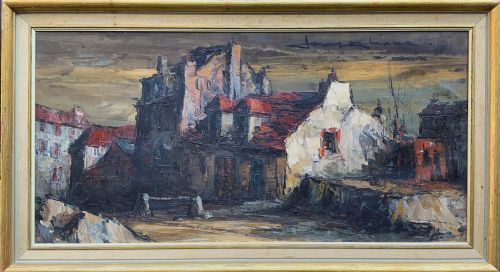
Painters applied oil and watercolour onto canvas, wood panels, paper and card to record urban scenery. Artists utilised impasto techniques to build physical texture on the canvas, creating depth within architectural elements.
Works are commonly presented in traditional gilt wood frames behind glass where watercolours or drawings require physical protection. The interaction between pigment and support underpins the visual longevity of each piece.
Vintage Cityscape Art Retail Price Guide 2026
Typical asking prices for vintage cityscape art among the pieces listed under this phrase on Sellingantiques today, from the lower quarter to the upper quarter. They describe what is for sale here now, not the wider market.
Artists frequently braved chilly European winters and bustling market crowds to capture fleeting moments of daily life on canvas.
Assessing quality
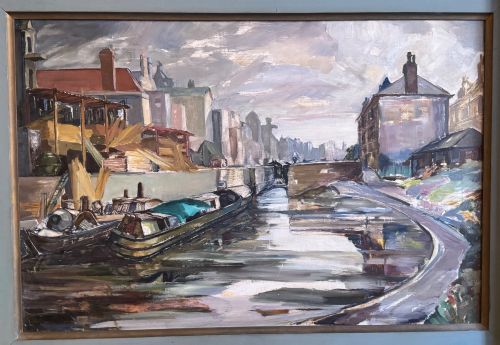
Quality rests in the handling of light, perspective and spatial depth rather than mere subject matter. Superior compositions demonstrate confident brushwork that conveys atmosphere and movement within a bustling street or quiet canal.
The integrity of the original support and the sympathetic preservation of the surface pigment influence the standing of a piece. Finer examples retain their intended palette without excessive overpainting or structural compromise to the canvas or frame.
Sushila Singh·Augusto Alberici·Alfred Pollentine·Antonio DeVity·Richard Henry Wright·Francisco Sancha·Anton Ignaz Melling·Alfred Wolmark·Caroline Burnett·Paul-Jean Anderbouhr·Victor Gabriel Gilbert·Fred Lawson·Charles James Lauder·Ron Folland·Merio Ameglio·E A Minardo·J W Hogley·Claude Jousset·Hein Hoppmann
The Vintage Cityscape Art Glossary
- Impasto
- Paint applied thickly to a canvas, standing out in relief from the surface. This technique allows the artist to capture the physical texture of stone, brick or water.
- Gilt wood
- Timber frames finished with a thin layer of gold leaf or metallic gilt. These frames often accompany traditional European paintings.
- Gouache
- An opaque water-based paint that dries to a matte finish. It provides stronger coverage than traditional watercolour.
- Watercolour
- A paint consisting of water-soluble pigments applied to paper. It creates transparent washes of colour particularly suited to atmospheric skies.
Vintage Cityscape Art: Frequently Asked Questions
What periods do these paintings cover?
The available works span from the nineteenth century through the mid-twentieth century. Styles evolve from academic recording towards impressionistic and abstract interpretations of urban environments.
Each period brings distinct colour palettes and handling of paint, reflecting the artistic movements active at the time of creation.
How should I display a vintage painting?
Position paintings away from direct sunlight and excessive humidity to protect the canvas and pigments. Adequate wall space allows larger panoramic pieces to be viewed comfortably from a distance.
Ensure hanging hardware matches the weight of the frame and the specific wall construction of your room.
How do I identify a watercolour from an oil?
Watercolours are painted on paper and generally displayed under glass to prevent moisture damage. Oil paintings utilise canvas or wood boards with a thicker, textured surface that remains unglazed.
Examining the edge of the frame often reveals the underlying support material used by the artist.
What subjects are most common?
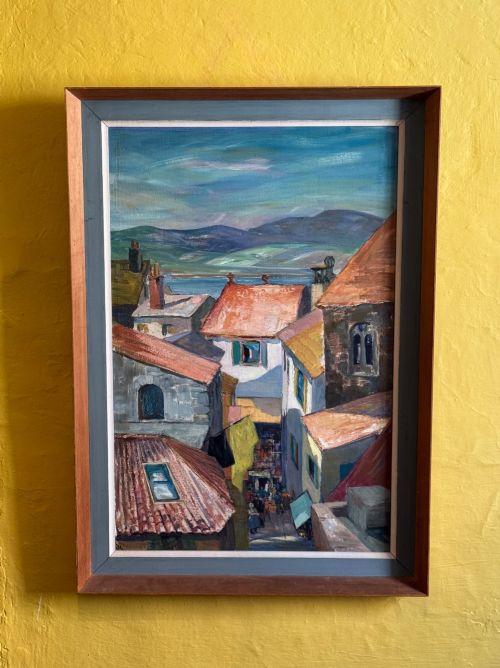
European capitals such as Paris, London and Venice dominate the repertoire. Views typically capture bridges, cathedrals, market squares and bustling waterways.
Artists frequently returned to specific architectural landmarks to study changing light conditions throughout the day.