






Vintage Circus Artwork
These vintage circus artwork pieces bring colour and theatricality into a room through original paintings, drawings, and panels.
Vintage Circus Artwork
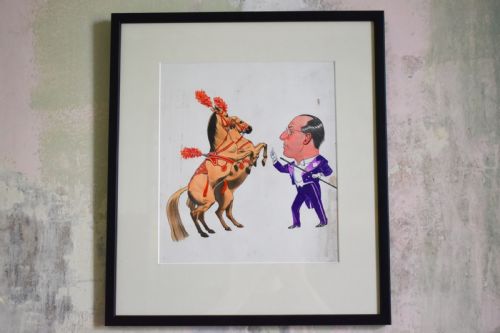
When you search for vintage circus artwork, you are looking at original paintings, decorative wall panels, and works on paper capturing performers, animals, and fairgrounds. These pieces span from the 19th century through the mid-20th century, encompassing styles such as Surrealism, Victorian Folk Art, and British Impressionism.
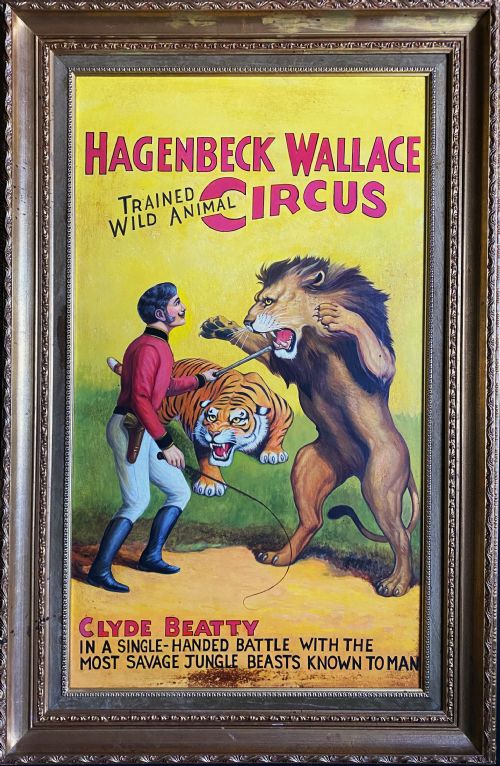
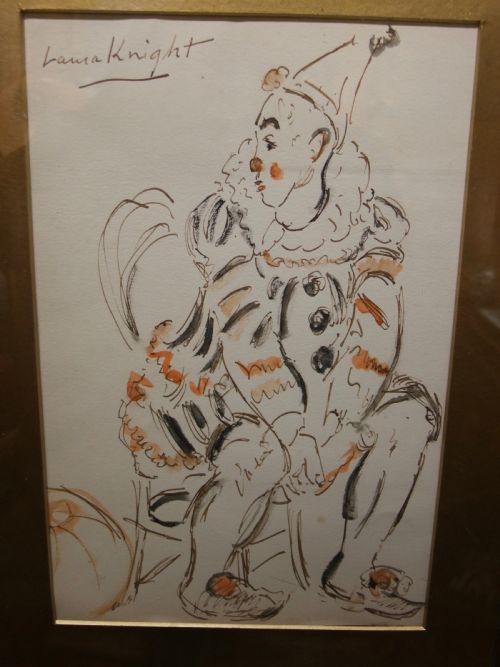
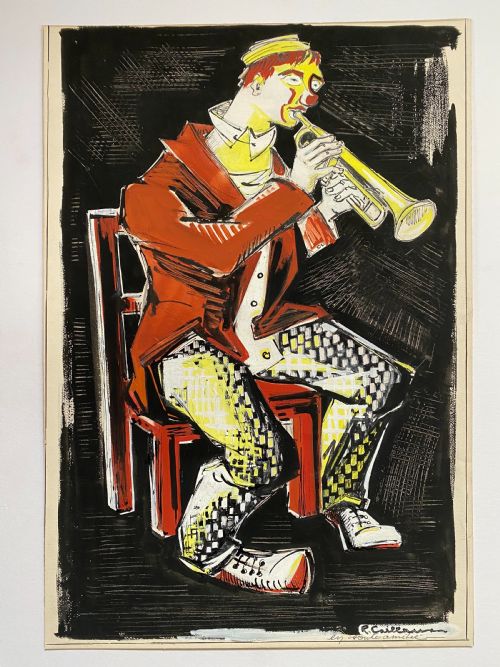
You are most likely to meet works executed in watercolour, gouache, and oil on paper or canvas, reflecting both professional studio output and illustrative traditions. Subjects range from animal trainers and clowns to cyclists and fairground ride panels.
The material forms vary from framed artwork to large oil paintings and decorative panels, showing how artists recorded the spectacle of the big top across different decades. Each piece offers a distinct window into twentieth-century entertainment and performance.
Materials and techniques
Artists captured these subjects using traditional media including watercolour, gouache, graphite, and oil paint applied to paper, wood, glass, and canvas. Works on paper often employ graphite underdrawing with washes of watercolour or opaque gouache to build form and expression.
Larger pieces utilise canvas and wood panels, providing a sturdy support for rich oil paints that render detailed scenes of trainers, performers, and fairground rides. Framed artwork frequently preserves these delicate works behind glass, protecting the paper and pastel surfaces from atmospheric wear.
Listings feature works created across seven distinct periods, ranging from the 19th century up to the 1960s.
Assessing quality
Quality in these pieces rests upon the sureness of the draftsmanship, the handling of the medium, and the expressive capture of the subject. A confident graphite line or a fluid watercolour wash demonstrates the maker's mastery over more hesitant or stiffly rendered compositions.
The sophistication of the palette and the psychological engagement of the portraiture also distinguish finer works from simpler decorative items. Well-preserved works on paper retain their original pigment vibrancy without excessive fading or paper discolouration.
Emil John Hess·Archille Zavatta·Dame Laura Knight·Lucy Kemp-Welch
The Vintage Circus Artwork Glossary
- Gouache
- An opaque watercolour paint consisting of pigment, water, and a binding agent such as gum arabic. It dries to a smooth, matte finish that allows for bright, solid colour application.
- Graphite
- A form of crystalline carbon used as a drawing medium in pencils. It produces grey or black marks that easily smudge or take washes of ink and watercolour.
- Surrealism
- A 20th-century avant-garde movement that sought to release the creative potential of the unconscious mind. In these pieces, it manifests as dreamlike and uncanny depictions of performers.
- Decorative Wall Panels
- Large painted or illustrated sections intended to adorn architectural spaces or fairground rides. They function as robust displays designed for public entertainment settings.
Vintage Circus Artwork: Frequently Asked Questions
What periods do these pieces cover?
The selection spans from the 19th century through various decades of the 20th century, including the 1910s, 1920s, 1930s, 1940s, 1950s, and 1960s. This wide timeframe captures shifting artistic movements from Victorian folk art to mid-century modernism.
Different eras brought distinct stylistic approaches, moving from illustrative precision to more expressive and surreal interpretations of circus life.
How should I hang framed artwork?
Keep framed pieces out of direct sunlight to prevent the fading of watercolours, gouache, and pastel pigments on paper. Maintaining stable indoor humidity levels also protects wooden panels and paper supports from warping or degradation.
Ensure that frames are securely hung using appropriate wall fixings that match the weight of the canvas, wood, or glass components.
What subjects appear in these works?
Common subjects include clowns, animal trainers with lions and tigers, circus ballerinas, trumpeters, and cyclists. Fairground ride panels also feature prominently, depicting the vibrant atmosphere of travelling shows.
Artists focused both on the quiet moments of preparation and the dynamic action of performance under the big top.
How do I identify a work on paper?
Works on paper utilise materials such as watercolour, gouache, ink, and graphite as primary mediums. They are typically framed behind glass to protect the delicate surface from dust and physical damage.
Examining the edges and reverse of the framing often reveals the texture and weight of the underlying paper sheet.