
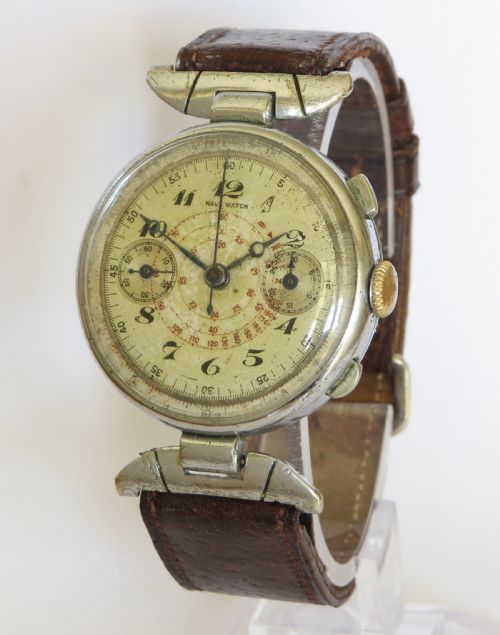


Vintage Chronograph Wristwatch
A vintage chronograph wristwatch brings mechanical timekeeping and stopwatch capability together on the wrist, spanning styles from Art Deco to mid-century aviation.
Vintage Chronograph Wristwatch
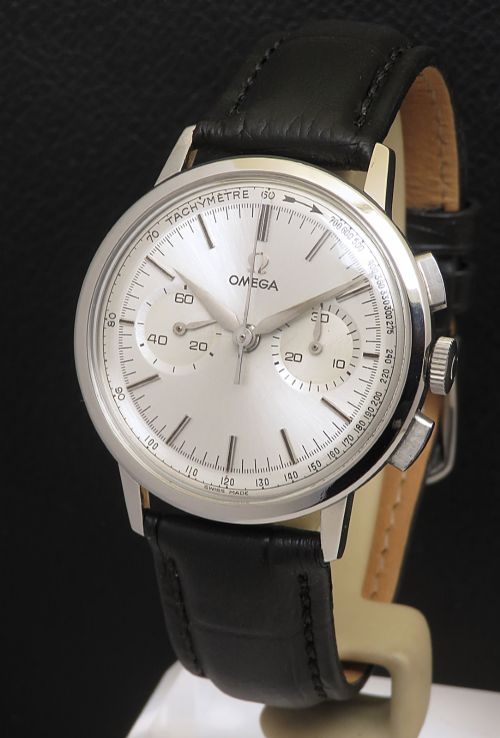
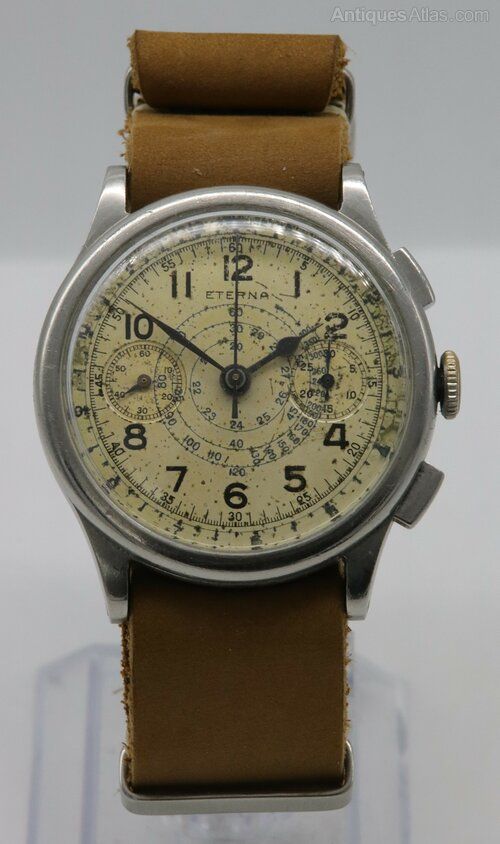
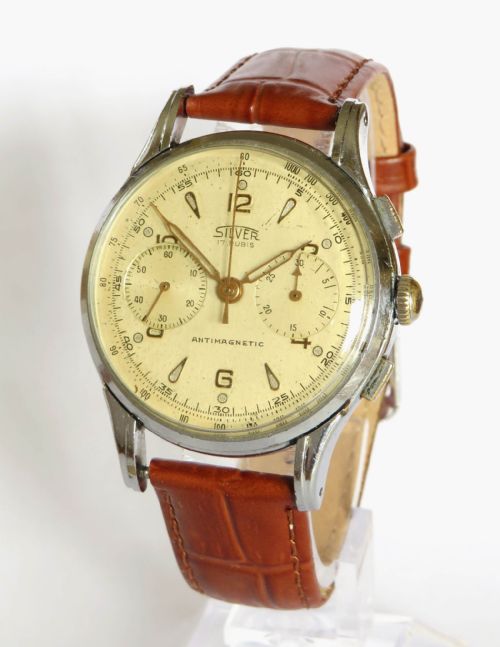
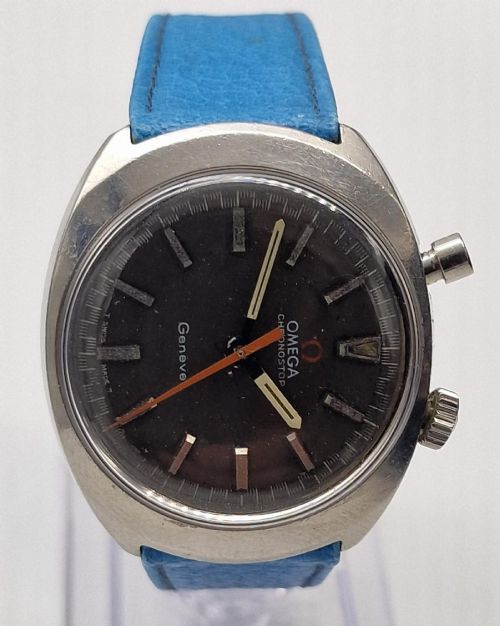
A vintage chronograph wristwatch serves the wearer both as a standard timekeeper and as a mechanical stopwatch for timing intervals. When searching for a vintage chronograph wristwatch, buyers encounter designs originating from the 1930s through to the 1960s and later. These pieces capture mid-century horology, aviation history, and military applications.
The selections on this page range from utilitarian aviator models to dressier gold-plated and triple calendar pieces. Pieces from the 1930s often show distinct Art Deco influences, while 1950s and 1960s versions embrace mid-century modern aesthetics. Common forms include specialised pilot watches, drivers editions, and multi-register dial layouts.
Makers represented in these periods include established Swiss houses alongside military suppliers. Examples span from simple two-register dials to complex triple calendar moonphase complications. Each decade brought distinct case geometries, ranging from round stainless steel housings to square gold-plated configurations.
Materials and construction
Cases are constructed from stainless steel, chrome, gold plate, and solid gold, paired with protective glass or acrylic crystals. Movements rely on complex mechanical assemblies with manual wind mechanisms, utilising Swiss movements such as Landeron and Valjoux calibres.
Dials incorporate printed scales, subsidiary seconds registers, and applied markers beneath crystal covers. Straps are predominantly fashioned from leather to secure the metal case to the wrist during daily wear or piloting duties.
Listings feature periods from the 1930s through to later than 1960, utilising stainless steel, gold plate, leather, and acrylic glass.
Distinctions in quality
Superior examples demonstrate precision movement engineering from recognised Swiss manufacturers, housing robust mechanical calibres like column-wheel or cam-switching chronograph mechanisms. The grade of the movement, from standard commercial ebauches to high-specification military-issued calibres, dictates the standing of the watch.
Material choice and dial execution also separate ordinary pieces from exceptional ones, particularly when precious metals or complex complications like triple calendars and moonphases are present. Originality of dial printing, hands, and case finishing preserves the historical integrity desired by collectors.
Omega·Eterna·Antoremi·Hahn Landeron·Breitling·Invicta·Mappin·Fludo·Miramar·Benrus·Chronographe Suisse·Beltane·Mundus·Vixa·Heuer
The Vintage Chronograph Wristwatch Glossary
- Chronograph
- A watch with a display function used to measure elapsed time alongside the primary timekeeping hands. It includes independent start, stop, and reset controls.
- Manual wind
- A mechanical movement powered by manually turning the crown rather than through an automatic rotor. This traditional method requires regular winding to maintain operation.
- Triple calendar
- A watch complication displaying the day of the week, the month, and the date alongside standard time and chronograph functions. These apertures and pointers are typically arranged across the dial face.
- Acrylic glass
- A lightweight, shatter-resistant form of transparent plastic used for watch crystals during the mid-century period. It can be polished to remove surface scratches.
- Calibre
- The specific manufacturer's designation for a particular watch movement design. Collectors reference these numbers to identify the mechanical architecture inside the case.
Vintage Chronograph Wristwatch: Frequently Asked Questions
What is a vintage chronograph wristwatch?
A vintage chronograph wristwatch is a mechanical timepiece from past decades that includes an integrated stopwatch function. These watches allow the wearer to measure short intervals of time using dedicated pushers on the side of the case.
They reflect the design trends and horological engineering of periods such as the 1940s, 1950s, and 1960s, combining daily timekeeping with specialised utility.
How do you wind a manual chronograph?
To wind a manual chronograph, rotate the crown clockwise between your thumb and forefinger until you feel resistance. This winds the mainspring that stores energy for the mechanical movement.
Care should be taken not to overwind the crown once firm resistance is reached, ensuring the longevity of the internal spring.
How were aviation chronographs used?
Aviation chronographs were utilised by pilots to calculate navigation data, fuel consumption, and flight times during journeys. The rotating bezels and multi-scale dials assisted in performing rapid in-cockpit mathematical calculations.
Military forces also issued specific models to air force personnel for synchronized timing and operational missions.
What is a triple calendar complication?
A triple calendar complication displays the day, month, and date on the watch dial alongside standard time and chronograph functions. Days and months typically appear through small windows, while the date is indicated by an extra hand pointing to a scale around the dial edge.
This mechanical layout provides comprehensive calendar data within the wristwatch format.