

Vintage China Display Case
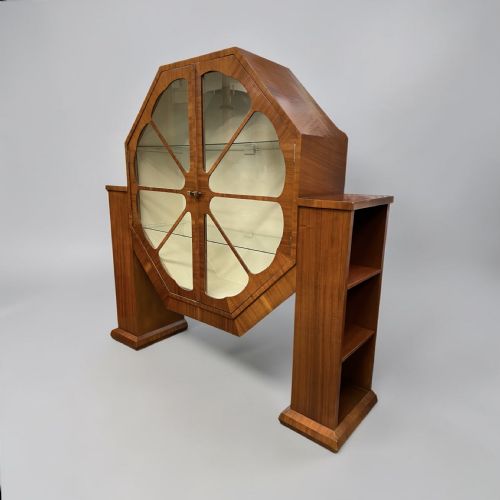
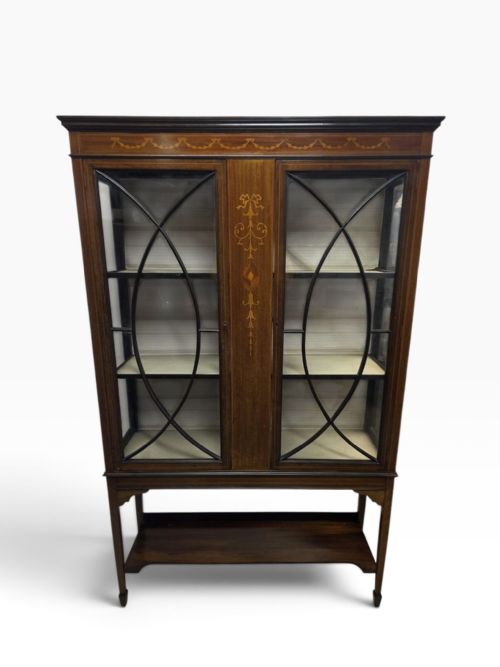
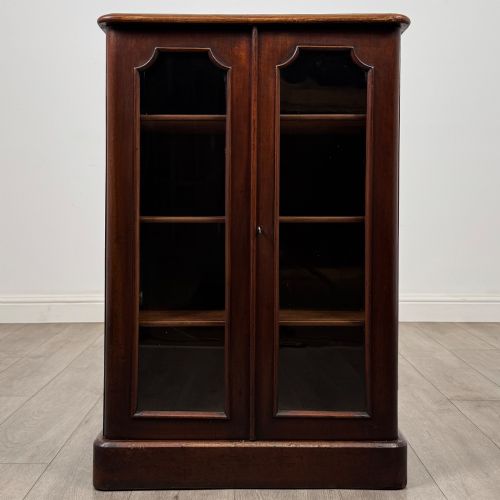
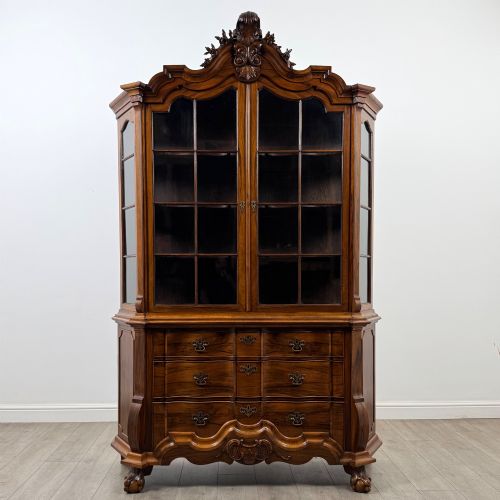
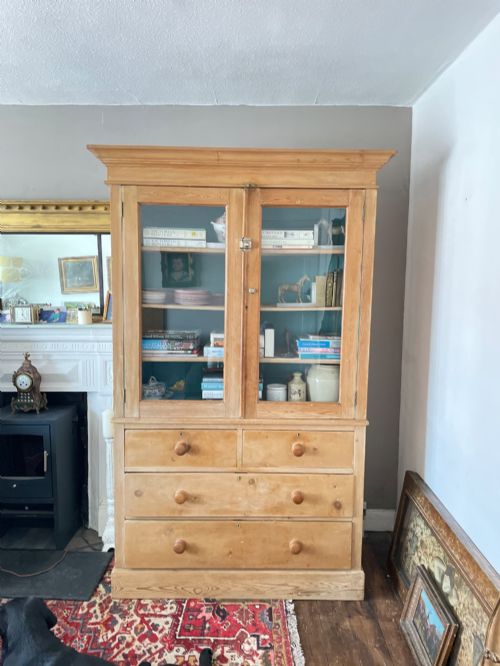
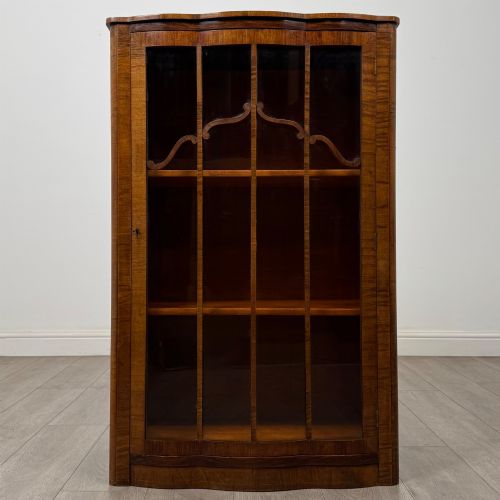
A vintage china display case holds tableware behind glass, ranging from Edwardian mahogany to Art Deco walnut.
Vintage China Display Case
A vintage china display case provides a glazed enclosure for storing and viewing ceramics, porcelain and glassware. Buyers searching for a vintage china display case encounter varied timber frames spanning the Victorian, Edwardian and Art Deco eras.
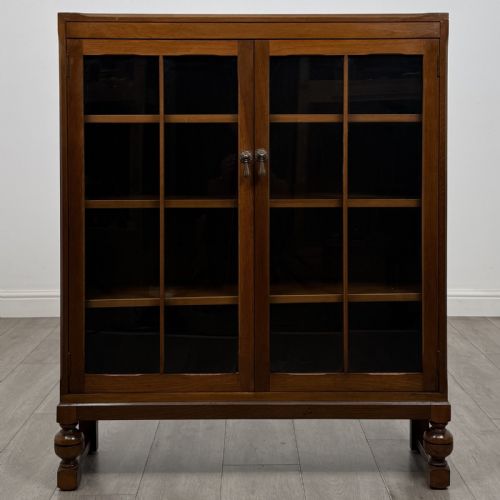
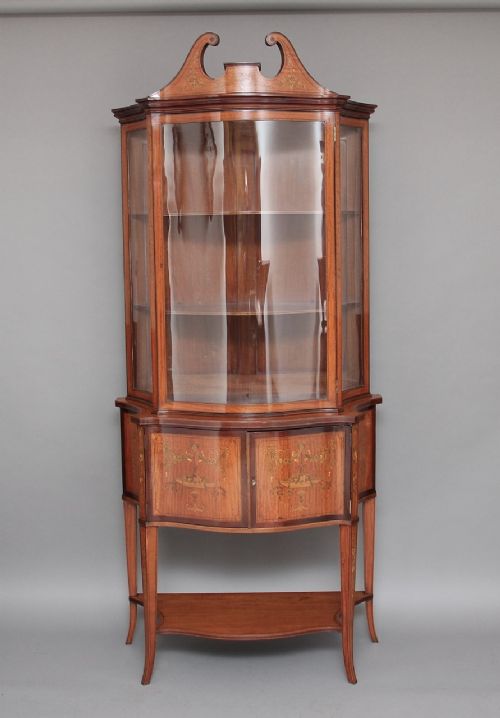
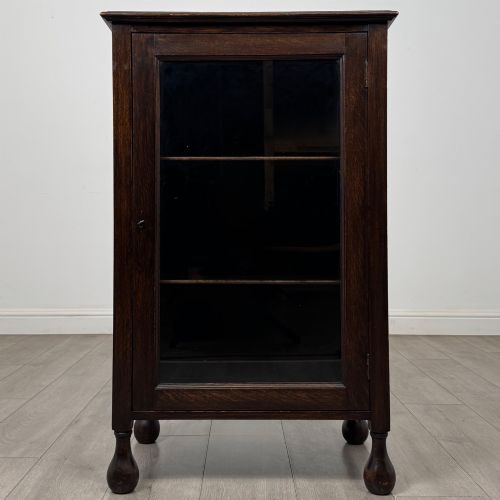
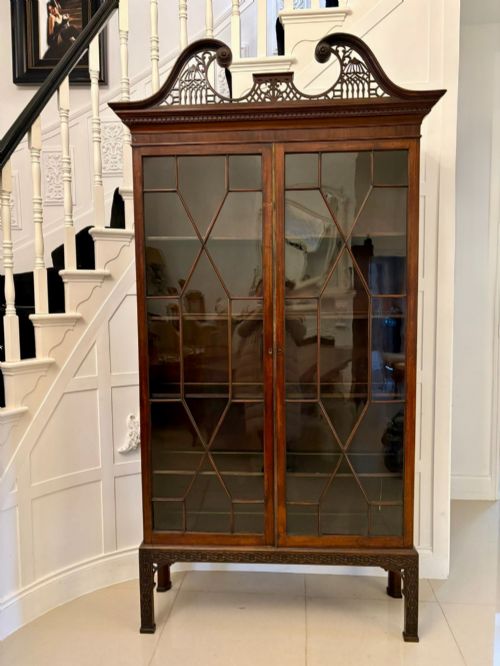
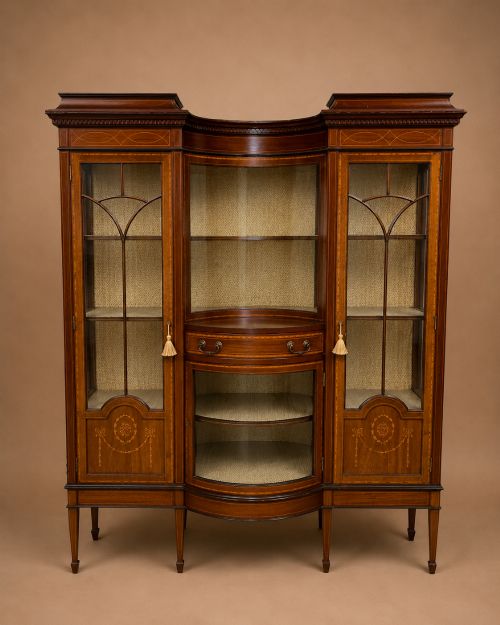
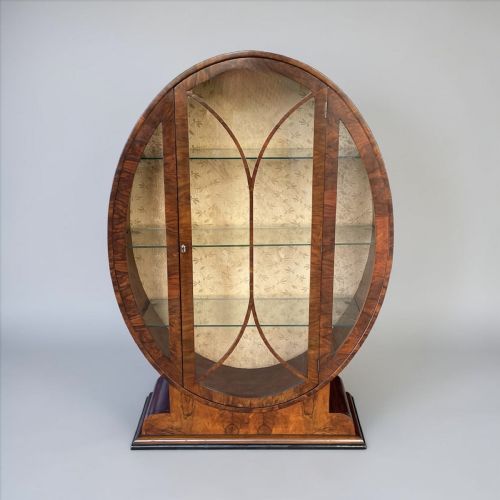
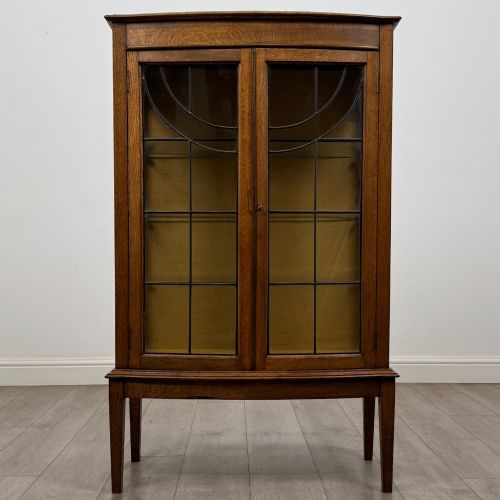
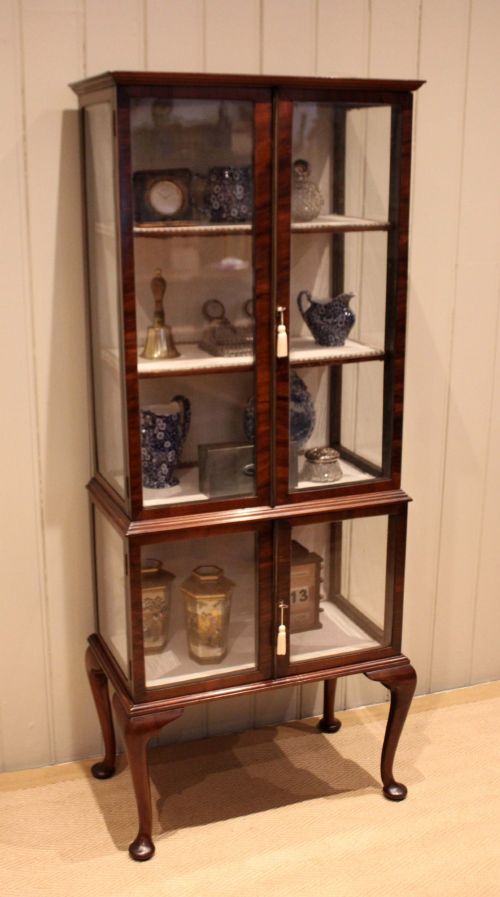
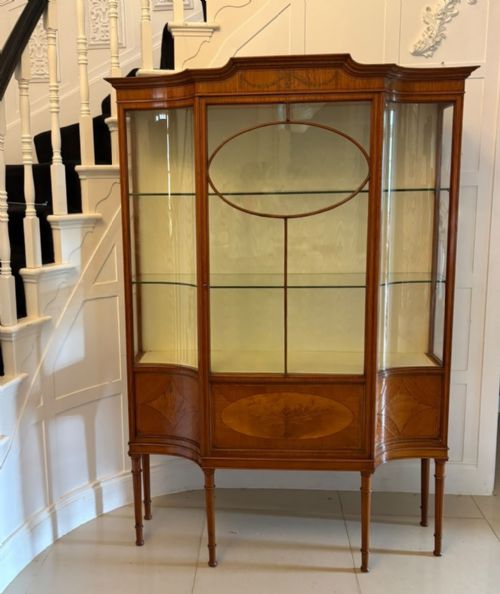
The pieces on this page appear in forms such as tall bookcase cabinets, corner cupboards and low side cabinets. Edwardian and Victorian versions frequently feature delicate inlaid woodwork, whilst 1930s examples showcase streamlined shapes in walnut and oak.
Originating as practical storage for dining rooms and drawing rooms, these cabinets balance transparent door panels with solid timber lower sections. They suit homes needing both display space for collections and enclosed storage for everyday items.
How they were made
Cabinet makers utilised solid and veneered timbers including mahogany, walnut, oak and pine, often finished with contrasting satinwood inlay. Glass panes are fitted into timber frames or held by leaded cames, sometimes shaped in curved or oval configurations.
Metal components such as brass hinges, locks and handles provide structural closure and decorative contrast to the timber. Interior surfaces occasionally incorporate fabric linings or painted finishes to highlight the contents displayed behind the glazed doors.
What varies in quality
Quality rests on the selection of timber figures, such as burr or figured walnut, and the precision of satinwood stringing and floral marquetry. Superior cabinets display balanced proportions, tight joinery in the door frames and finely cast brass hardware.
The complexity of the glass work also marks the tier of a piece, with leaded panels, bow fronts and curved side windows requiring advanced carpentry skills. Plain flat glazing paired with straightforward rectilinear frames represents more utilitarian manufacture.
Maple and Co
The Vintage China Display Case Glossary
- Astral glazing
- A method of dividing glass panes using slender wooden bars arranged in geometric patterns. This technique originates in earlier centuries but appears on revival bookcases.
- Bow front
- A convex curved cabinet face that swells outward in the centre. It adds visual movement and requires curved glass panels.
- Sheraton Revival
- A late nineteenth and early twentieth century style inspired by eighteenth century designer Thomas Sheraton. It utilises light timbers, satinwood inlay and classical symmetry.
- Vitrine
- A glass-fronted cabinet designed specifically for displaying objects of curiosity or porcelain. The term derives from the French word for glass.
- Leaded glass
- Small panes of glass held together by strips of lead called cames. This technique creates patterned windows common in Art Deco designs.
Vintage China Display Case: Frequently Asked Questions
How do I clean the glass safely?
Use a mild glass cleaner applied to a soft cloth rather than directly onto the glass. This prevents moisture from seeping into fragile timber frames or antique lead cames.
Take care around painted or polished interior surfaces by keeping cleaning fluids away from the wood. Dry the glass thoroughly to maintain clarity.
Can these cabinets hold heavy china?
Most Edwardian and Victorian shelves support standard dinner services and decorative plates safely. Distribute heavier serving platters toward the lower wooden shelves rather than upper glass sections.
Check the stability of shelf supports before loading heavy collections. Fixed wooden shelves generally offer greater weight capacity than adjustable tiered glass.
How do I date a display cabinet?
Examine the timber species, construction joints and decorative styles present on the frame. Edwardian pieces often display satinwood inlay and mahogany, whilst 1930s examples favour walnut and geometric Art Deco lines.
Hardware styles and backboards also offer clues to the period of manufacture. Compare the overall aesthetic against documented revival styles from the nineteenth and twentieth centuries.
Where should I place a cabinet at home?
Position the cabinet away from direct sunlight to protect timber finishes and delicate fabrics from fading. Ensure the floor is level so the doors align properly within their frames.
Allow sufficient clearance for doors to open fully without striking adjacent furniture. Rooms with stable humidity levels help preserve antique wood and veneer.