
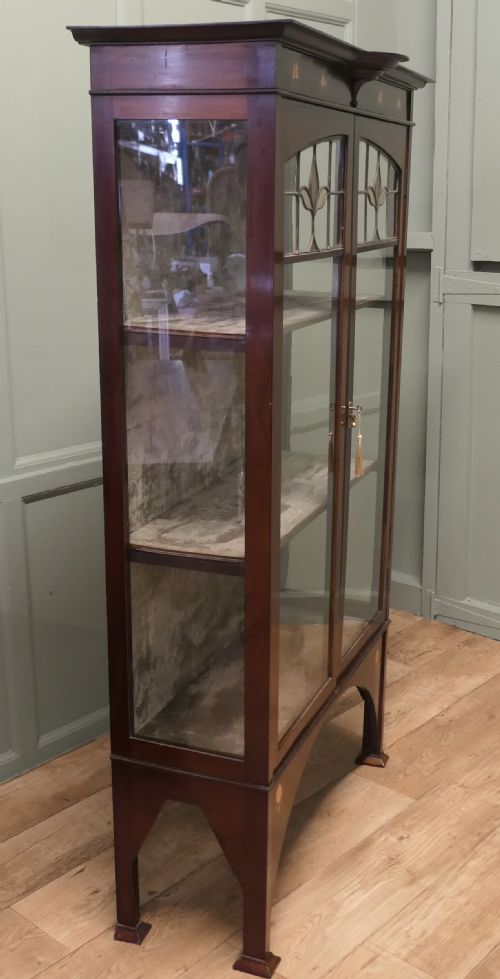
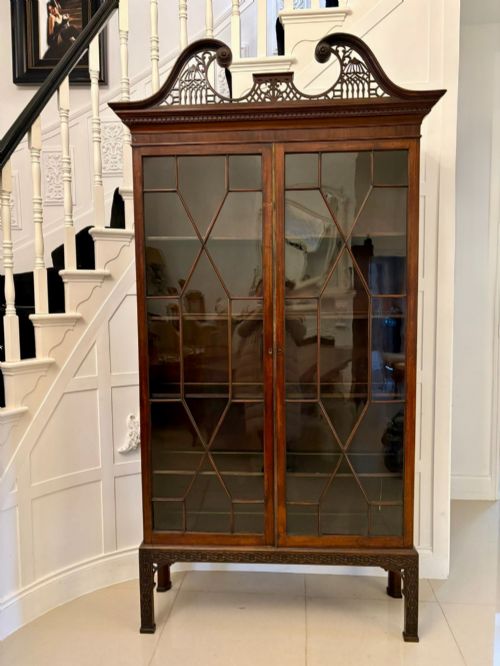
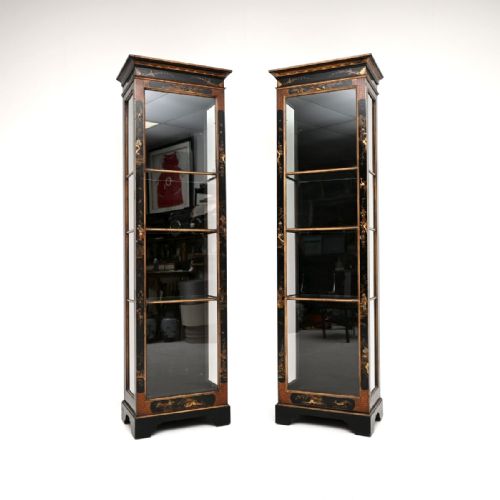

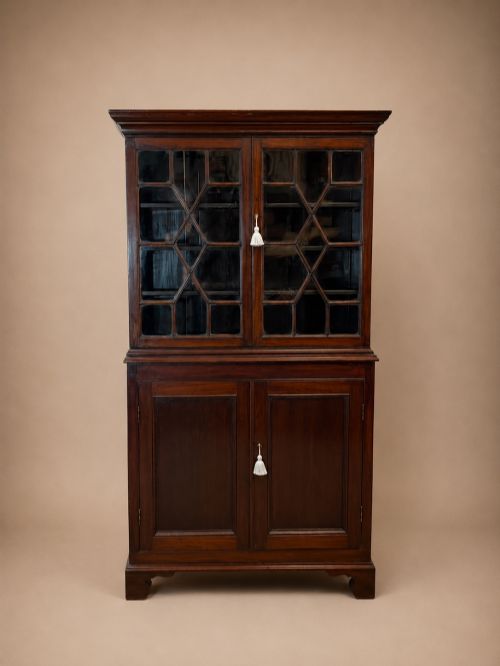



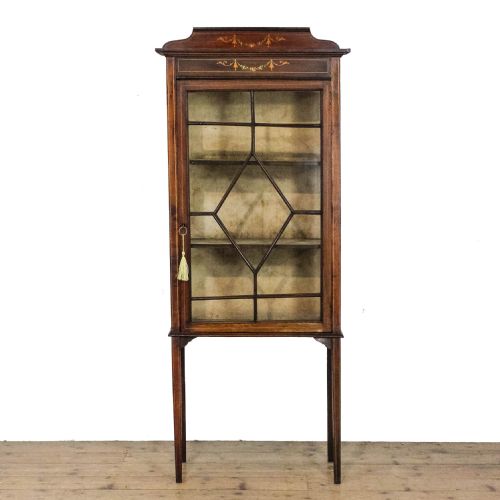


Tall China Cabinet
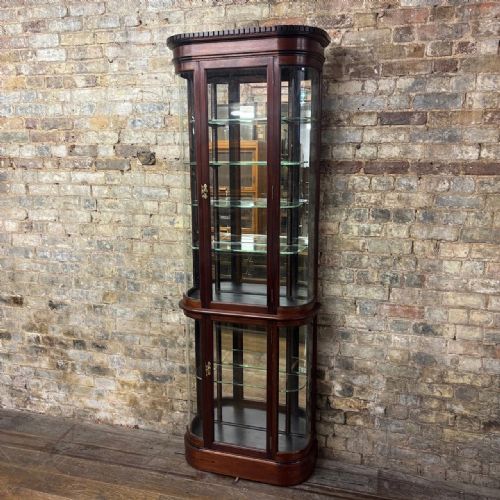
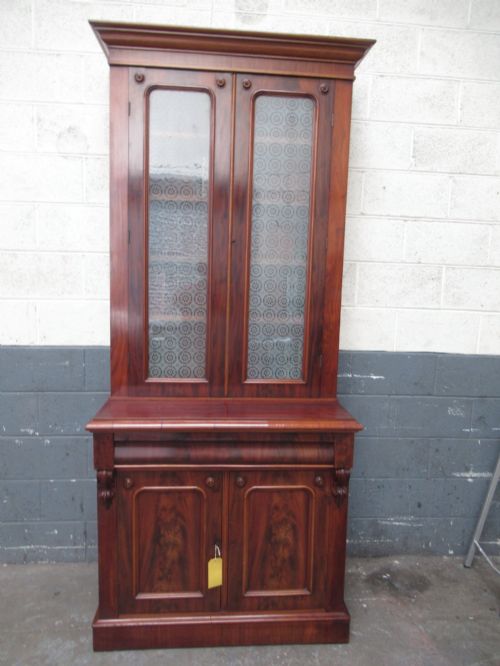
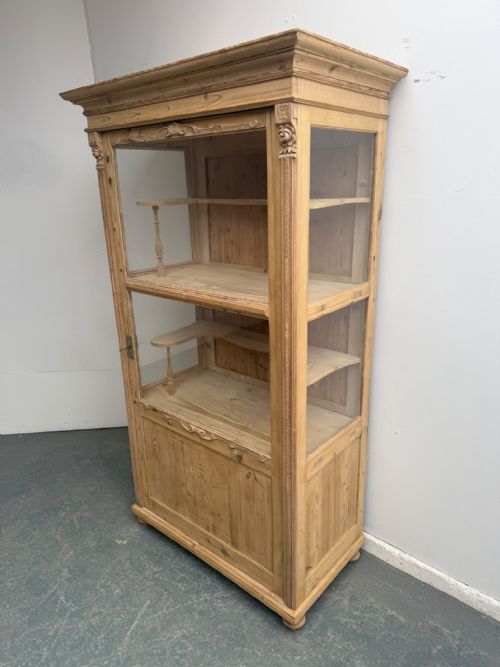
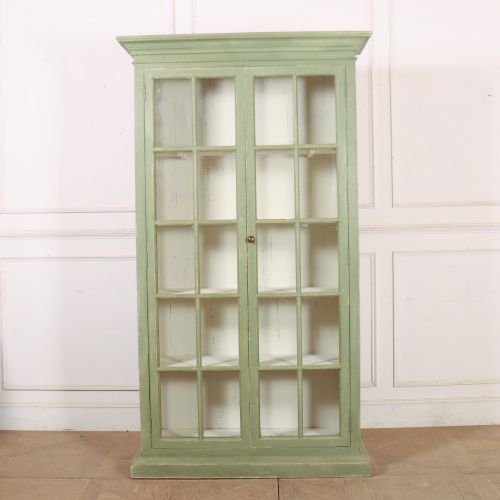
A tall antique china cabinet brings vertical presence and glass-fronted protection to your room, holding treasured porcelain behind timber frames.
Tall China Cabinet
A tall antique china cabinet serves to elevate display storage, bringing stately proportions and glass panels into living spaces. When you search for a tall antique china cabinet, you encounter versatile forms that double as bookcases and glazed display units across several centuries.
The pieces appearing here span Georgian, Victorian, and Edwardian eras, with mahogany forming the primary timber alongside oak, walnut, pine, and rosewood. These cabinets arrive in configurations ranging from slender single-door uprights to substantial two-part breakfronts and corner units.
Makers adapted these tall formats for domestic interiors, incorporating astragal glazing bars, lower cupboards, and inlaid satinwood details. The selection leans heavily toward Edwardian and Victorian iterations, offering practical height and transparent shelving for collections.
Materials and construction methods
Cabinet makers built these tall frames using dense hardwoods like mahogany and oak, applying satinwood inlay, marquetry, and lacquered finishes for decorative impact. Glass panes were secured into doors with wooden glazing bars, often arranged in intricate geometric or astragal patterns.
Construction relied on durable joinery techniques, dividing taller examples into two-part sections for transport and stability. Brass hardware, fabric linings, and hand-carved mouldings completed the structural and visual assembly of each piece.
Listings feature tall antique china cabinets across the 18th, 19th, and 20th centuries, utilising mahogany, oak, walnut, and pine.
Markers of distinction in tall cabinets
Quality rests upon the selection of timber grain, the precision of inlay work, and the delicacy of the glazing bars. Cabinets featuring figured mahogany, intricate marquetry, or maker signatures distinguish themselves from utilitarian workshop pieces.
Proportion and structural integrity dictate the standing of a piece, particularly in taller two-part formats where balance is essential. Original glass panes, well-fitted drawers, and intact hardware elevate the standing of the cabinet within its period.
S and H Jewell London
The Tall China Cabinet Glossary
- Astragal glazing
- Wooden bars dividing glass panes into smaller geometric panels. This technique lightens heavy doors and characterises period display furniture.
- Marquetry
- Decorative veneer patterns assembled from various woods and materials to create pictorial or geometric designs on cabinet surfaces.
- Satinwood
- A pale, lustrous timber utilised for stringing, banding, and inlay work on mahogany furniture, particularly during the Georgian and Edwardian eras.
- Breakfront
- A large cabinet design where the central section projects forward from the flanking wings, adding architectural depth to tall furniture.
- Pedestal
- A foundational support block or freestanding column base that elevates tall cabinets and upright display furniture.
Tall China Cabinet: Frequently Asked Questions
How do I date a tall china cabinet?
Dating relies on identifying stylistic markers, timber choices, and construction techniques associated with periods like Georgian, Victorian, or Edwardian. Details such as inlay motifs, door frames, and glazing bar patterns point toward specific manufacturing eras.
Examining secondary woods inside drawers and the type of fixings used provides further chronological clues. Comparing these elements against known period examples clarifies the age of the cabinet.
What is the difference between a bookcase and a display cabinet?
Bookcases traditionally feature wooden shelves meant for storing volumes, though many period iterations include glazed doors to protect the contents. Display cabinets specifically prioritise visibility, often incorporating glass on multiple sides and lighter internal shelving for porcelain.
Many listings combine these definitions because tall glazed furniture served both purposes in historic homes. The inclusion of fabric-lined interiors or adjustable display grooves often signals a primary intent for china rather than books.
Are two-part cabinets easier to move?
Two-part cabinets divide into an upper glazed section and a lower base cupboard, significantly reducing the weight and height for transportation. This modular construction allowed historic makers to manoeuvre tall furniture up staircases and through domestic doorways.
When positioning the cabinet in a room, the upper section simply rests upon the lower base, sometimes secured with internal brackets. This split design also assists with safe installation in rooms with lower ceilings.
How should I clean antique mahogany?
Maintenance involves dusting with a soft, dry cloth and applying traditional beeswax periodically to nourish the timber grain. Avoid modern silicone sprays or excessive moisture, which can damage historic polished surfaces and veneers.
Glass panels benefit from standard glass cleaner applied sparingly to a cloth rather than sprayed directly, protecting the surrounding timber and glazing putty. Regular care preserves the depth of the mahogany colour over time.