





Vintage Cherub Art
These vintage cherub art pieces bring classical winged figures into interior spaces through paintings, carvings, lamps, and metalwork.
Vintage Cherub Art
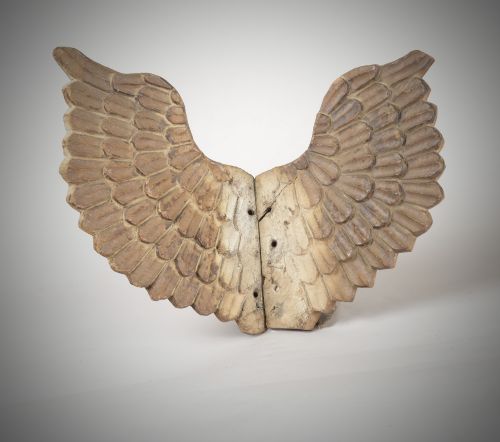
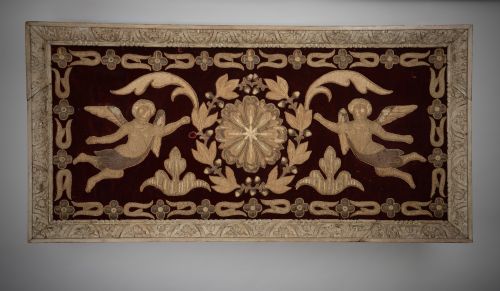
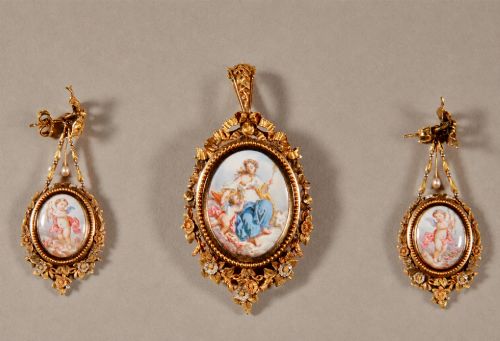
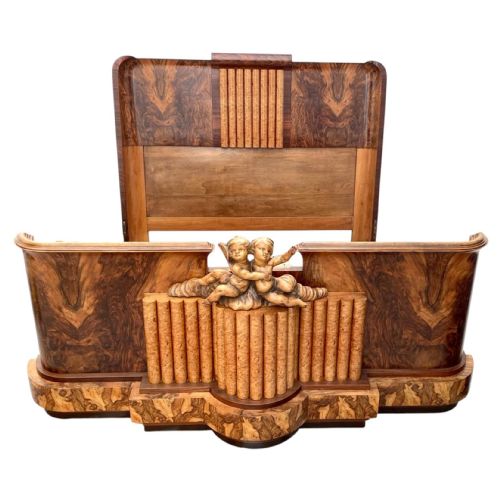
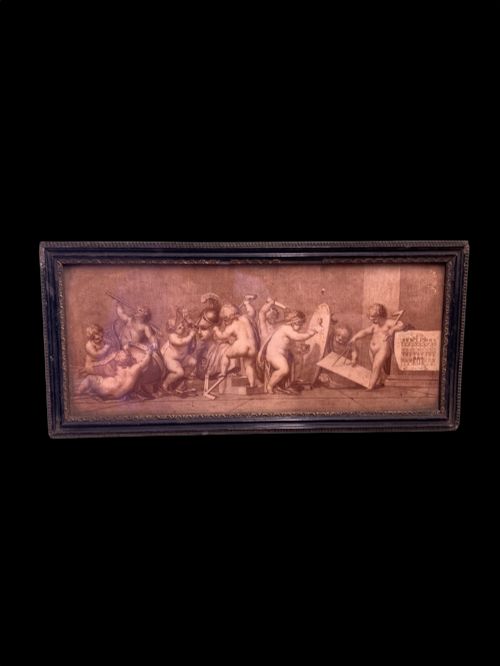
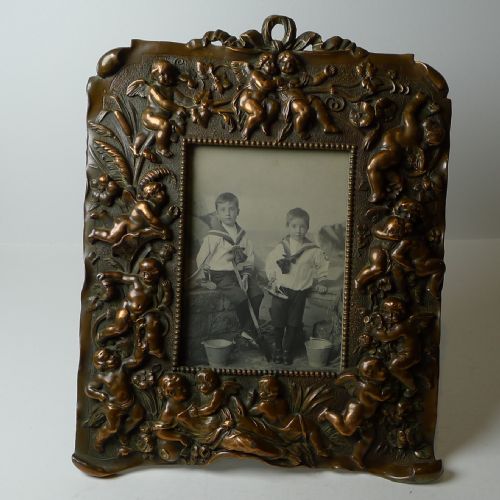
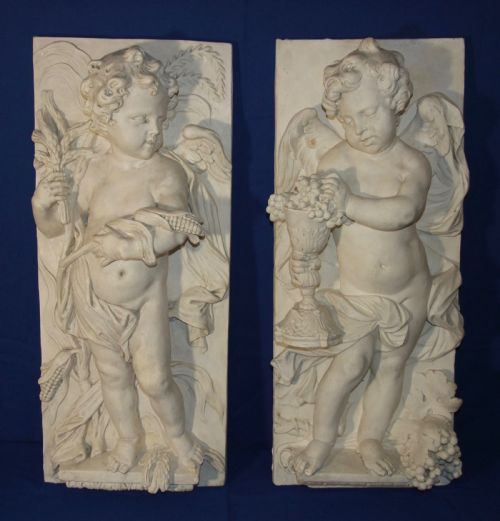
Vintage cherub art spans decorative objects and fine artworks depicting winged angelic figures, drawing from 18th century, 19th century, Edwardian, and 1930s periods. Buyers seeking vintage cherub art will encounter diverse interpretations ranging from carved wooden architectural salvage and plaster wall friezes to porcelain figures and bronze lamps.
The objects take many forms, including framed paintings, engravings, wall sconces, table mirrors, and religious sculptures. French and Italian influences dominate the styles, incorporating Baroque, Rococo, Neoclassical, Art Nouveau, and Art Deco aesthetics.
How they were made
Materials span carved wood, bronze, brass, porcelain, plaster, glass, and paper, often finished with polychrome paint or gold leaf. Artisans combined traditional hand-carving and casting methods with period manufacturing techniques.
Paintings utilise grisaille and camaieu bleu palettes on canvas or paper, while sculptural works employ moulded plaster, cast spelter, and fired porcelain.
Vintage Cherub Art Retail Price Guide 2026
Typical asking prices for vintage cherub art among the pieces listed under this phrase on Sellingantiques today, from the lower quarter to the upper quarter. They describe what is for sale here now, not the wider market.
Listings feature 19th century and 18th century pieces alongside Edwardian and 1930s works, spanning bronze, porcelain, and carved wood.
What varies in quality
Quality rests in the precision of the modelling and the depth of the carving, distinguishing mass-produced items from master-modelled works. Sculptures modelled by named artists or produced by established potteries demonstrate superior anatomical detail and finishing.
The integrity of the original surface, whether polychrome paint, gold leaf, or patinated bronze, defines the visual success of each piece. Intricate details in cast metalwork and hand-carved wooden elements show the maker's hand more clearly than simpler casts.
H. Schubert·Auguste Moreau·Karl Tutter
The Vintage Cherub Art Glossary
- Grisaille
- A painting executed entirely in shades of grey or neutral greyish-brown. This technique creates a monochromatic image that often mimics the appearance of relief sculpture.
- Camaieu bleu
- A monochrome painting technique executed entirely in shades of blue. It produces a rich tonal effect similar to traditional blue-and-white ceramics.
- Spelter
- An alloy of zinc and lead or copper used as a cheaper substitute for bronze. It was widely utilised for decorative figures and lamps during the late 19th and early 20th centuries.
- Polychrome
- Decorated in a variety of colours. Applied to wood, plaster, or terracotta, it gives sculptures a lifelike appearance.
Vintage Cherub Art: Frequently Asked Questions
How do I date a cherub wood carving?
Dating relies on tool marks, timber choice, and the prevailing artistic style of the period. Eighteenth-century pieces typically show hand-chiseled backing and denser hardwoods.
Later Victorian and Edwardian copies often employ machine sawn elements and softer secondary woods. Comparing the stylistic flourishes of the carving to documented furniture periods helps confirm the era.
Where were bronze cherub lamps placed?
These lamps functioned as decorative table lighting in formal reception rooms and parlours. They added ambient illumination while displaying intricate metal casting.
Pairs often flanked mirrors or mantelpieces to create symmetrical arrangements in period interiors.
What is the difference between spelter and bronze?
Bronze is a durable alloy of copper and tin that takes a fine patina and sharp chisel marks. Spelter is a softer, lighter zinc alloy that was less expensive to cast.
Spelter pieces often feature applied bronze-coloured paint to imitate the heavier metal.
How do I clean polychrome painted plaster?
Cleaning requires a dry, soft-bristled brush to gently remove surface dust without disturbing the fragile paint layers. Moisture can soften plaster and lift historic pigments.
Avoid chemical solvents and abrasive cloths entirely to preserve the original finish.