




Vintage Cherry Table
These vintage cherry table examples bring warm fruitwood grain and practical French provincial charm straight into a dining room or bedroom.
Vintage Cherry Table
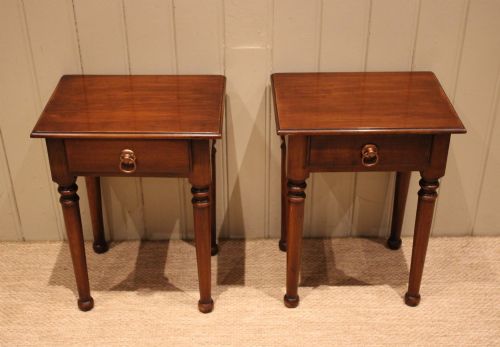
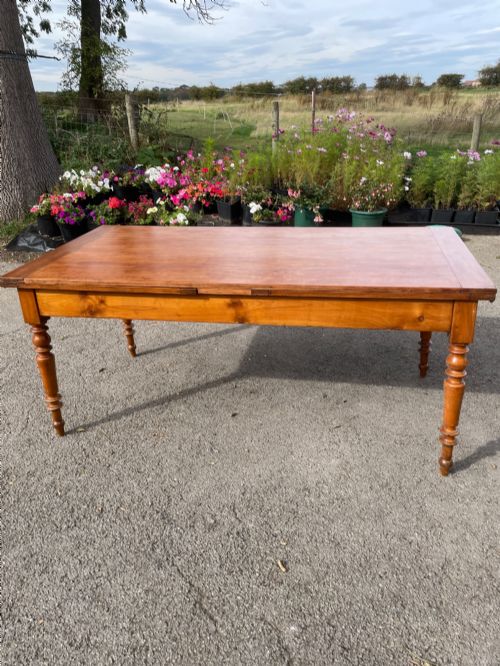
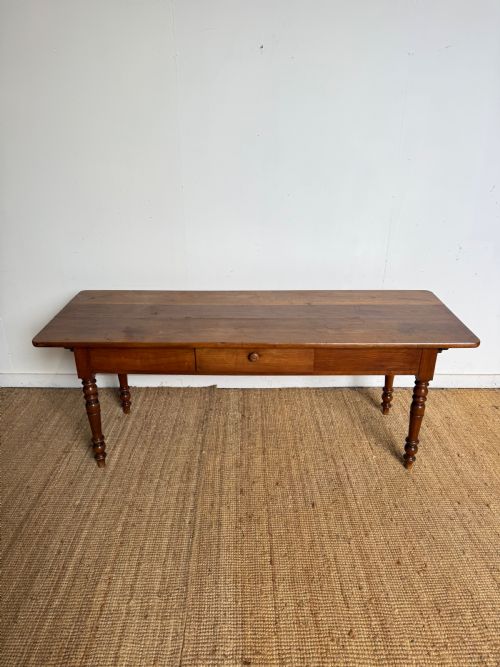
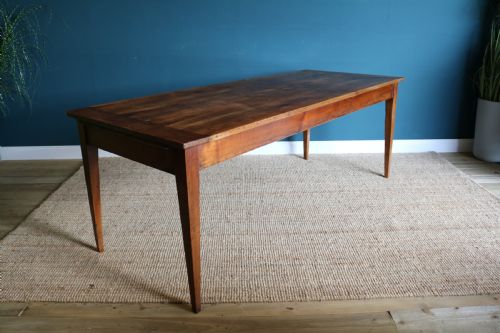
A vintage cherry table covers a wide selection of nineteenth and twentieth-century French provincial furniture built from cherrywood and timber. Buyers looking at this search phrase will encounter everything from long farmhouse refectory dining tables to smaller bedside lockers and coffee tables.
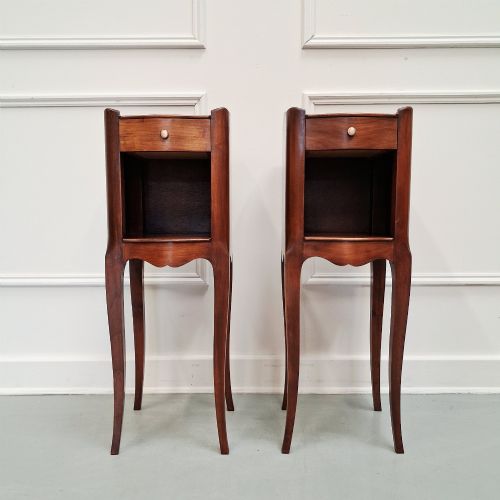
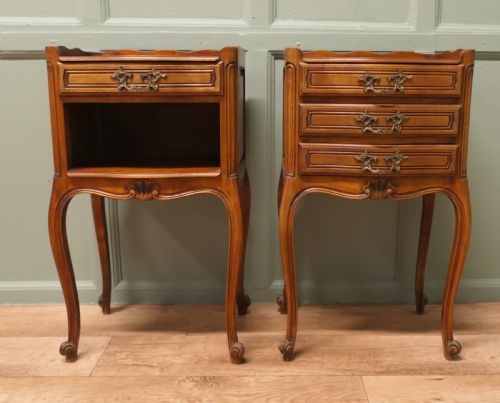
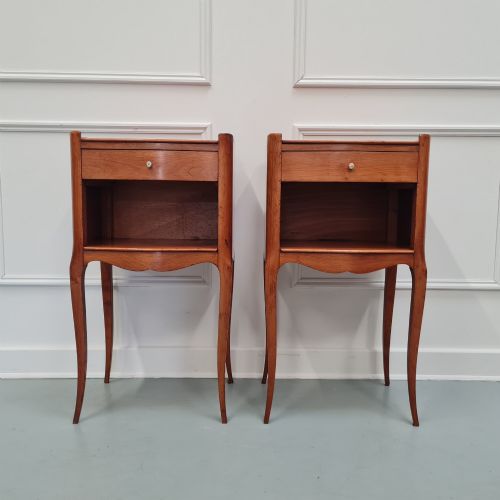
The nineteenth-century examples dominate the offerings, particularly large extending dining tables equipped with bread slides and cabriole legs. Alongside these large pieces, compact bedside chevets and console tables appear frequently across the decades up to the nineteen thirties.
Materials and construction
Construction relies heavily on solid cherry wood and regional timber, occasionally joined by walnut or fitted with brass and metal hardware. Carpenters shaped these dense fruitwoods into sturdy dining tables, dressing tables, and smaller nightstands.
Makers utilised traditional extending mechanisms, including double draw leaves and sliding bread boards, alongside functional single drawers. Cabriolet legs and candle shelves appear on specific regional pieces, showing careful attention to both utility and domestic comfort.
Vintage Cherry Table Retail Price Guide 2026
Typical asking prices for vintage cherry table among the pieces listed under this phrase on Sellingantiques today, from the lower quarter to the upper quarter. They describe what is for sale here now, not the wider market.
One cheerful clock slips into the listings, proving that even a wood table search cannot hide from a bright red bakelite mantel piece.
Judging quality and proportion
The distinction between standard utility items and finer pieces lies in the choice of timber and the restraint of the carving. Better examples display rich grain variation in the cherrywood paired with well-proportioned cabriole legs rather than plain straight supports.
Original mechanics such as sliding bread boards and smooth double extending leaves also elevate a piece. Construction integrity across the joints and the survival of secondary details like candle shelves separate superior items from more basic regional furniture.
The Vintage Cherry Table Glossary
- Chevet
- A small bedside table or nightstand designed for French bedrooms. These often include a small cabinet door or open shelf for nighttime items.
- Bread slide
- A pull-out wooden shelf located just beneath the tabletop. Historically used for slicing bread, it now provides extra surface space.
- Cabriole leg
- A furniture leg that curves outward and then tapers inward, inspired by the motion of a leaping animal. This shape is typical of French provincial design.
- Refectory table
- A long, narrow dining table traditionally built for communal dining. These pieces feature sturdy wooden frames suited for heavy daily use.
Vintage Cherry Table: Frequently Asked Questions
How do I use a bread slide?
The wooden slide pulls out smoothly from directly beneath the main tabletop. It gives extra surface space when serving food or drinks.
Push it back flush with the apron when you finish dining to restore the clean lines of the table.
Are these tables French in origin?
Most examples originate from France, following provincial styles like French country and Louis XV. Makers utilised local fruitwood to build sturdy tables for everyday domestic life.
Regional workshops shaped these pieces with cabriolet legs, integrated drawers, and practical extending mechanisms.
What is a chevet?
A chevet is a small bedside cabinet or locker designed to sit next to a bed. They often feature a single drawer and a small lower compartment.
Pairs of these bedside tables appear frequently alongside single dressing tables and larger dining furniture.
How do I care for cherrywood?
Cherrywood benefits from regular dusting with a soft, dry cloth to protect the warm finish. Avoid placing fruitwood furniture in direct sunlight to prevent uneven fading of the grain.
Apply a gentle beeswax periodically to nourish the timber and maintain a soft natural lustre.